Nazi-era art hoard makes German exhibition debut in Bonn
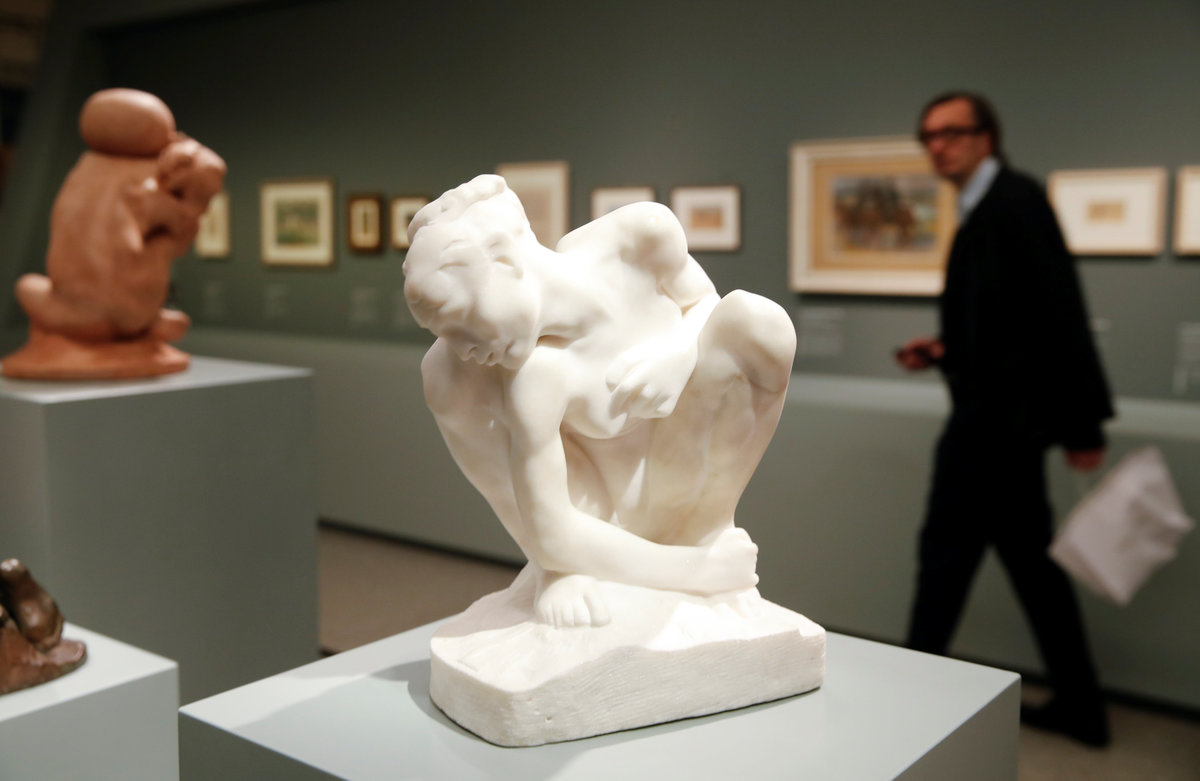
The marble sculpture "Crouching Woman" (1882) of French artist Auguste Rodin is seen during a media preview of the "Gurlitt: Status Report - Nazi Art Theft and its Consequences" exhibition at the Bundeskunsthalle in Bonn, Germany, November 2, 2017. REUTERS/Wolfgang Rattay
BERLIN (Reuters) - Some 250 art works from a huge trove hoarded by a collector during the Nazi era went on display in Germany for the first time on Thursday, as its curators pursue efforts to find the rightful owners of pieces identified as looted.
German art dealer Hildebrand Gurlitt built up the collection after being enlisted by the Nazis to sell modern art they had seized from German museums and collectors and labeled "degenerate".
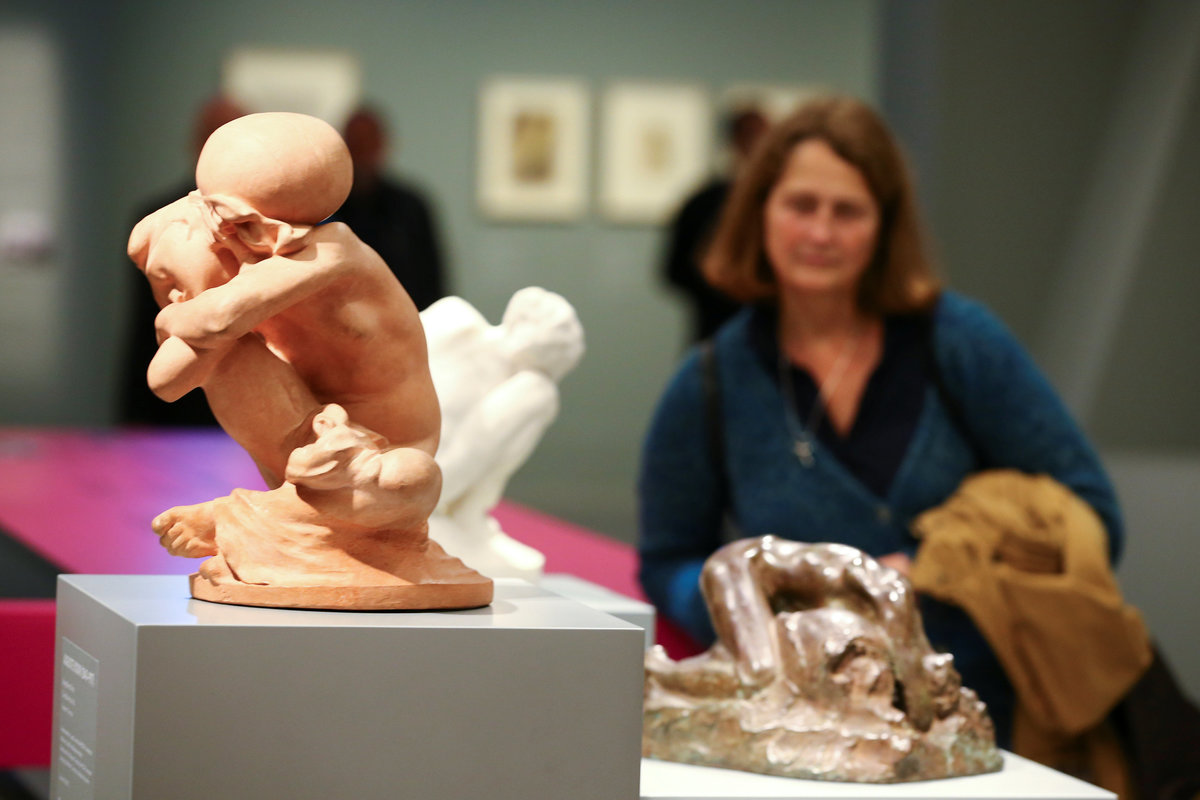
A woman looks at various sculptures of French artist Auguste Rodin during a media preview of the "Gurlitt: Status Report - Nazi Art Theft and its Consequences" exhibition at the Bundeskunsthalle in Bonn, Germany, November 2, 2017. REUTERS/Wolfgang Rattay
His son Cornelius inherited the collection, which includes works by Pablo Picasso and Henri Matisse as well as older masterpieces, and kept it in his Munich apartment for decades.
Gurlitt bequeathed the 1,500 works to Switzerland's Kunstmuseum Bern, which inherited them after his death in May 2014.
The collection is now being displayed simultaneously in Bern and in Germany's former capital Bonn, with part of the latter exhibition focusing on works stolen from individual collectors.
A man walks past an oil painting entitled "The Saints Gregory, Maurus, Papianus and Domitilla" by Flemist artist Peter Paul Rubens (1577-1640) during a media preview of the "Gurlitt: Status Report - Nazi Art Theft and its Consequences" exhibition at the Bundeskunsthalle in Bonn, Germany, November 2, 2017. REUTERS/Wolfgang Rattay
The display at the German Federal Gallery includes works by Claude Monet, Max Beckmann, Albrecht Duerer and Pieter Brueghel, whose works are presented alongside biographies of people from whom the Nazis stole art.
At least two works on display have been confirmed as looted and attempts to identify their original owners are ongoing.
"In total, there are six which were clearly identified as looted art. Many works are still being investigated and they might also turn out to be looted," Rein Wolfs, the exhibition curator, told Reuters Television.
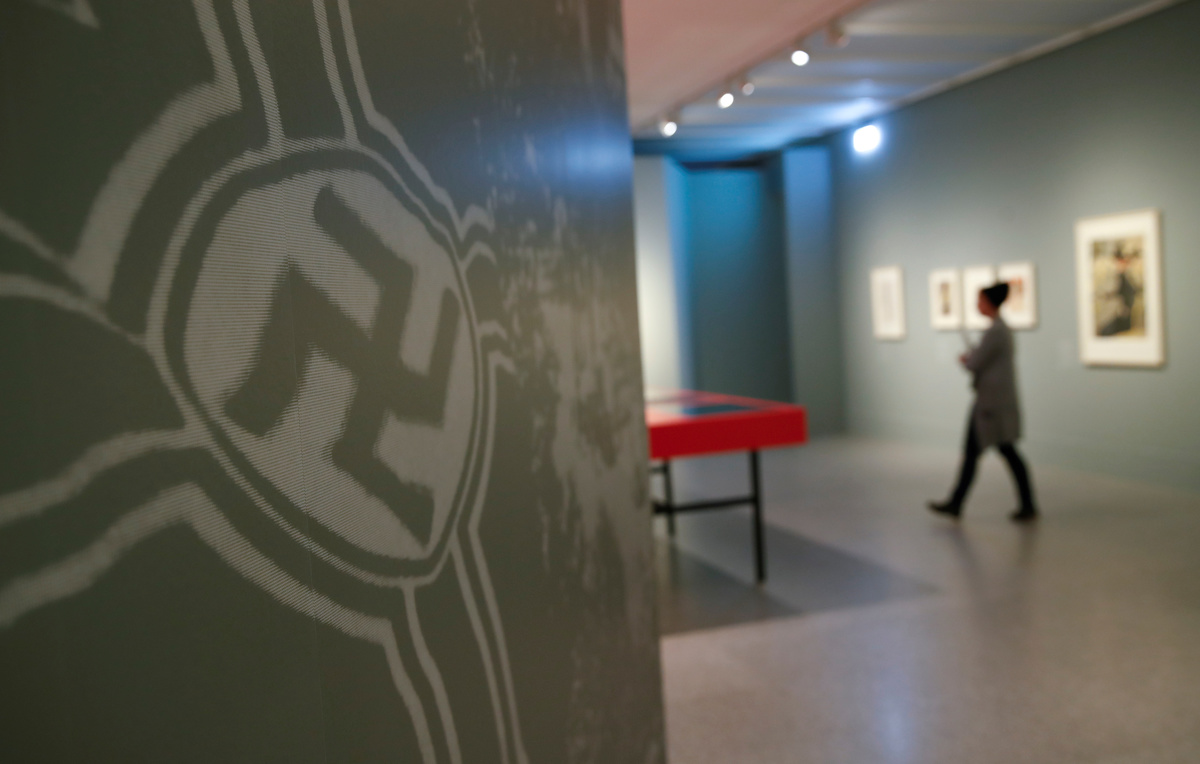
A woman walks past a Swastika during a media preview of the "Gurlitt: Status Report - Nazi Art Theft and its Consequences" exhibition at the Bundeskunsthalle in Bonn, Germany, November 2, 2017. REUTERS/Wolfgang Rattay
Germany's Culture Minister Monika Guetters said the government had allocated 6.5 million euros ($7.6 million) to researching the original owners' identities.
(Reporting By Riham Alkousaa and Reuters TV; editing by John Stonestreet)
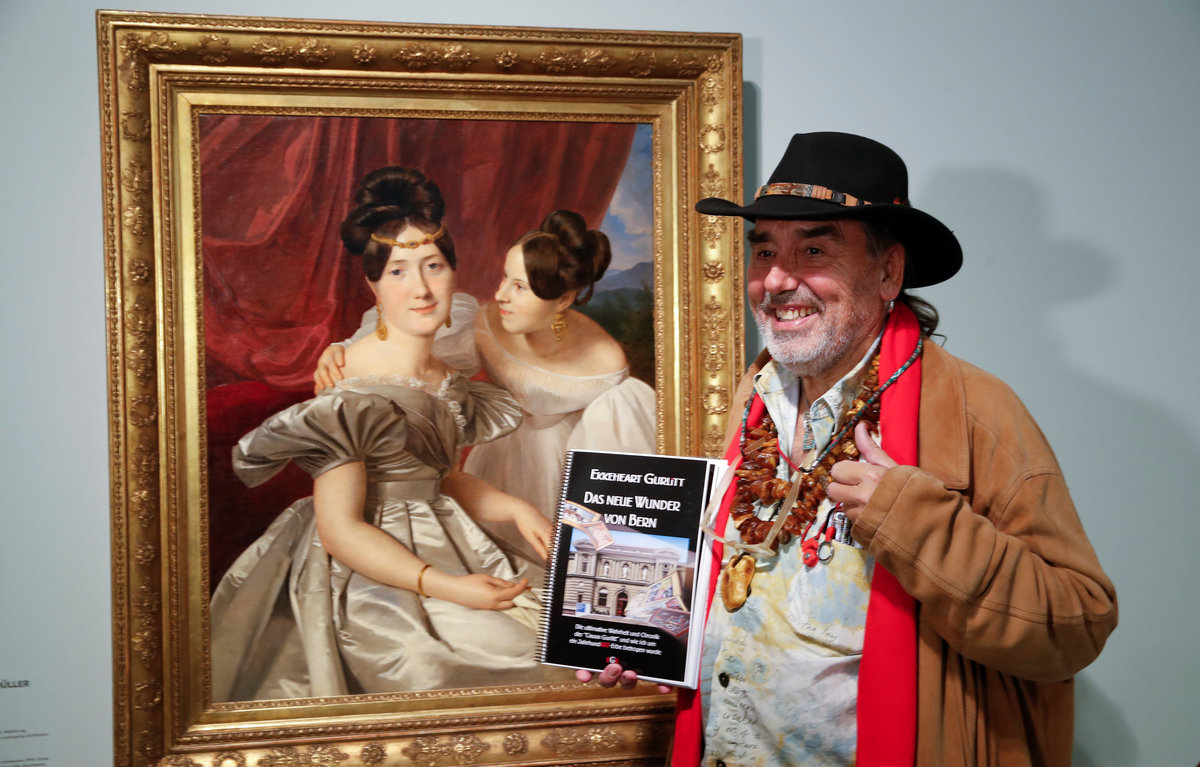
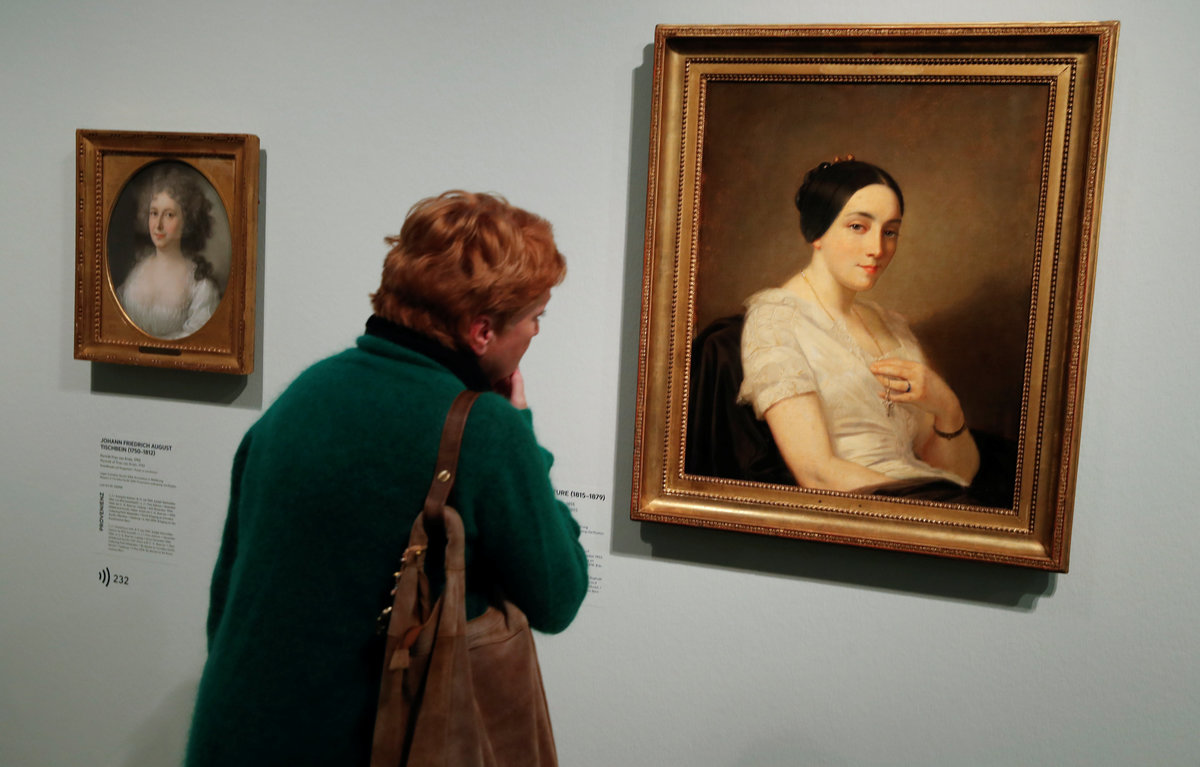
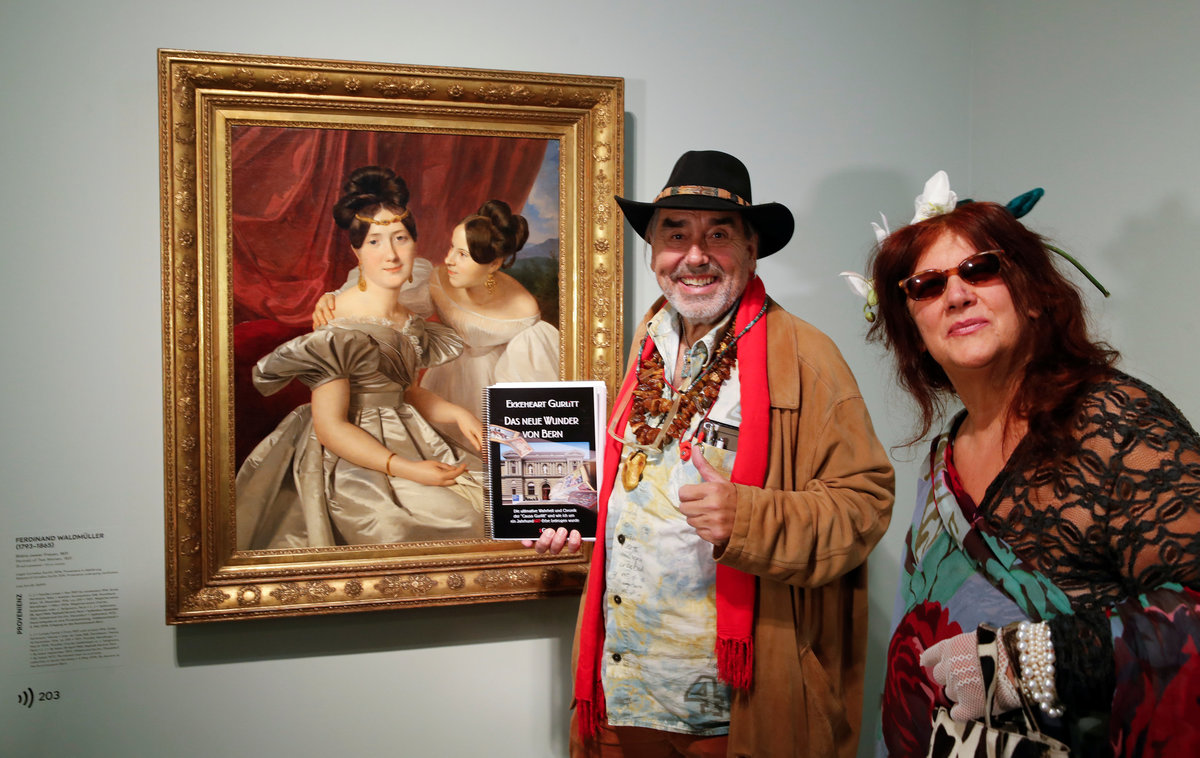
Ekkehard Gurlitt, a second cousin of Cornelius Gurlitt poses in front of an oil painting entitled "Portrait of two Women" (1831) by Ferdinand Waldmueller, which is identified as Nazi-looted art during a media preview of the "Gurlitt: Status Report - Nazi Art Theft and its Consequences" exhibition at the Bundeskunsthalle in Bonn, Germany, November 2, 2017. REUTERS/Wolfgang Rattay A woman looks at an oil painting entitled "Portrait of a Young Woman" by French artist Thomas Couture (1815-1879), which is identified as a Nazi-looted art during a media preview of the "Gurlitt: Status Report - Nazi Art Theft and its Consequences" exhibition at the Bundeskunsthalle in Bonn, Germany, November 2, 2017. REUTERS/Wolfgang RattayEkkehart Gurlitt, a second cousin of Cornelius Gurlitt, and his muse "Lady Mokka" pose in front of an oil painting entitled "Portrait of two Women" (1831) by Ferdinand Waldmueller, which is identified as Nazi-looted art, during a media preview of the "Gurlitt: Status Report - Nazi Art Theft and its Consequences" exhibition at the Bundeskunsthalle in Bonn, Germany, November 2, 2017. REUTERS/Wolfgang Rattay
Sign up to read this article
Read news from 100’s of titles, curated specifically for you.