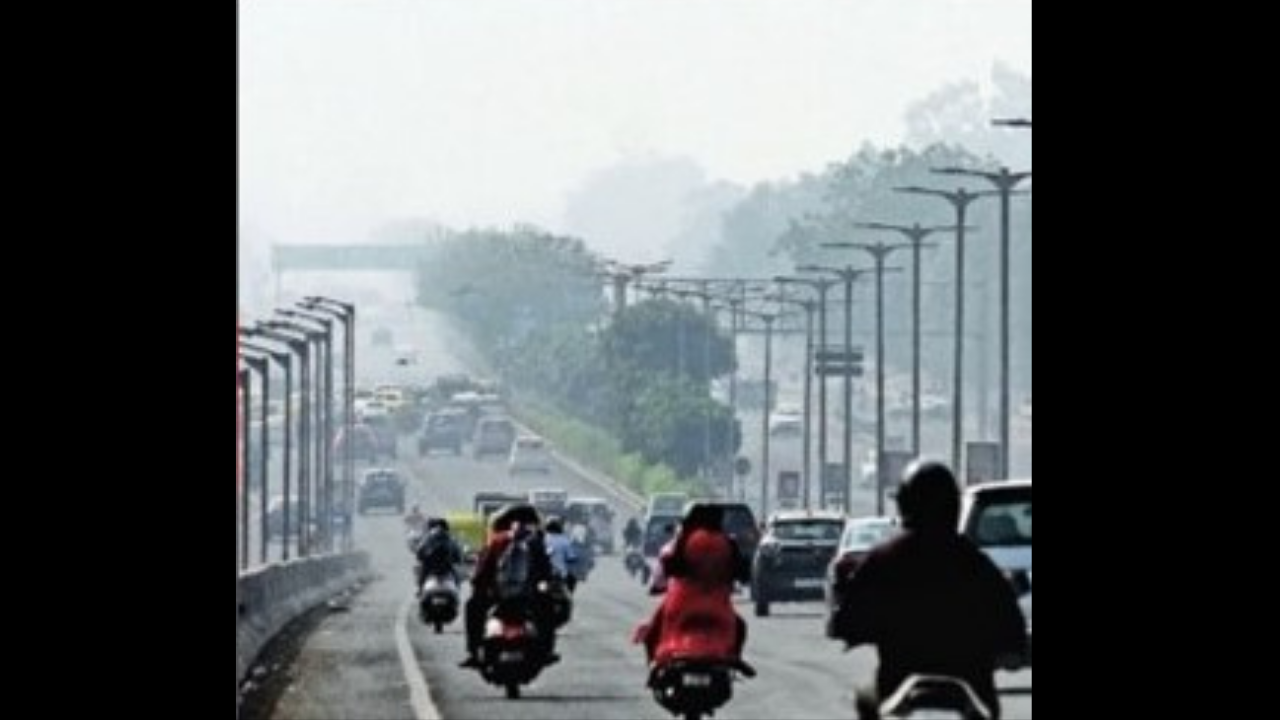
AHMEDABAD: Why are some portions of National Highways passing through the city becoming accident hotspots?
The road safety council for Ahmedabad city in April culled out 19 reasons for accident occurrences.
A majority of the accidents occurred because certain fundamental rules concerning signage and safety features laid down by the Indian Road Congress (IRC) were not being followed.
The council pointed out to poor road markings or signage, defective traffic signals, poor pedestrian infrastructure, and visual obstructions such as plantations on kerbs or central road verges.
Structures and street furniture were proving to be major reasons for accidents as well. The council had analyzed two major highways. One was NH-64, which extends between Aslali and APMC Market.
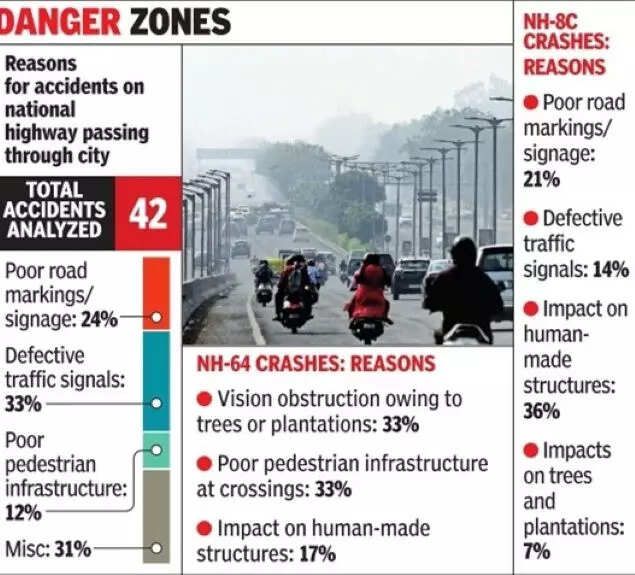
The other was NH-8C or SG Road. The council studied 42 fatal accidents on these stretches.
A senior road safety council member told TOI that usually when a municipal road or a state highway intersects with an NH, it tends to become an accident-prone zone.
On SG Road, the council found that 36% of the accidents occurred because of vehicle impact on certain human-made structures and 21% occurred due to improper road signage.
On the Aslali to APMC Market stretch, on NH-64, 33% of the accidents occurred because of vision obstruction by trees or roadside plantations, while another 33% occurred due to bad pedestrian infrastructure or the total lack of it.
“We have observed in most of the 42 accidents that activities such as crossing and turning left or right have the potential for conflicts. Most accidents are occurring at designated pedestrian crossings,” said a senior AMC official and a member of the council.
He added: “Good intersection design is the solution. With proper signage and road markings, road users should be able to traverse an intersection, whether it is four-way, three-way, or roundabout.”