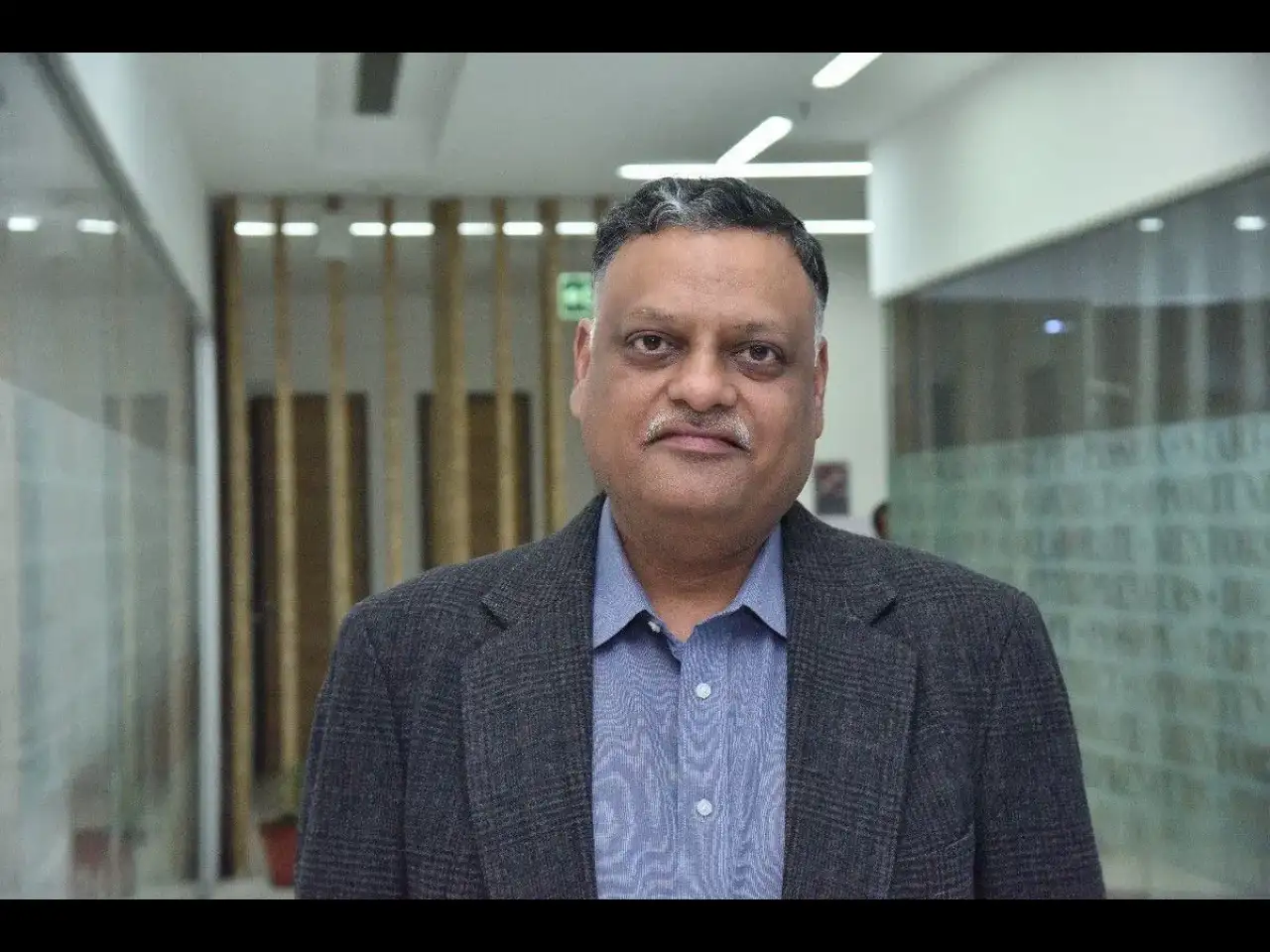
As India deepens its push into digital innovation and applied artificial intelligence, the role of institutional platforms that bridge startups, enterprises and government is becoming more critical. The NASSCOM Centre of Excellence (CoE), supported by the Ministry of Electronics and Information Technology (MeitY), aims to position itself as a neutral enabler focused on scaling real-world deployments. In an interaction with ET Online, Sudhanshu Mittal, Head and Director, Technical Solutions at MeitY NASSCOM CoE, outlines how the platform measures impact, drives India’s innovation ecosystem, and plans to expand its footprint under the IndiaAI mission. Edited excerpts:
ET: India has multiple incubators and accelerators. How does NASSCOM Centre of Excellence (CoE) differentiate itself, particularly in market access and deep-tech enablement?
Sudhanshu Mittal (SM): Over time, CoE has differentiated itself by focusing on both innovation development and adoption. We do not take equity or intellectual property from startups, which builds trust. Since we have no direct stake in any one startup, enterprises also rely on us for unbiased solution curation. Our enterprise partners also trust us in providing them with the best possible solution for their requirements. For us the success is about the on-ground impact created through deployment. We go beyond the usual “connect” and measure us about the actual impact created. For societal use cases, we also evaluate effectiveness over time so that outcomes are backed by measurable data.
ET: Which three sectors have seen the most measurable disruption due to CoE interventions in the last 24 months? Can you share sector-wise data on jobs created, patents filed, or proof of concepts deployed?
SM: CoE is technology-led rather than sector-specific. We have enabled deployments across healthcare, manufacturing, logistics, agriculture, consumer services, and public services, wherever there is clear potential for impact through innovation.
ET: What key performance indicators (KPIs) does the CoE use to measure success across its innovation hubs? Are there benchmarks around startup success rate, intellectual property (IP) creation, or technology commercialization?
SM: the success of CoE innovation hubs is tracked across multiple parameters spanning startup growth, enterprise outcomes, academia engagement and societal impact. Startup growth is assessed through indicators such as revenue generated by CoE startups, funding or grants raised, intellectual property created, the number of startups graduating from incubation, employment generated and the volume of prototypes showcased.
Enterprise success is evaluated based on how effectively CoE supports organisations in addressing their innovation needs. This includes curated innovation showcases, proof of concept deployments, scaled implementations and the development of impact-led success stories. These enterprise engagements also contribute to startup growth, as they are driven by solutions developed by CoE startups.
Engagement with academia forms another key pillar, given its role in shaping future technological capabilities. CoE conducts sessions and workshops for students and faculty to provide exposure to real-world innovation, commercialisation pathways and the entrepreneurial journeys of startup founders.
Societal impact is measured through the deployment of digital innovations that improve citizen-facing services. CoE has enabled solutions in healthcare, particularly across primary health centres, government hospitals and low-resource settings. It has also supported initiatives in agriculture and the application of artificial intelligence in public service delivery through collaborations with government departments.
ET: Many view NASSCOM CoE as a bridge between innovation and enterprise. What monetization or value-delivery models have proved most scalable across sectors such as manufacturing, healthcare, or banking, financial services and insurance (BFSI)?
SM: Enterprises engage with CoE because we act as a neutral arbiter. Once we analyse a problem statement, we identify and curate the most relevant startup solution. In many cases, solutions are co-developed with the enterprise.
Typically, engagements move from funded proof of concept to scaled deployment. The key to success is internal stakeholder buy-in within the enterprise. In several instances, once a solution is scaled, enterprises choose to invest in the startup to influence its future direction. Where co-creation leads to intellectual property, ownership may be shared. These agreements are directly between the enterprise and the startup, with CoE facilitating as required.
ET: What is the CoE’s three-year roadmap in terms of geographical expansion or sectoral focus? Are there plans to expand into Tier II and Tier III cities or create sector-specific CoEs?
SM: Our approach is not sector-driven. Under the IndiaAI mission of MeitY, there are plans to establish 58 artificial intelligence Centres of Excellence across the country.
Of these, 17 centres are proposed in states such as Uttarakhand, Himachal Pradesh, Tripura, Meghalaya, Manipur, Nagaland, Goa, Arunachal Pradesh, Mizoram, and Sikkim, along with Union Territories including Jammu and Kashmir, Puducherry, Chandigarh, Andaman and Nicobar Islands, Ladakh, Dadra and Nagar Haveli and Daman and Diu, and Lakshadweep. These largely fall in the Tier II and Tier III category. NASSCOM is currently in discussions with several states to explore setting up these centres.