Newly elected Myanmar President Min Aung Hlaing made an official trip to Laos from July 3-5. It was his first state visit to another Association of Southeast Asian Nations (Asean) member country after taking office on April 10.
In Laos, the Myanmar leader and his host witnessed the signing of an agreement for a feasibility study on a hydropower dam.
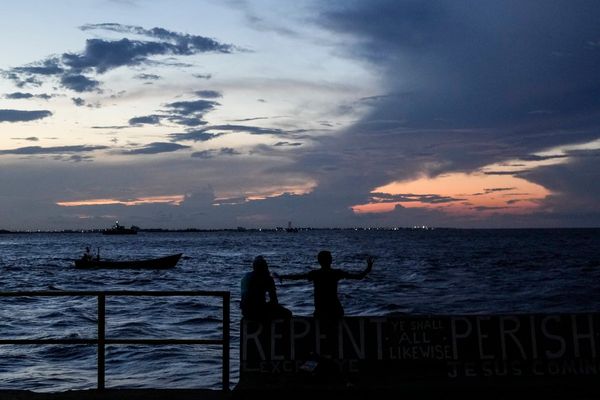
If built, this dam will sit somewhere along the 234km stretch of the Mekong River mainstream border shared by Laos and Myanmar, with a generating capacity of 2,790 Megawatts.
The feasibility study, which will be undertaken jointly by Laos' Phongsupthavy Group Sole Co Ltd and Myanmar's Primus Sapphire Power Co Ltd, is expected to take 34 months.
This ambitious development has significant strategic geopolitical, economic, hydrological, environmental and social ramifications.
The location is within the coverage of the Lower Mekong Basin as stipulated under the Agreement on the Cooperation for the Sustainable Development of the Mekong River Basin signed in Chiang Rai on April 5, 1995 by Cambodia, Laos, Thailand and Vietnam (or the 1995 Mekong Agreement), which established the Mekong River Commission (MRC).
Despite sharing the Lancang-Mekong River (Lancang being the Chinese name for the same river), neither China nor Myanmar have signed the agreement and is therefore not a member of the MRC.
Beijing and Nay Pyi Taw were designated MRC "dialogue partners" in 1996 and have been involved in activities such as attending MRC summits and council meetings, dialogue partner meetings, high-level visits, technical exchanges, joint studies, selective data sharing and the like.
Myanmar's explanation as to why it hasn't joined the MRC is because its share of the Mekong watershed area is only 3%. However, recent reports have emerged of contamination of the waters, sediments and aquatic systems, first in the tributaries in Thailand and eventually the Mekong mainstream itself, with toxic levels of heavy metals such as arsenic, mercury, lead, and cadmium.
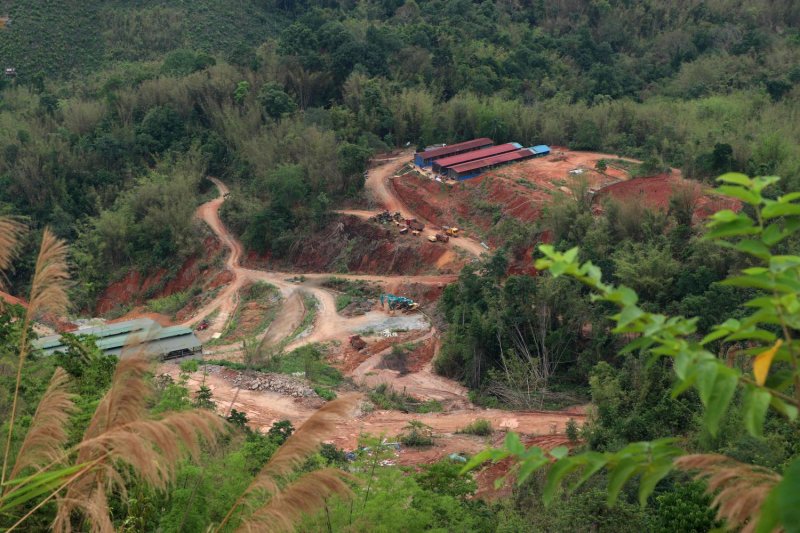
These materials originate from poorly regulated illegal mining activities of gold and rare earths, some reportedly involving Chinese operators occurring in parts of contested areas of Myanmar in the upper reaches of the Mekong River Basin.
This has caused substantial, if not irreparable, harm and damage to the health, environment, incomes and livelihoods of people living in neighbouring countries further downstream, especially Thailand.
However, Myanmar did join Thailand in the MRC-initiated Joint Water Quality Monitoring activity to track movement and deposits of these hazardous substances in the Kok, Sai and Ruak tributaries of the Mekong, which are shared by the two countries.
Even so, there is no sign of durable solutions to tackle the root causes. That may explain why academics and civil society activists, particularly in Thailand, are calling for accountability and responsibility from authorities and stakeholders.
Why is the case? Mekong sub-regional governments have shown they can act swiftly and decisively against transnational scam and trafficking operations -- but largely because their own nationals were the victims. Transboundary organised crime involving exposure to poisonous substances poses no less a threat to innocent lives and livelihoods, yet is treated with far less urgency.
Moreover, the proposed Lao-Myanmar dam, if built, would be the largest mainstream dam in the Lower Mekong Basin in terms of generating capacity -- and the first on the entire river system to span two sovereign nations.
The question is how can both countries manage the river more sustainably and inclusively? Laos is bound by the Mekong Agreement, while Myanmar is not, and the two countries thus end up governing the river under two different regimes.
The dam could invariably alter the hydrological flow and ecological balance and potentially create significant impacts. The project would transform Myanmar from a passive bystander into a major player in the Mekong River and Sub-region.
That said, is it about time to renew the invitation for Myanmar to take its rightful seat at the MRC table, preferably by the next MRC Summit for April next year in Bangkok?
Myanmar has been an active member in all the other major Mekong-wide cooperation frameworks like GMS, ACMECS, LMC/MLC or Mekong-China, Mekong-Japan, Mekong-ROK and Mekong-India. Why not the MRC, one of the oldest of them all?
It would also make sense from an Asean-wide perspective of having all mainland Southeast Asian or Mekong countries fully represented in key Mekong collaborative initiatives.
Even two other non-Mekong riparian countries of Asean, Indonesia and Singapore, have lately established cooperative programmes with the MRC on water and related issues.
So, it would seem sensible for Myanmar, itself a Mekong riparian country, to play a more active role in the MRC with the aim of advancing the peaceful cooperation and shared prosperity of the Mekong sub-region and the wider Asean region.
The sentiments as expressed by former Myanmar foreign minister Than Swe on March 25 are instructive. He said: "Although Myanmar's share of the river may be modest at just 234 km (3% of the total basin area), its strategic location connecting the upper and lower streams of the river and positioning as the heart of the Myanmar-Laos-Thailand 'Golden Triangle' cements Myanmar's role as an indispensable member…in balancing sustainable development with ecosystem conservation".
It is hoped Myanmar will soon turn these words into tangible and timely outcomes.
Apichai Sunchindah is a natural resources and environmental specialist focusing on Asean and Mekong affairs.