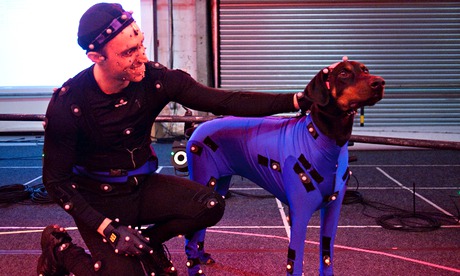
From Masterchief in Halo: Anniversary to Bond in the GoldenEye 007 remake, Oliver Hollis has assumed the form of some of gaming’s biggest icons. But what is it like to perform in digital realms, and how is it different from stage and screen?
What is motion capture performance for video games?
From a performance point of view, motion-capture acting is essentially performing the action of motion of human and non-human forms, which is then translated on to a video game character.
How is motion-capture performance for games distinct from stage or screen?
The only real difference is how you communicate a character. In film there are certain established rules you have to follow – shot or size of performance, for example. In motion capture you are still communicating the truth of a character, but the rules are different.
That’s because the player is interacting as audience and director?
Yes. But also there is the way you perform. Technology is getting closer to capturing every movement of your face and so on. But it’s still not like film. It’s not 100% accurate, so you still have to modify your performance to accommodate for that.
But as technology improves, and more nuance is captured, is there more pressure on the actors?
Performances in games do have to be incredibly good now, because the viewer – the player – can walk straight up to a character, and look them dead in the eyes. If there’s any faking or untruth there, they will detect that immediately.
Does the fact you wear no costumes and perform in blank sets liberate you as an actor?
Absolutely, because you don’t have to contend with your own identity. In any other medium, people can usually see your face and make judgments, perhaps based on other work you’ve done. With motion capture you start from absolute zero every time. You can become absolutely anybody. It’s been described as “pure acting”, and I think that’s true.