The United States has long been described through the people who arrived there rather than only those born within its borders. That idea sits quietly behind many public lists of successful immigrants in America, where origin stories begin far from American cities but end up embedded in industries that shape everyday life. The Forbes list of the most successful living immigrants in America reflects that pattern in an indirect way, grouping influential figures whose careers unfolded across different continents before intersecting with American business, media, technology, entertainment, and culture. Some entered the country as children and gradually moved into leadership roles without any clear turning point.
Get breaking news anytime, anywhere. Download the TOI app now!
Others arrived later with established skills and went on to become some of the most influential immigrants in the US, reshaping entire sectors soon after. The result is less a shared narrative and more a layered record of migration, adaptation, entrepreneurship, and long-term influence that built up over decades, highlighting the lasting contribution of immigrants to the American economy and society.
List of the most successful living immigrants in America
|
Rank
|
Name
|
Origin Country
|
Field |
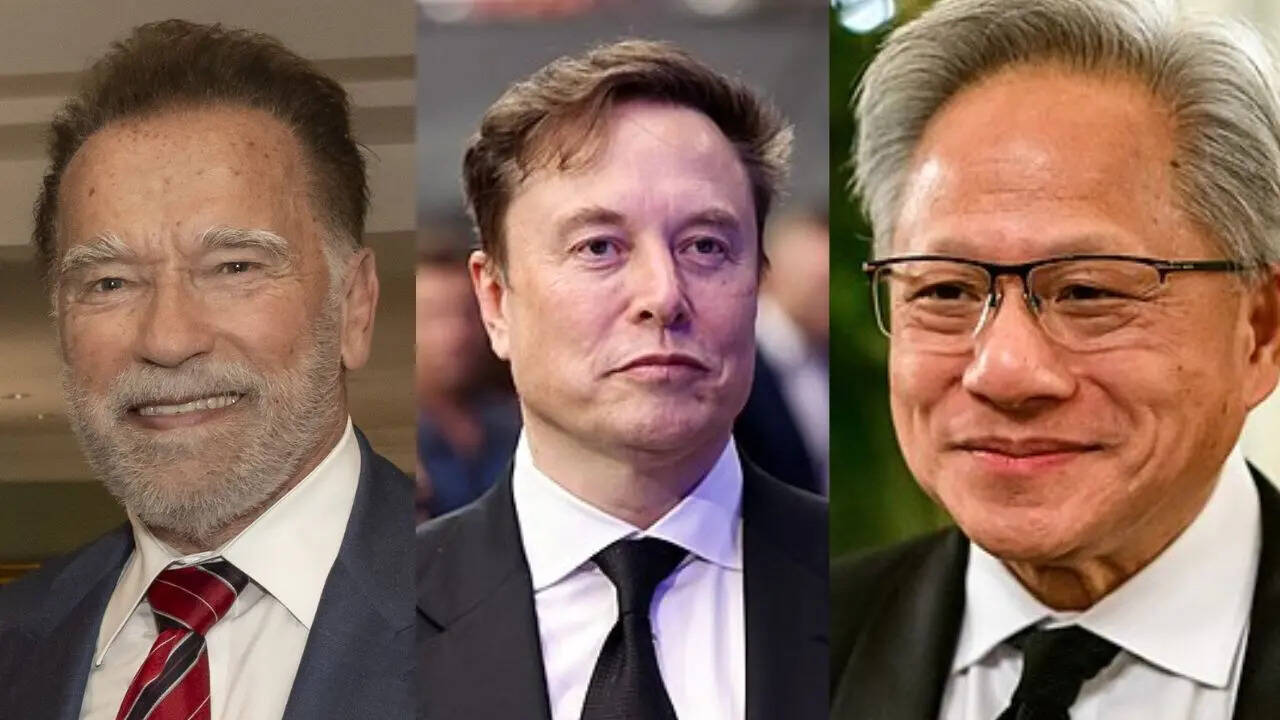
| #1 | Arnold Schwarzenegger | Austria | Film, Politics, Business |
| #2 | Elon Musk | South Africa | Technology, Industry |
| #3 | Sergey Brin | Russia | Internet Technology |
| #4 | Jensen Huang | Taiwan | Semiconductors, Computing |
| #5 | Rupert Murdoch | Australia | Media |
| #6 | Peter Thiel | Germany | Venture Capital, Tech |
| #7 | Thomas Peterffy | Hungary | Financial Trading |
| #8 | Lisa Su | Taiwan | Semiconductor Industry |
| #9 | Vlad Tenev | Bulgaria | Fintech |
| #10 | Wolfgang Puck | Austria | Culinary Industry |
America’s most successful immigrants
Arnold Schwarzenegger
Arnold Schwarzenegger’s arrival in the United States did not begin with film sets or political offices, but with the disciplined world of bodybuilding in Austria. He came in the late 1960s, carrying little recognition beyond sporting circles, and very little certainty about what would follow. The early years in America were not smooth. Language barriers, cultural distance, and the slow process of building connections shaped much of that period.
Business interests followed, particularly in property and investment, running alongside his growing public profile. Later, politics added another layer entirely, with his tenure as Governor of California placing him inside a system far removed from entertainment.
Elon Musk
The early years of Elon Musk were spent in South Africa, during which time he developed his interest in technology and programming skills, far from any kind of fame. His move to North America happened slowly; from Canada to the United States, his endeavors started coming to fruition.
He works in several industries that do not intersect in a straightforward manner. From space travel in SpaceX to automobiles in Tesla, to various technological infrastructural efforts, all happen within the spotlight. The individual firms operate in separate industries but are usually talked about collectively as an emerging ecosystem.
Sergey Brin
Sergey Brin arrived in the United States as a child after leaving the Soviet Union with his family. The move placed him in an environment where computing and early internet systems were still developing, both technically and culturally.
At Stanford University, he met Larry Page, and their collaboration led to the early work that became Google. The project did not begin as a corporate structure but as an attempt to organise information in a more effective way than existing systems allowed.
Jensen Huang
Jensen Huang moved from Taiwan to the United States as a child, later pursuing engineering and building a career in computing hardware. His early professional environment was shaped by rapid changes in how graphical processing and computing power were being used.
Nvidia began with a focus on graphics processing units for gaming systems. At the time, this was a specialised segment of the technology industry, tied mainly to visual performance and entertainment software.
Over time, the company’s technology found new applications beyond gaming. As computing demands expanded into data centres, artificial intelligence, and machine learning, GPUs became central to workloads that required parallel processing at scale.
Rupert Murdoch
Rupert Murdoch entered the United States after already building a media presence in Australia. His expansion into American media during the 1970s marked the beginning of a broader consolidation across newspapers and television networks.
His influence has often been discussed in terms of ownership scale. Control over multiple media channels placed him in a position where business decisions intersected with public communication and political discourse.
Peter Thiel
Peter Thiel moved from Germany to the United States during early childhood, later studying philosophy and law at Stanford. His academic background contrasts with his later work in technology investment and company formation.
He co-founded PayPal, which played a role in establishing early digital payment infrastructure at a time when online financial systems were still unstable and fragmented. The company’s growth helped define patterns that would later be repeated in fintech development.
Thomas Peterffy
Thomas Peterffy immigrated to the United States from Hungary as an adult, and entered the financial world during an era in which the trading process was done manually. His initial efforts revolved around programming and system building skills, which were rather novel during that period.
He contributed to the emergence of electronic trading platforms, and was a part of the transition from conventional exchanges to newer electronic formats. The rise of Interactive Brokers can be attributed to this transition, as well as to the development of technological means for trading.
Lisa Su
Lisa Su moved from Taiwan to the United States during childhood, later pursuing engineering and entering semiconductor research. Her early career developed within an industry already defined by high competition and rapid technical cycles.
She became chief executive of AMD in 2014, a period when the company was under pressure within the semiconductor market. The task involved restructuring product development and repositioning AMD within a competitive global industry. Her leadership period is often associated with operational restructuring and technical focus, though the changes unfolded over multiple product cycles rather than a single turning point.
Vlad Tenev
Vlad Tenev moved from Bulgaria to the United States as a child and later studied mathematics before entering financial technology. His career path led to the creation of Robinhood, a trading platform designed to simplify access to financial markets.
The platform reduced traditional barriers to trading, allowing users to engage with stock markets through mobile systems. This accessibility contributed to rapid growth, particularly among younger users.
Wolfgang Puck
Wolfgang Puck moved from Austria to the United States and entered the culinary world during a period when American dining culture was beginning to diversify. His early training was rooted in classical techniques, which he later adapted to local ingredients and regional styles.
His restaurant Spago became associated with a shift in dining approach, combining formal culinary training with a more flexible presentation style. This approach gradually expanded into a wider restaurant network.