
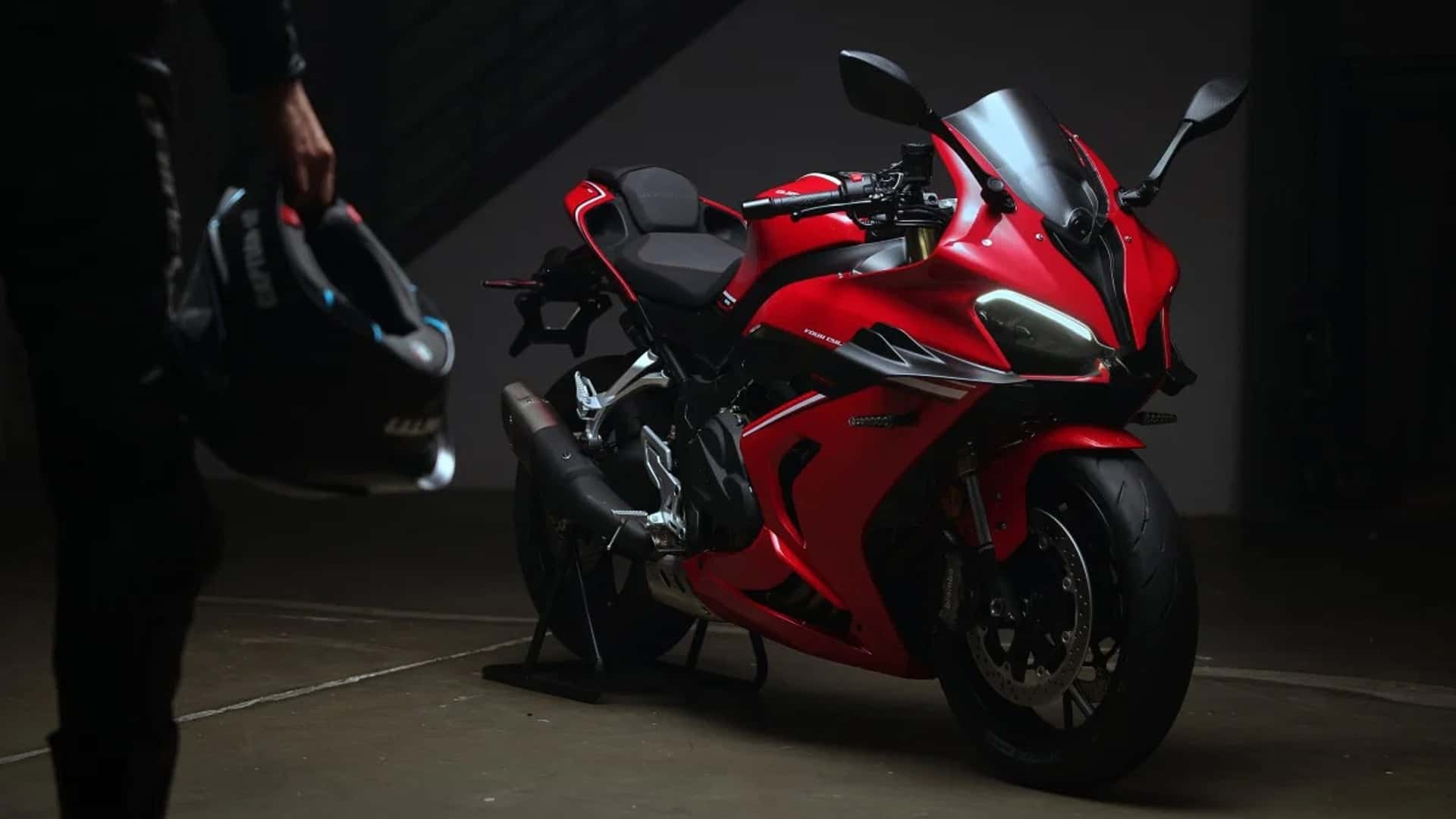
The Qianjiang Motorcycle Group—known by us as QJ Motor—is one of the largest two-wheeled vehicle manufacturers in China, and offers a menagerie of models, all of which look eerily similar to something you might be familiar with.
Now, I’m not necessarily trying to throw shade on the QJ Motor crew, but it is worth noting the brand has a history of imitating its competition. Imitation is the sincerest form of flattery, right?
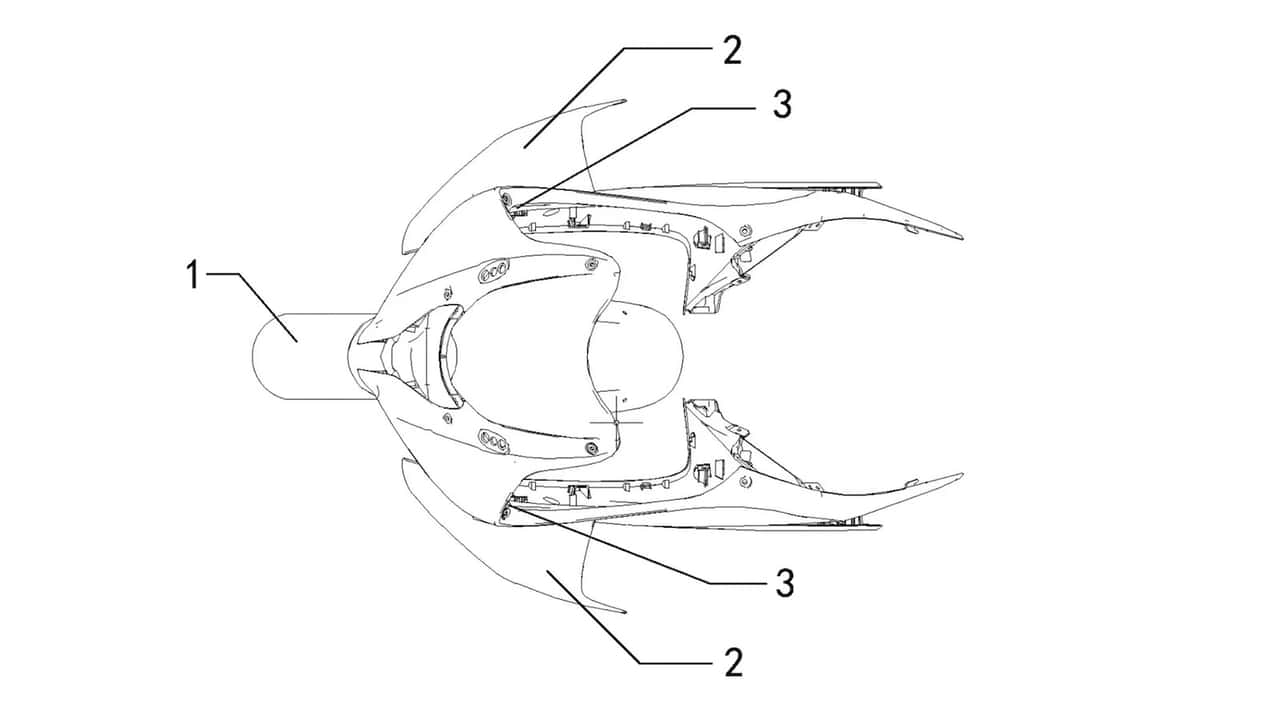
So, it came as no surprise to see that QJ Motor filed a patent for an IMU-controlled active winglet system for sport bikes that looks a lot like a set of active aero winglets CFMoto recently introduced on its new V4 Superbike...
The bike seen in the patent appears to be either an SRK 800 RR or SRK 921 RR, according to the team at Visordown. Both of those bikes already have fixed winglets that help direct airflow, but this new patent suggests the winglets would be linked to the motorcycle’s IMU system, which would allow them to move independently and alter the machine's aerodynamics in real time.
This system would adjust individually to influence airflow, changing how quickly the bike could tip into a corner, how it reacts under heavy braking, and generally adjust airflow like how ailerons work on an aircraft.
This technology has been common in Formula 1 for years, namely the front and rear wings, which level out down the straightaway to reduce drag and increase overall speed. And, indeed, it's been on road-going supercars for decades, and even economy cars, though the latter is used to make cars more slippery to get better fuel economy. But we’ve only seen active aero on one other production motorcycle, the Moto Guzzi V100 Mandello, which featured adaptive side deflectors and a windscreen that adjusted based on the riders height.
As mentioned above, CFMoto is working on something similar, too, with a system developed for their flagship superbike, the V4 SR-RR. Like the patent introduced by QJ Motor, instead of traditional static winglets, the V4 SR-RR features electronically controlled winglets on the front fairing that adjust their angle of attack in real-time.
Are these IMU controlled ailerons on the front fairing just unnecessary tech to help sell new superbikes? Or, could they be game-changing pieces of aero equipment that aid riders in achieving greater cornering speed, better braking stability and additional velocity while headed down the front straightaway?
However it shakes out, one thing is certain... Active aero is coming to the motorcycle industry, whether we asked for it or not.