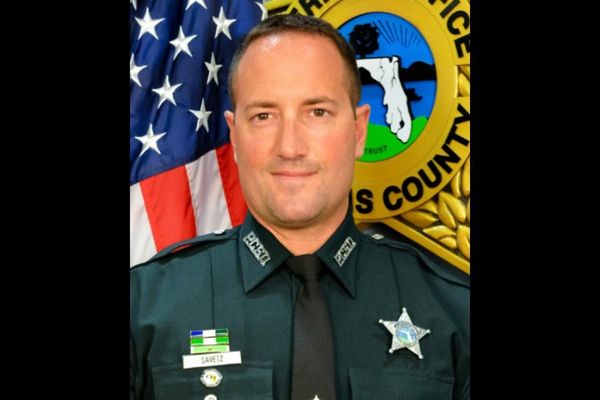
Dennis Hope, a former used-car salesman from Rio Vista, California, has spent more than four decades selling what he describes as plots of land on the Moon, as per a report in Science Blog. Hope began the venture in 1980 after a divorce and financial difficulties, when he became interested in whether international law prohibited private individuals from claiming lunar property.
Hope recalled an introductory political science course in which he had learned about the 1967 Outer Space Treaty. He obtained the treaty from a library and focused on its provision prohibiting national appropriation of celestial bodies.
What the Outer Space Treaty says about the Moon
Article II of the Treaty on Principles Governing the Activities of States in the Exploration and Use of Outer Space states that outer space, including the Moon and other celestial bodies, cannot be subject to national appropriation through sovereignty, use, occupation or other means. The provision is the basis for the prohibition on countries claiming ownership of the Moon.
Hope interpreted the wording as applying to nations rather than individuals. He noted that the treaty did not specifically refer to private citizens and concluded that it did not prevent an individual from claiming lunar property.
On November 22, 1980, Hope registered a declaration claiming ownership of the entire lunar surface, as well as the surfaces of other planets in the solar system and their moons, excluding Earth. He subsequently sent copies of the declaration to the United Nations headquarters in New York and the Soviet government, asking them to raise any legal objections to his claim.
Neither body responded, which Hope interpreted as acceptance of his claim. About six weeks later, he established Lunar Embassy and began selling one-acre lunar plots for $19.95, in addition to a handling fee for the deed.
Lunar Embassy's business and customer claims
According to figures reported by Hope, Lunar Embassy has at times sold as many as 1,500 lunar deeds in a single day, according to Science Blog. A 2013 profile of Hope by US News and World Report reported that the business had sold lunar plots to more than six million customers over its operating history.
Hope has also claimed sales involving Mars, Venus, Mercury and Jupiter's moon Io. His reported figures include about 611 million acres of the Moon, 325 million acres of Mars and 125 million combined acres on other celestial bodies.
Hope has said that former US presidents Ronald Reagan, Jimmy Carter and George H.W. Bush were among his customers. He has also named John Travolta, Tom Cruise, Nicole Kidman and Barbara Walters as customers.
He has claimed that he once rejected a $50 million offer from a buyer seeking the entire northern region of the Moon. Lunar Embassy operates from a modest office with two full-time employees, 27 resellers and representatives in several countries who sell the deeds on commission.
Customers receive a certificate of ownership, a copy of Hope's original registered declaration, a map of their claimed lunar plot and documents describing the Lunar Embassy as a governing entity.
Why Hope's lunar ownership claim has no legal standing
Legal experts have rejected Hope's interpretation of the Outer Space Treaty. Article VI requires countries that are parties to the treaty to authorise and supervise space activities conducted by private individuals and corporations, according to Science Blog report.
Legal scholars have therefore argued that a private claim to lunar territory would require recognition by a national government. However, governments themselves cannot claim sovereignty over the Moon under Article II, preventing them from granting such ownership rights to private individuals.
Tanja Masson-Zwaan, president of the International Institute of Space Law, has said that purchasing Hope's documents does not provide buyers with ownership rights over the Moon. Ram Jakhu of McGill University's Institute of Air and Space Law has similarly rejected the idea that the treaty contains a loophole allowing individuals to claim celestial territory.
The legal consensus is that Hope's documents do not constitute legally recognised deeds to lunar land. They function instead as memorabilia representing a claimed ownership interest that has no recognised legal basis.
Future lunar activity could test space law
The question of lunar ownership is becoming more significant as private companies prepare for increased activity around the Moon. US legislation passed in 2015 allows American citizens to own resources they extract from celestial bodies, while stopping short of recognising ownership of the land itself. Luxembourg has adopted similar legislation, with other countries developing their own approaches.
The Outer Space Treaty, which has governed international space activity for decades, does not specifically address every legal question that could arise from private companies establishing lunar bases or extracting resources.
Hope therefore does not legally own the Moon, but his decades-long business has highlighted unresolved questions about private activity, property rights and resource extraction in space that could become increasingly important as lunar exploration expands.