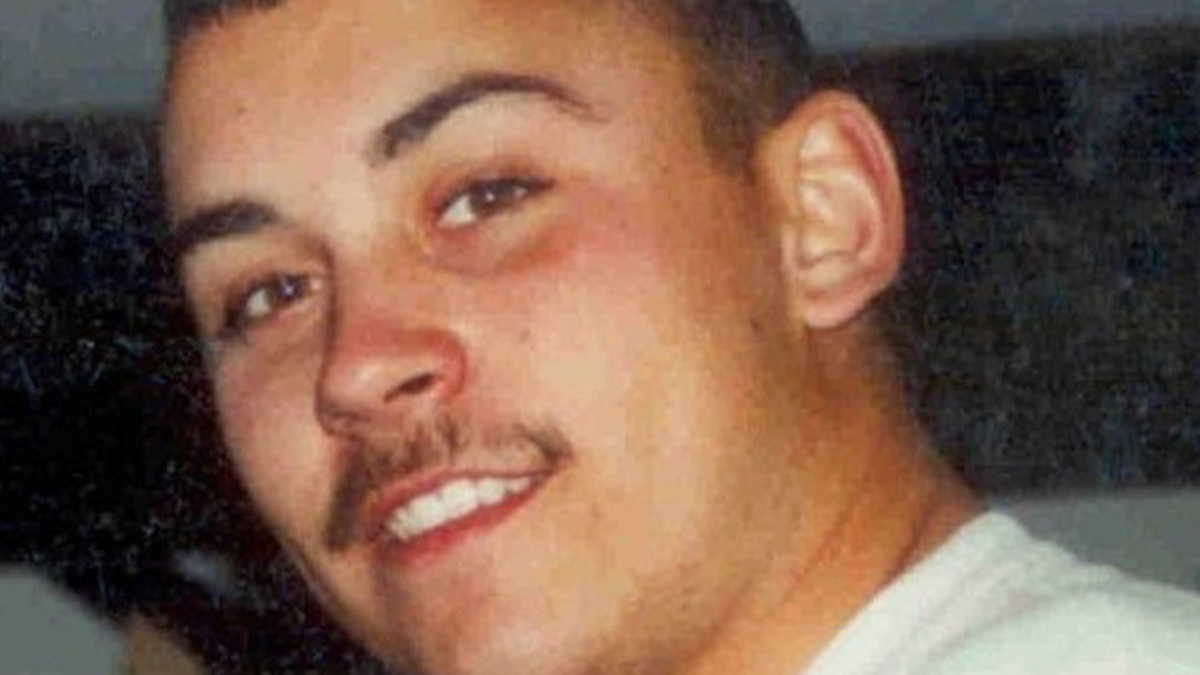
In June 2005, 22-year-old Todd Geib vanished after attending a large, late-night keg party in a rural orchard in Casnovia Township, Michigan. Three weeks later, the search concluded tragically when his body was discovered in a small, private body of water known as Open Hall Lake in Muskegon County.
The official ruling that followed—an “undetermined drowning”—failed to reconcile the numerous forensic anomalies and suspicious circumstances surrounding Geib’s death, causing decades of debate over whether his passing was accidental or a homicide.
The night Geib disappeared
In this weeks episode, Zee shares the story of Jenny Greenteeth + other bog creatures from around the world, and Danielle covers the mysterious death of Todd Geib. https://t.co/7WkH5CMkoE pic.twitter.com/4mic91S6Kf
— ghostsnheauxs (@ghostsnheauxs) July 12, 2023
Geib left the party around 12:45 a.m. on June 11, and in the moments that followed, he made a series of panicked and confused phone calls to friends and family. During one exchange, he was reported to have stated, “I’m in a field,” before the call dropped. Crucially, when Geib’s father called back, he allegedly heard only muffled sounds or a single gasp before the line went dead.
The toxicology report later confirmed Geib was intoxicated with a blood alcohol concentration of 0.12, and it also noted the presence of antidepressants, which the family insisted he had no prescription for.
The scene of the body’s discovery on July 2nd defied standard forensic expectations for a drowning victim. Geib was found partially exposed, standing vertically in the pond with his head and one shoulder above the water’s surface, a position considered almost impossible for a body that had succumbed to natural drowning and subsequent decomposition and float cycles.
Even more compelling was the post-mortem examination, which revealed no water in his lungs, leading many experts to conclude he did not inhale water while alive, suggesting he was either incapacitated or dead before entering the lake.
Geib and decomposition: conflicting theories
Adding to the mystery, because Geib’s body exhibited a limited degree of decomposition, inconsistent with a person submerged for 21 days in the June heat, a theory emerged, backed by some forensic experts, that Geib may have died elsewhere and been placed in the pond days or even hours before his discovery.
Authorities, however, have countered that cold water temperatures, specific water chemistry, or the formation of adipocere—a grayish, protective wax that replaces fatty tissue in cool, oxygen-poor environments—could significantly slow decomposition and account for Geib’s unusual state of preservation.
Law enforcement followed several leads
The official investigation initially pursued multiple leads beyond simple drowning. Among these was a strong early focus on a possible hit-and-run after a tip suggested Geib may have been struck by a vehicle near the highway after leaving the party. This theory, while investigated, ultimately did not result in charges.
The lack of satisfying closure led to Geib’s case becoming a focal point of the “Smiley Face Killer Theory,” sometimes called the “Smiley Face Killer Network, a highly controversial hypothesis advanced by retired NYPD detectives Kevin Gannon and Anthony Duarte, alongside criminologist Dr. Lee Gilbertson.
According to the Lansing State Journal, they propose that a network of organized killers targets young, college-aged men who disappear after nights out drinking, only to be found later in bodies of water under suspicious circumstances. Geib’s unusual condition—the low decomposition, the lack of lung water, and the upright posture—is cited as evidence that his death aligns with the pattern of a non-accidental death followed by body disposal.
But despite a Change.org petition demanding the case be reopened, gaining thousands of signatures and the tireless efforts of Geib’s family, police agencies, including the FBI, generally maintain that these deaths, including Geib, are tragic, unrelated, alcohol-related drownings, and do not support the organized serial killer theory. Consequently, nearly two decades later, the Geib case remains officially closed as an undetermined drowning, leaving the fundamental questions—how he died and who was responsible—unanswered in the minds of many.