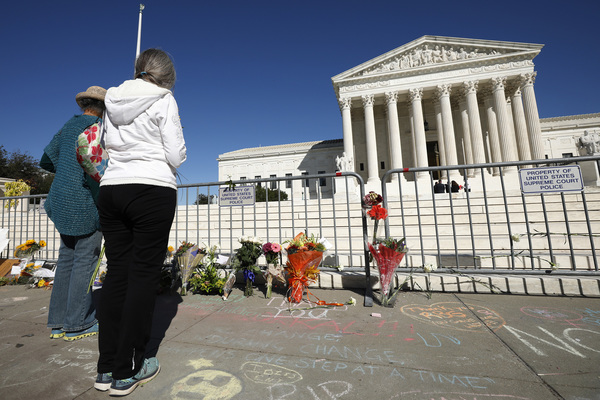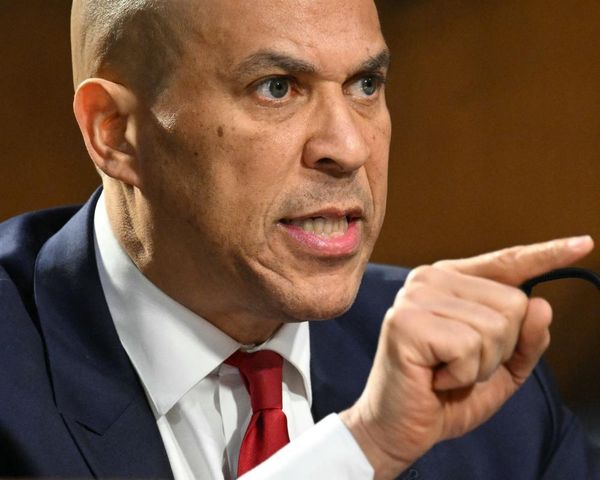
Barack Obama reminded his Republican congressional foils after his 2008 victory that elections have consequences. Yet today, Democrats are shocked _ shocked! _ that the 2016 election would still have any.
They carry on now as if the Constitution provides otherwise, but the simple fact is that in our system of self-governance, the president nominates Supreme Court justices and the Senate confirms or rejects them _ all at their discretion and on their timetable.
I realize reason isn't in fashion these days, but reason is the bulwark of our system. So ask yourself these two simple questions: In voting to replace Justice Ruth Bader Ginsburg before the November election, would Republicans be doing anything that isn't provided for in the Constitution? And would they be doing anything Democrats wouldn't do if given the chance _ likewise, legally and constitutionally?
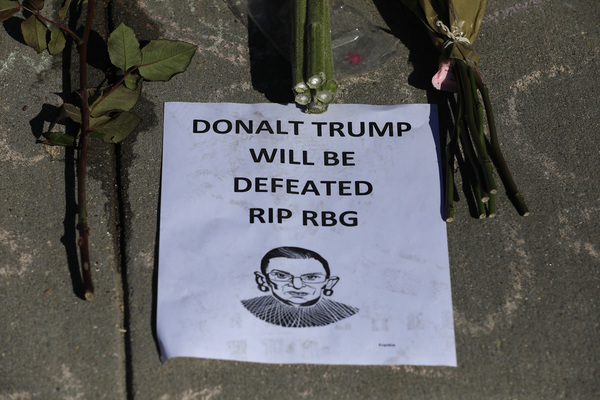
Has well-earned political and numerical advantage suddenly been outlawed? If so, someone tell House Speaker Nancy Pelosi, stat.
In an age in which federal budgets are pure fiction and little else seems to be accomplished in Washington, seeing our national government actually function as designed and intended is admittedly something of a jolt. But there it is.
The people fill Supreme Court vacancies through their duly elected presidents and senators. Today's are the president and senators the people elected in 2016 and 2018. And as Ginsburg herself also reminded us in 2016, "There's nothing in the Constitution that says the president stops being president in his last year."

Many people voted for a Republican president and a GOP Senate majority specifically with the Supreme Court in mind, says U.S. Rep. Roger Marshall, the Kansas Republican nominee for Senate on the November ballot.
"I just think we have an obligation to fulfill our commitments to those people who made that decision," Marshall says.
Nor is it out of line with precedent. Kansas Attorney General Derek Schmidt notes that 29 Supreme Court vacancies have popped up in election years in U.S. history, and in every case, the president has nominated someone shortly thereafter. In addition, in almost all 19 cases involving presidents and Senate majorities of the same party, the nominees were confirmed. In the 10 instances in which the parties were different, the nominee sailed through only three times.
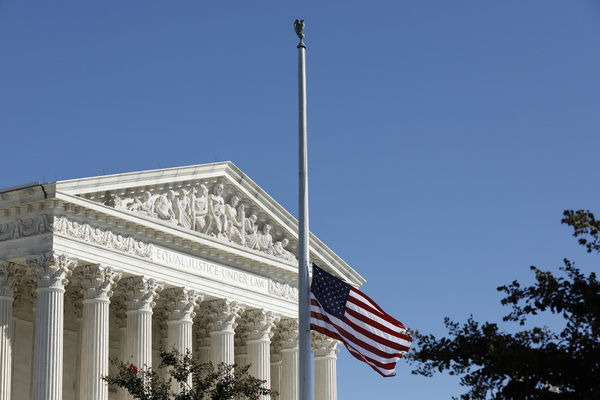
Sen. Roy Blunt, a Missouri Republican, summed up the historical precedent on "Face the Nation" Sunday, noting that "when the Senate and the president were in political agreement, no matter what was the election situation, the judges went on the court and other courts. When they weren't in agreement, they didn't."
"At what point should a president not take action because the next one might see things differently?" asks Dave Trabert, chief executive officer of the conservative Kansas Policy Institute. "Five months before the end of his term? Eight? Twelve?"
What about the fact that the Republican Senate in 2016 denied President Obama's high-court nominee Merrick Garland a hearing? How can it possibly be fair that in 2020, senators would go so far as to fast-track President Trump's nominee?
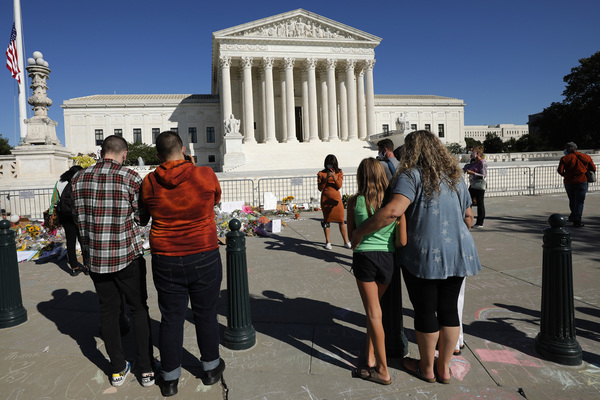
That's simple too: prerogative and preference. It's up to the Senate majority what the body takes up and what it doesn't. That happens to be the same principle that governs every state legislature and most other public bodies in America every day. It works, fabulously. And yes, it's fair, utterly.
The alternative is to ask our Republican senators to stop being Republican, check their beliefs at the door and bend to the will of the Senate's elected minority. Should we ask the same of Democrats in the House? In what universe is that the doctrine of governance?
Moreover, if a senator believes that a Supreme Court nominee would do subtle or substantial damage to the Constitution, wouldn't he or she not only have the right but the obligation to stand in the way? Are senators required to violate their consciences in order to fulfill someone else's misguided notion of fairness? Or to adhere to Emerson's "foolish consistency," which is "the hobgoblin of little minds, adored by little statesmen and philosophers and divines"?
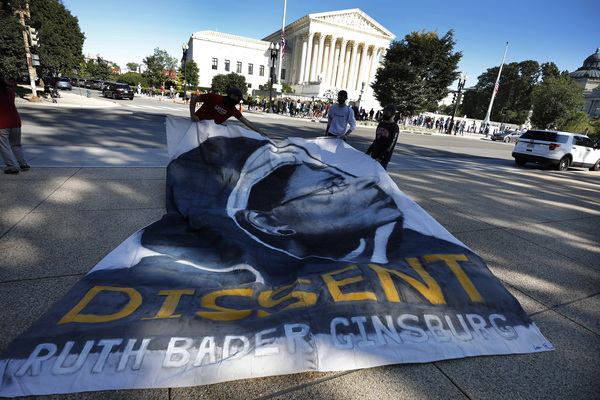
As for the Senate not having "done its job" in 2016 _ hogwash. By its very definition, the job of a deliberative body is to deliberate, not to be a rubber stamp or a slave to process. Not taking action on a nominee that one finds objectionable is, by default, taking action. It is rejecting that nominee. That, like it or not, is part and parcel of the Senate's job.
The people spoke in 2016. Their elected officials are speaking in 2020, perfectly in line with their job description, their beliefs and the Constitution.
There's absolutely nothing underhanded or unfair in that.