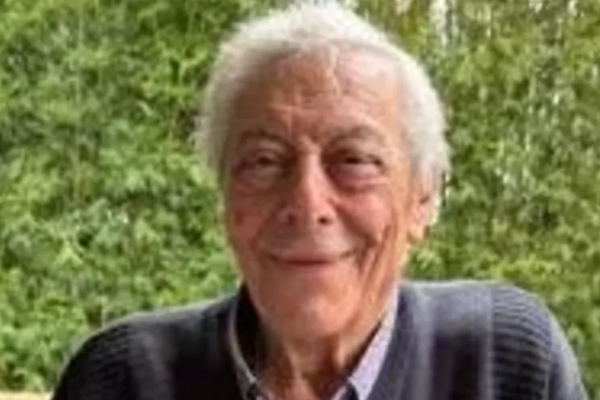
TEPOZTLAN, Mexico _ Juan Carlos Quiroz was working late in Mexico City on March 16, 2017, when his older sister called with distressing news. That afternoon, in the family's hometown a few hours away, their 71-year-old father had gone missing.
A retired middle-school principal who often had his nose in a newspaper, Albino Quiroz Sandoval had left home that afternoon to run an errand at a nearby hardware store.
Family members searched the cobblestone streets of Tepotzlan, a town of 14,000 set high in a mountain range in the state of Morelos, and eventually found his Toyota sedan nearly a mile from the store.
Going on the assumption that his father had been kidnapped, Juan Carlos set out the next morning to file a missing person's report _ a process that took 12 hours and required him to visit four separate government offices.
That same day, police sent a lone officer from the state capital of Cuernavaca to investigate, but she left after finding no leads. As the hours passed and nobody called demanding ransom, it became clear Albino had not been kidnapped.
The story might have ended there: another unsolved disappearance in a nation where more than 40,000 people are registered as missing and the homicide rate this year is at a record high, with more than 31,000 killings.
Rampant impunity prevails in Mexico despite a 2016 overhaul of the justice system aimed at winning more convictions. At least in the short term, the sweeping changes appear to have only made it harder to prosecute crimes, as new due-process requirements are routinely violated by under-equipped forensic agents, poorly trained prosecutors and bribe-taking police officers.
Just 5% of killings in Mexico end in a conviction. The obstacles are especially daunting in Morelos, where in 2018 the conviction rate was less than 1%.
Juan Carlos and his family quickly realized that they were up against not only whoever was responsible for Albino's disappearance _ but also their own government.
Many families _ especially those with less education or fewer resources _ would have given up. But Albino, who rarely missed a day of work in his 48 years as an educator, had imbued each of his four children with a strong moral compass and devotion to the truth.
He gave Juan Carlos a copy of "The Odyssey" when he was just 8 years old and watched proudly as his son left to study at a prep school in Mexico City at 15, earned a master's degree in international relations at Johns Hopkins University at 31 and eventually became an energy analyst for the Mexican government.
And so Juan Carlos put his pain aside and launched his own probe.
"I realized that it wasn't my job to grieve," he said recently. "I had to look for answers, or I wasn't going to get any."