VERACRUZ, Mexico _ Sixteen years ago, Mexico embarked on a monumental campaign to elevate living standards for its working-class masses.
The government teamed with private developers to launch the largest residential construction boom in Latin American history. Global investors _ the World Bank, big foundations, Wall Street firms _ poured billions of dollars into the effort.
Vast housing tracts sprang up across cow pastures, farms and old haciendas. From 2001 to 2012, an estimated 20 million people _ one-sixth of Mexico's population _ left cities, shantytowns and rural ranchos for the promise of a better life.

It was a Levittown moment for Mexico _ a test of the increasingly prosperous nation's first-world ambitions. But Mexico fell disastrously short of creating that orderly suburbia.
The program has devolved into a slow-motion social and financial catastrophe, inflicting daily hardships and hazards on millions in troubled developments across the country, a Los Angeles Times investigation has found.
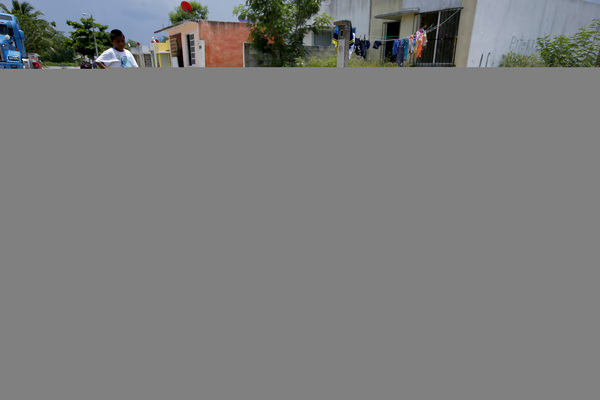
Homeowners toting buckets scrounge for water delivered by trucks. Gutters run with raw sewage from burst pipes. Streets sink, sidewalks crumble, and broken-down water treatment plants rust. In some developments, blackouts hit for days at a time.

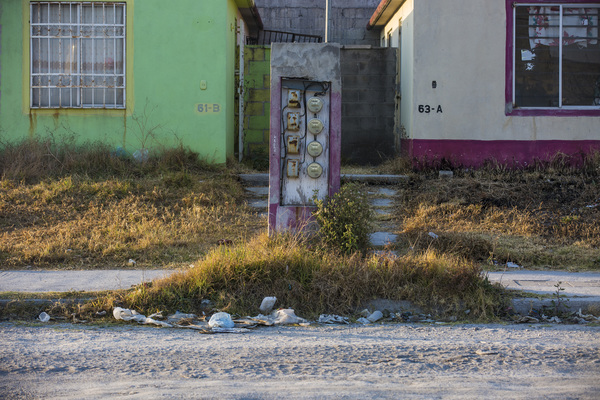
Inside many homes, roofs leak, walls crack and electrical systems short circuit, blowing out appliances and in some cases sparking fires that send families fleeing.
The program cost more than $100 billion, and some investors and construction executives reaped enormous profits, hailing themselves as "nation builders" as they joined the ranks of Mexico's richest citizens.
Meanwhile, the factory workers, small-business owners, retirees and civil servants who bought the homes got stuck with complex loans featuring mortgage payments that rose even as their neighborhoods deteriorated into slums.
The Times visited 50 of the affordable-housing developments from Tijuana to the Gulf of Mexico. It also reviewed thousands of pages of government and industry documents, and interviewed hundreds of homeowners, municipal leaders, housing experts, civil engineers, construction workers and government officials.
The program, plagued by poor planning, corruption and a lack of oversight from the start, has reached crisis levels amid government indifference and impunity. Authorities have rarely investigated widespread allegations of fraud. And developers in some cases have tried to obstruct homeowners' efforts to get problems fixed.
The American housing crisis and recession a decade ago also were marked by regulatory failures, and the U.S. economy eventually recovered. But the crisis in Mexico has been deepening.
Conditions at the developments vary widely. While some meet basic standards, rapid decay is evident at developments in or near every major city: Failed water systems. Unfinished electrical grids, wastewater systems and other infrastructure. Parks and schools that were promised but never materialized.
Many developments were built far from employment centers on marginal land _ wetlands, riverbanks and unstable hillsides _ with scarce access to water. Local officials rewrote zoning laws and approved developments with little or no review.
Developers downsized homes _ building about 1 million one-bedroom units as small as 325 square feet, which is smaller than a typical two-car garage in the U.S. Many families of six, seven or more live in these postage-stamp dwellings, sleeping in laundry nooks and hallways.

Builders have all but abandoned hundreds of developments without completing infrastructure, resulting in a patchwork of public services.
In developments without working streetlights, youngsters wield flashlights to navigate pitch-black streets. In those without trash-hauling, people burn garbage in vacant lots to deter rats.
Tree stumps are placed in open manholes to alert children to the hazards of poorly maintained streets. Residents of water-parched neighborhoods lock the lids of rooftop cisterns to keep thieves from siphoning water.
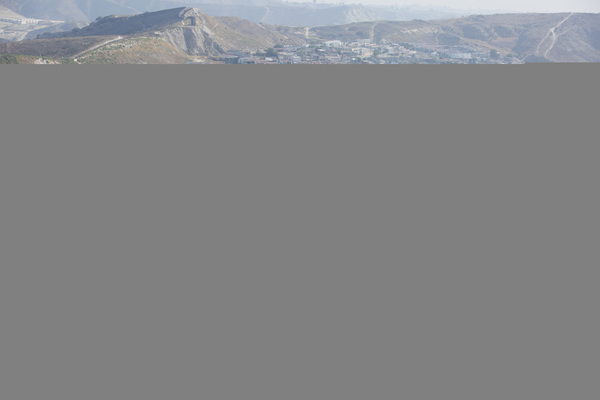
The unfinished developments blight cities across the country. An estimated 300,000 people live in more than 40 incomplete tracts in the fast-growing Baja California cities of Tijuana and Ensenada.
In Mexico state, which surrounds Mexico City, developers have completed only 36 of the 235 developments started between 2005 and 2012, leaving 200,000 to 500,000 people in limbo, according to state records.
"It was a world of corruption," said Alberto Uribe, the mayor of Tlajomulco, a suburb of Guadalajara. His predecessors in the city approved developments where the well water has run low for an estimated 300,000 people, he said. Water is now rationed, and many families receive water only every other day.

Much of the flimsy construction remains vulnerable to harsh weather.
In September, hundreds of homes and streets in poorly graded developments flooded in Mexico state. Hundreds of homes in Ciudad Juarez have flooded so often that they are going to be torn down. In the Cabo San Lucas area, an August storm toppled two four-story buildings that were built in separate affordable home developments only eight years ago.
Residents of blighted developments over the years have marched on city halls, blocked highways, pelted sales offices with rocks, held sales agents hostage, even set fire to model homes.
"Homeowners protest for running water. Police respond with punches," read a headline in June about police breaking up a freeway blockade at a development in the state of Veracruz.
Hundreds of thousands of people have walked away from their homes, allowing squatters and gangs to take over many neighborhoods.
Stay or go, many homeowners are saddled with mortgages tied to an inflation index. Because monthly payments _ typically about 25 percent of a worker's salary _ are deducted from paychecks, the only way for many Mexicans to escape the rising debt is to quit their jobs and work in the underground economy.
The homeowner unrest has been largely ineffective; authorities have failed to hold anyone accountable for the problems.
Tens of millions of dollars' worth of construction bonds intended to make repairs and finish infrastructure remain unused or unaccounted for. There have been no congressional hearings or fact-finding commissions in Mexico.
However, the U.S. Securities and Exchange Commission in March accused Homex, once Mexico's biggest developer, of reporting "fake" sales of 100,000 homes, which inflated revenues by $3.3 billion. It is believed to be the largest fraud in Mexican history.

The SEC eventually settled with Homex, without assessing a fine, and filed similar civil charges against former Homex executives. Those remain pending. (Homex declined to comment on the SEC allegations.)
Mexico's National Banking and Securities Commission assessed Homex a $1.2 million fine. There's no evidence that Mexican authorities are investigating any criminal wrongdoing.
Instead, local prosecutors have pursued cases against activists who accuse developers of fraud and of shortchanging homeowners to boost profits.
The country's most prominent homeowner leader has been imprisoned for two years without trial on armed robbery charges that several judges have thrown out. Other homeowner leaders seeking repairs to their developments say they have been harassed, threatened, even bribed to drop their protests.
Bearing the brunt are millions of first-time homeowners _ people such as Lucia Lopez, 66.
When she toured the model homes at a new development called Colinas de Santa Fe, near the historic port city of Veracruz, she appreciated the modern touches: sparkling faucets, running water, electrical outlets in every room.
Lopez had raised her children in a shack with dirt floors and a roof made of palm fronds. She sold flowers and cleaned floors for a living. She had no savings.
Yet under the housing program, she was able to buy a tiny, two-bedroom house for $20,000 with a government-backed loan.
Her excitement was short-lived. The roof of her new home leaked. Frequent power outages plunged the neighborhood into darkness. Faucets went dry for days at a time.
Today, Lopez sidesteps crumbling asphalt and puddles of sewage when she goes out to shop or visit neighbors. She holds a lemon to her nose to block the stench from the broken-down water treatment plant.
One day last year she fell into an uncovered manhole. She managed to brace herself against the sides and climb out, badly bruised and covered in excrement.
"I cry every time I think about it," she said. "If I had drowned, they would have never found me."