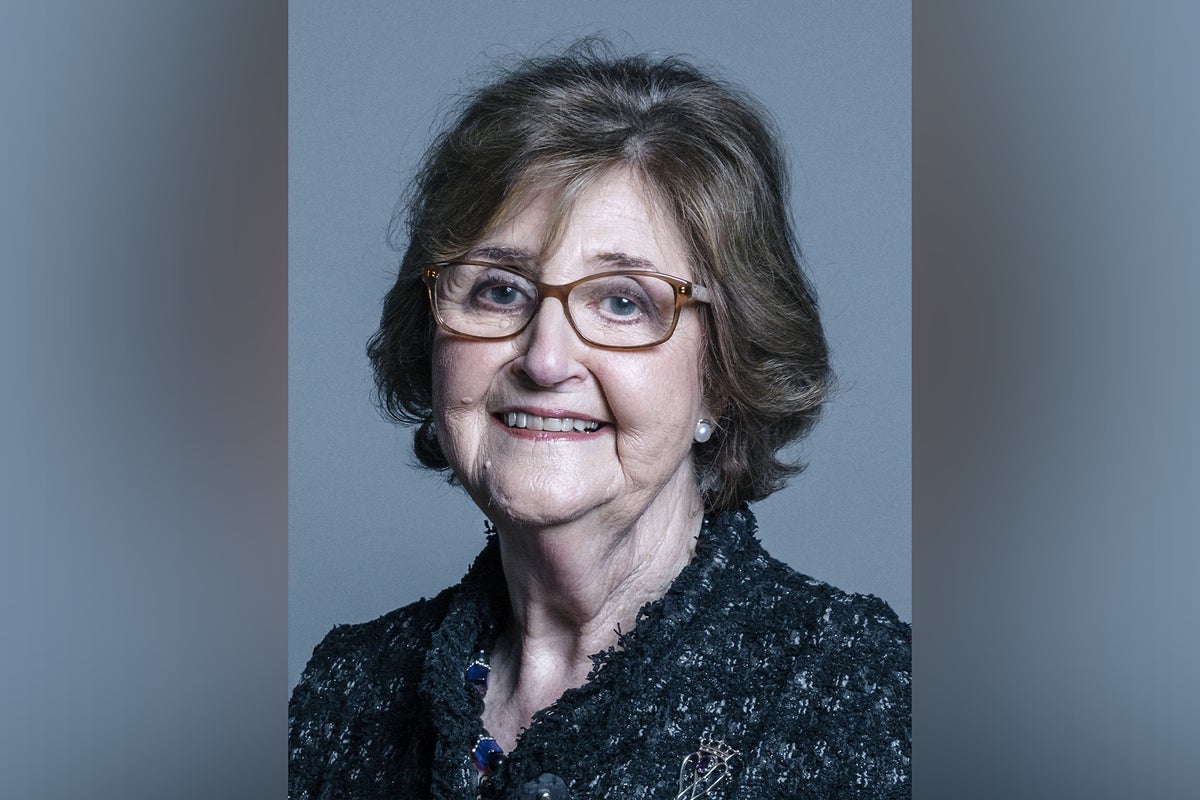
Meta Ramsay once described the delicate art of recruiting an agent to spy for British intelligence.
As, at the time, one of the few women operatives in MI6, she had to be particularly careful, if her potential target was male, that the approach was not mistaken for romantic advances.
“You’re cultivating someone and you haven’t got to the stage – because you want to recruit them – of asking them that, yet you’re making all the signs of being very happy, and wanting to see him and have lunch and all these things,” she told The Sunday Herald in 2024.
“That’s an absolute killer if you don’t get it right. You must never let a man make a move thinking that it will be welcomed and then it’s not, because then you’ve really ruined your own project.”
It was a rare insight into a 22-year career in the shadowy world of intelligence which saw her rise to become the most senior female officer in MI6 – and reportedly put her in the running for the top job, which would have made her the first woman “C”.
As the head of the agency’s Helsinki station in the 1980s she was involved in one of the most audacious operations of the Cold War, extracting the KGB double agent Oleg Gordievsky from the Soviet Union from under the nose of the Russians.
After taking compulsory retirement at the age of 55, she embarked on a new career in politics, becoming foreign policy adviser to Labour leader John Smith, an old university friend, before entering the House of Lords and becoming a government minister under Tony Blair.
A lifelong socialist, she said her proudest achievement in office was helping to steer the 1998 Scotland Act – which established the Scottish Parliament – through the upper chamber.
Margaret Mildred “Meta” Ramsay was born on July 12 1936 in Glasgow into a solidly working class family – her father was an engineering pattern-maker, while her mother was the daughter of a Jewish refugee from Ukraine.
Determined that she should have a good education, her parents saved up so they could afford the £10-a-term fees to send her to Hutchesons’, a local private school where she won prizes for debating.
From there she won a place at Glasgow University, reading for a general degree covering the arts, languages, philosophy and science.
She quickly established herself as a star of the debating society, going on to win election as the first woman president of the Scottish Union of Students. As well as Mr Smith, her circle of friends included Donald Dewar, Scotland’s founding first minister.
After graduating, she moved into international student politics, joining the International Student Conference which had been set up in the early 1950s to counter the influence of the communist-controlled International Union of Students.
At that time, she was not yet working for British intelligence but it was on one of her trips abroad, she said, that she was first approached by someone from the Ministry of Defence.
From there it was “a natural progression” to enter the Foreign Office and then MI6 – or the Secret Intelligence Service (SIS), as it is more formally known.
“I wanted to achieve something positive and helpful to the fight and the cause of democratic socialism,” she later recalled.
The service she joined was still very male-dominated – at times much to her frustration. She recalled one occasion in the 1970s when she came across a woman she thought would make a “perfect” agent runner, only to be told by the head of recruitment that they were not looking for women.
“He said: ‘It would take an extraordinary gel’ – and it was the ‘gel’ that got to me – ‘to be an intelligence officer’. And I said: ‘Well, it would take an extraordinary boy, too, but it hasn’t stopped you recruiting males,” she told the Financial Times.
While she believed the passing of the Equal Opportunities and Sex Discrimination Act in 1975 led to some improvement, she was just one of two women to break into the senior ranks of MI6 in the 1970s and 1980s.
It could also be extremely dangerous. “If you get yourself into a difficult situation, the adrenalin goes so hard your training kicks in, it prepares you,” she remembered.
The exfiltration of Mr Gordievsky from the Soviet Union was only specific MI6 operation she ever discussed publicly – and then only after Mr Gordievsky had himself gone public with details of his extraordinary escape.
For more than a decade, the senior KGB officer had been Western intelligence’s most important source on the Soviet Union, revealing to shocked Western leaders just how close the two sides had come to nuclear war.
But by 1985 his identity had been compromised by a CIA double agent who was selling secrets to the Russians, and an elaborate plan was activated to spirit him to safety.
The final leg involved smuggling him across the border into Finland in the boot of an MI6 officer’s car – his wife changing their baby’s nappies while they waited at the frontier to distract the border guards’ sniffer dogs.
As station chief in Helsinki, Ms Ramsay was closely involved – although she remained reticent about her own role. She was, however, hugely admiring of Mr Gordievsky who she came to know well.
“There was nothing quite like Oleg,” she recalled. “He’s unique.”
After retiring from MI6 in 1991, she worked briefly as a consultant for a private security company, Control Risks, before her old university friend, Mr Smith, came calling and she took up the position of his foreign policy adviser.
Following his unexpected death in 1994, she was nominated for a life peerage by his successor, Mr Blair, entering the Lords in 1996 as Baroness Ramsay of Cartvale.
When Labour swept to power in the general election the following year, she was made a minister in the Lords, speaking for the Foreign Office, Scottish Office and the Department of Culture, Media and Sport.
After leaving government she was made a deputy Lords speaker in 2002, and in 2005 she was appointed to the parliamentary Intelligence and Security Committee which oversees MI6, MI5 and GCHQ.
Having been on MI6’s Iraq desk at the time on the first Gulf War in 1991, she was an outspoken supporter of Mr Blair decision to invade Iraq in 2003, even after it was shown that Saddam Hussein no longer had weapons of mass destruction.
A strong supporter of Israel – she was chair of Labour Friends of Israel in the Lords – she backed a two-state solution to the conflict in the Middle East and was strongly critical of Benjamin Netanyahu.
Lady Ramsay never married or had a family – something she put down to the demands of her secret life, saying: “There just wasn’t the right man at the right time, or if the time was right, the men weren’t.”