When I first heard that the families of the three runaway-to-Syria London schoolgirls were blaming their school and the Met police for not warning them of the danger I felt much as I did when I watched a young Muslim rioter on TV in suburban Paris say: “I’m going to go on rioting until the interior minister resigns.”
How very French, I thought. You’re more integrated into your adopted country than you seem to realise. It was the same instinct that prompted me to think that parents blaming other people for what is – to a greater or lesser degree – a failure of parenting is a very British response to family problems in 2015. Victimhood is all the rage.
It’s not hard to feel sorry for the families of Shamima Begum, Amira Abase (both 15) and 16-year-old Kadiza Sultana, some of whom gave testimony to MPs on Tuesday after belatedly discovering the teenage trio had secretly plotted to join the brutal Isis mini-state and got hold of £1,000 in cash (stolen family jewellery?) to get there via Turkey.
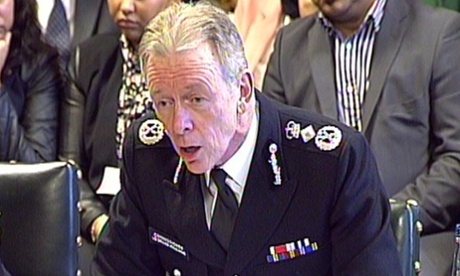
It’s also easy to be cross with the police (are you naïve or incompetent? – as Margaret Hodge would ask a laggard banker) for sending warning letters home via the very teenagers their warning was all about. It won’t happen again.
But you can see how it happened, just as you can wonder why parents needed a letter from Sir Bernard Hogan-Howe’s finest before asking pertinent questions of their impressionable kids.
Mohammed Emwazi, better known as Jihadi John, and supporters like Cage have also tried to blame MI5 harassment for his descent into sustained and murderous rage. Psychologically and chronologically, the story just doesn’t stack up. In different times, Emwazi’s “beautiful and gentle” side might have saved him, but he was groomed and led astray. Bad luck. No amnesty for him now.
Yet Hogan-Howe offered an amnesty to the three missing girls. So have others. Context matters here, social, political and personal. At the all-too-familiar personal level normal teenagers are rebellious; it’s necessary and healthy if they are to become functioning adults. Rebellion can be mild – staying out late, ducking out of school, getting drunk or a tattoo – or serious. Joining a gang, getting into hard drugs and/or prostitution, petty crime too, are among those that most frighten parents. Not being able to find work – the subject of Tuesday’s Guardian lead story – is another.
Rebelling from parental control, which might have been – we don’t know – quite strong in this case – to join a bunch of misogynistic foreign puritans high on violence – is an extreme example.
But embracing a demanding religion is another option open to the kids. As with gangs and the rest, it usually passes as they get older, more experienced and sensible. There are always casualties.
Social context matters too. Emancipated Muslim women – Saira Khan writes sensibly on this in Tuesday’s Mail – report that even liberal Pakistan-raised parents like her own expect their daughters to marry someone “suitable” whom they know. It stimulates further rebellion in some and also the habits of secrecy and a double life: submissive at home, outgoing outside it, she suggests. Remember those cheeky selfies found on the phones of the Bethnal Green runaways?
As for the wider politics, the west gets blamed for much of the turmoil in the Middle East and certainly deserves some of it. But, as with Hogan-Howe’s failings, it’s a bit more complicated.
In the seventh century the region largely rejected the newly official religion of its Roman masters in favour of Islam. It only fell to European dominance after rotting for centuries under the Muslim Ottoman caliphate.
What is certain is that all this has happened before and often. The bloody divisions within Islam (almost from day one) are mirrored in Christianity. The destruction of monuments to older civilisations at Nimrud and elsewhere – at the instigation of old men is a very old habit. Norfolk churches with arrow holes in their roofs bear witness to the iconoclastic impulses of Oliver (not Thomas) Cromwell’s zealous troops shooting down wooden angels. They killed their share of prisoners too.
Which is why we need to keep it in perspective. About 700 Muslim Brits are reported to have gone to join jihad, rather more from neighbouring countries like France where “secular equality under the republic” (not multiculturalism and war in Iraq) has been the norm. How many went for idealistic reasons to fight fascism in the Spanish civil war of 1936-39? About 4,000 (plus some for the other side), according to revised estimates here.
Idealistic they may have been – communism was the god that failed the 1930s – but that was a savage war too. As George Orwell’s timeless classic, Homage to Catalonia (in which he pays rare tribute to the Manchester Guardian’s reporting), records, the defeated republicans had a nasty side - Stalin’s – as well as an ineffectual one.
So what is happening now inside the Isis enclave will pass and some form of normality will be restored. By whom – Kurds, Sunnis, the Iraqi army from Baghdad? – we don’t yet know. But puritanical regimes seething with self-righteous violence rarely last for long, though they can do a lot of harm and bequeath more.
Remind me again, what happened to Maximilien Robbespierre, mastermind of the French Revolutionary terror of 1793?
Ah yes, the guillotine. Which leads me to a final contextual point. Wednesday’s latest chapter on Isis beheadings – plus reports of a 12-year-old boy being deployed to shoot a victim on propaganda videotape – is meant to upset us – and it does. But it will pass, as will Isis, more readily if we neither panic, nor over-react.
So i haven’t lost any bets lately asking pals when they think someone was last beheaded by a member state of the EU. The answer is in France on 10 September 1977. Yes, that’s 1977, not 1877. Read the details here and fresh ironies will become apparent. Food for thought on all sides and, as Tim Lott writes in the Guardian, we must strive against groupthink. Orwell would have wanted us to strive.