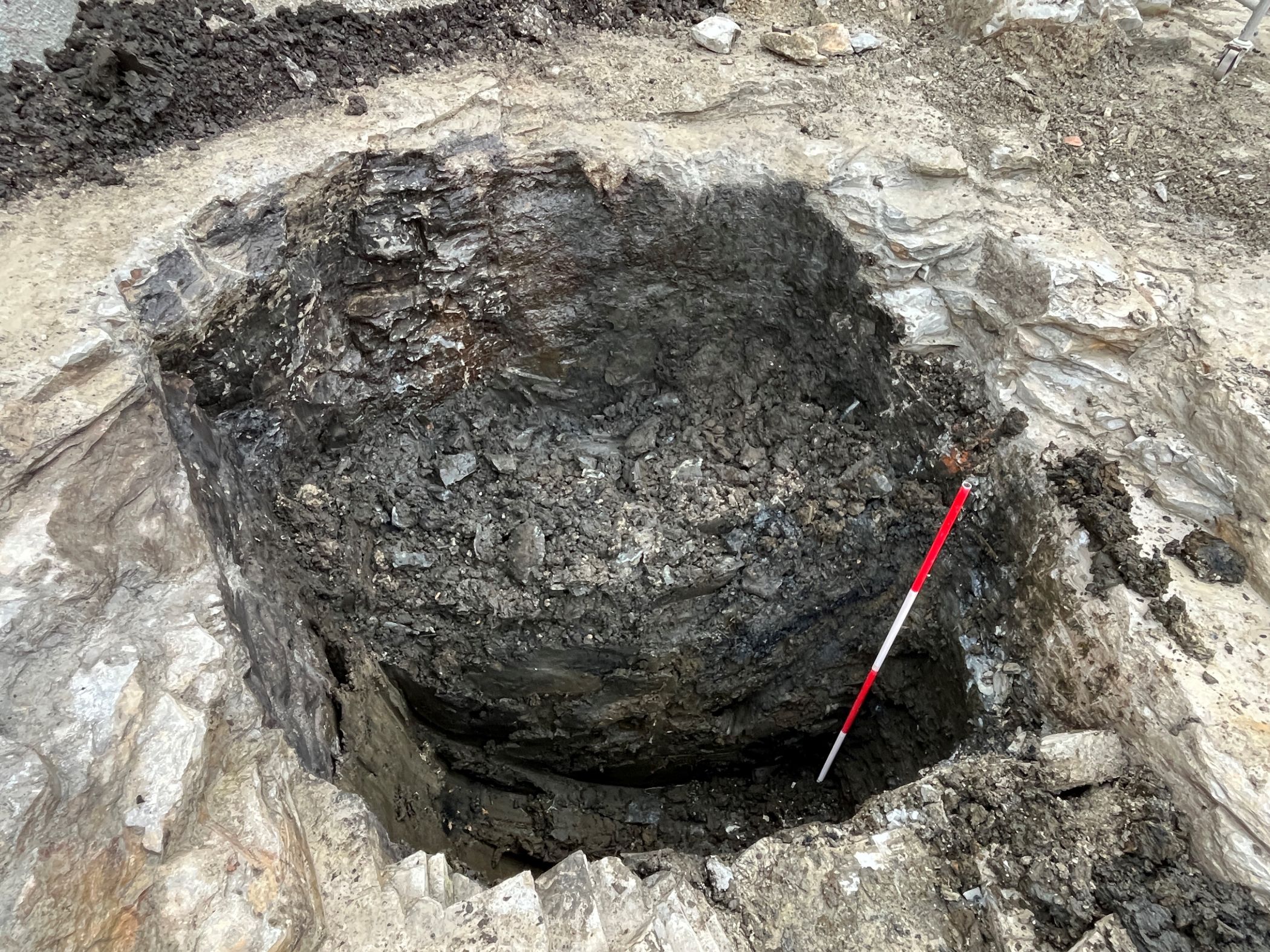
Archaeologists have found an exceptionally well-preserved medieval merchant’s notebook inside a 14th-century latrine in Germany, a discovery that could shed light on everyday life over 800 years ago.
The notebook, made of leather, wood and wax, was discovered in North Rhine-Westphalia (NRW) and is being restored at the German municipal organisation Landschaftsverband Westfalen-Lippe (LWL) in Münster.
“This is the only such find in all of NRW,” LWL archaeologist Barbara Rüschoff-Parzinger said.
“It sounds strange, but for us archaeologists, the latrine is almost always a treasure pit... But in no case is the complete book preserved as an archaeological find, as with us,” Dr Rüschoff-Parzinger said.
Archaeologists hope that once the text is decoded, it could provide valuable insights into the everyday life and living conditions in medieval Germany.
“It will possibly be possible to make the text, which is difficult to decipher, completely readable again with high-tech methods,” Dr Rüschoff-Parzinger says.
Preliminary analysis suggests that the book belonged to a medieval merchant from the German city of Paderborn.
“Merchants were educated people: they could both read and write, unlike most people,” city archaeologist Sveva Gai said.
But how the notebook ended up in the latrine remains unclear.
"It could have fallen in there due to a mishap," Dr Gai suspects.
The notebook consists of ten pages, of which eight pages are double-sided, and the first and last pages were filled only one-sided with wax.
It was found tied and packed with a small leather cover.
"Packed in a wet lump of earth – and initially quite inconspicuous – the object only cleared up during cleaning in our restoration workshop in Münster,” LWL restorer Susanne Bretzel said.
“And in fact, even after so many centuries in the latrine, the find in the ground still had a rather unpleasant smell,” she said.
The book’s leather cover was found in a surprisingly good state of preservation, partly due to the soil and humidity conditions of the region, researchers say.
The soil, in particular, has provided the best conditions for the text written in wax to remain intact for 700 to 800 years, the restorer says.
"I only had to clean the outside of the book, because the insides were so tightly together that there was no dirt there. The wood has not warped either, so that the wax is still intact and the writing itself is easy to read,” she explained.
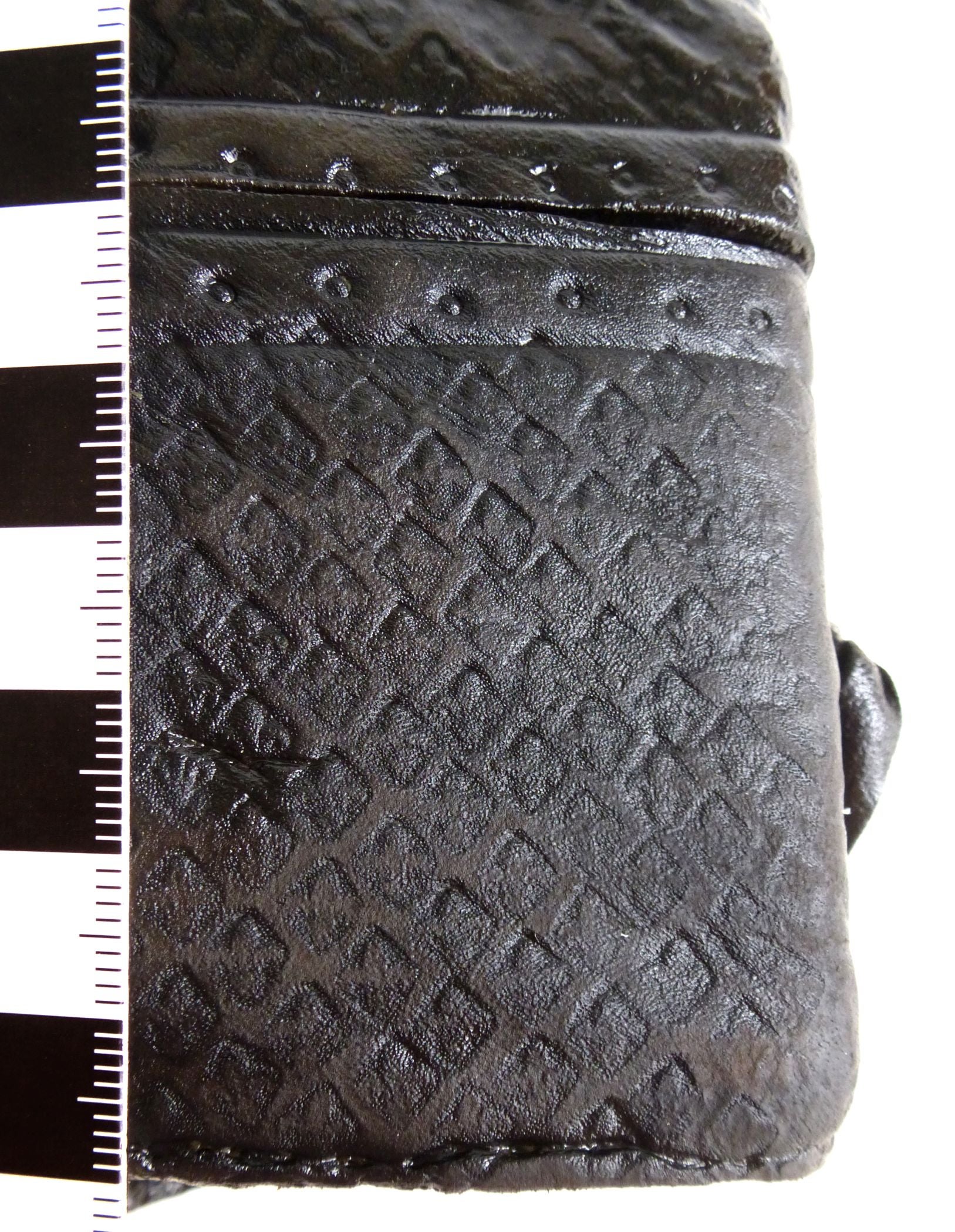
The surface of the leather cover was found decorated with an embossed pattern with small rows of lilies.
Future analysis of the pattern could reveal the origins of the piece right down to naming where it was produced, researchers say.
The special motif already hints that the book was an “upscale project” as lilies were a symbol of purity, royal power and divine favour in the Middle Ages.
"The Latin language – also a reference to an owner from the upper class – and the characters of the italics allow this book to be used in the period from the 13th to the end of the 14th century,” Dr Gai said.
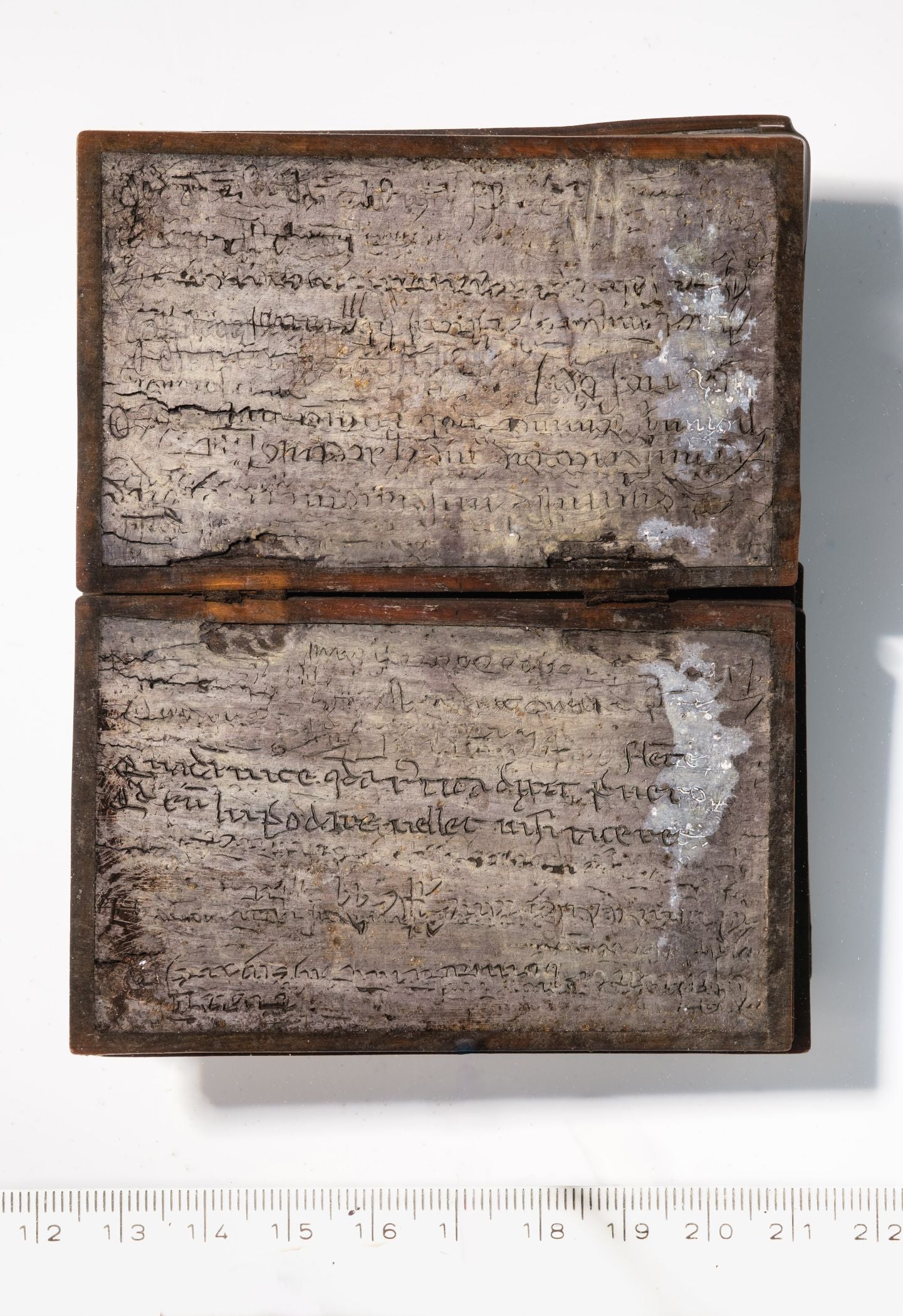
With transcription of the text likely to “take some time”, archaeologists are first focused on analysis of the materials used.
“Especially wood and wax must be examined in detail with natural scientific methods,” archaeologist Sandra Peternek said.
Scientists also hope to look at the book’s relation to other artefacts found during excavations at the medieval latrine.
"The remains of the silk fabric from the latrine were partly torn into rectangular rags, some extremely finely woven and decorated. Perhaps this was toilet paper, after the once noble fabric was to be thrown away,” Dr Gai said.
"As soon as this latrine can be assigned to a certain plot, one could try by means of archival research to identify the inhabitants of the plot,” she said.