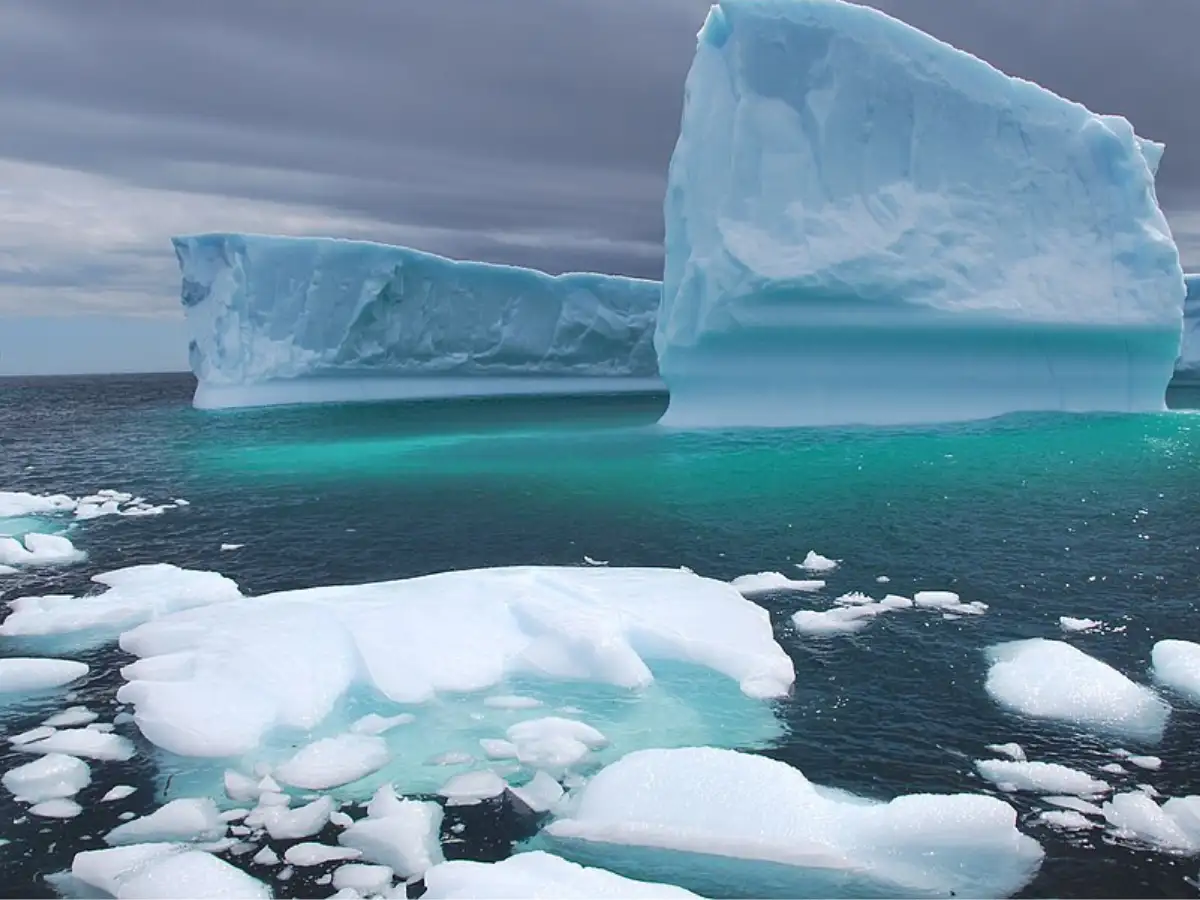
Climate change usually means trouble, but a new discovery is flipping the script for some marine life. Melting icebergs in the Arctic are spreading rocks across the sea floor, and those rocks are slowly becoming new footholds for corals, sponges, and other deep-sea creatures, according to a study published in Nature.
For Americans who mostly follow climate news through doom-and-gloom headlines, this one is different. It’s not that climate change is suddenly good news. It’s that the planet’s response to it is more complicated and sometimes more amazing than we give it credit for.
How icebergs turned into rock delivery trucks
The story begins with glaciers in north-east Greenland and parts of the Russian Arctic. These glaciers have been losing their stability since the early 2000s and are now breaking apart, or calving, much faster than before.
As pieces of these glaciers break off and float into the ocean as icebergs, they carry vast amounts of rock and debris that were scooped up as the glaciers ground their way across land. When these icebergs eventually melt in places like the Fram Strait, the patch of ocean between Greenland and the Norwegian archipelago of Svalbard, they deposit that rocky load directly onto the sea floor.
The team behind this discovery got a stroke of luck in 2021. While aboard the German research icebreaker Polarstern, helicopter pilots spotted what looked like a brand new island poking out of the sea ice. It was an iceberg loaded with dark rock and sediment that made it look almost black from above, according to biologist Melanie Bergmann of the Alfred Wegener Institute.
Forty years of weather logs solve the case
Here is the part that feels like a detective story. The researchers needed evidence that this dumping of rock was actually increasing over time, and the answer lay in an unlikely place: routine weather observations.