Picture this: Men in their late 40s and 50s suddenly start waking up in the middle of the night shivering, their T-shirts soaked in sweat. They cannot get back to sleep. They have bouts of dizziness. At random moments, their hearts pound. Their joints hurt — not ache, but hurt. No amount of daily hydration stops the headaches that appear out of nowhere. The skin on their penises is so raw that even sitting down is painful; sex is out of the question. Also, sometimes they have stabbing pains in their crotches.
Their workouts and healthy-eating regimens are no longer sufficient. They’re gaining weight and losing muscle mass. They have bloating, heartburn and other digestive issues. Their hair falls out. Their gums bleed. Their skin feels tight and itchy. There are days when they feel mild electric shocks when turning their heads. They’re irritable with their loved ones, can’t concentrate, and can’t seem to keep thoughts in their heads. They have panic attacks.
Not all men have these symptoms, or have them all at once. But they all have some of them, and it’s messing up their lives and their jobs and their marriages. They tell this to their GP, who shrugs and says, “Many men have trouble with this transition. Try not to worry too much; it’s a natural phase of life,” and then asks if they’ve tried meditation.
Want more from culture than just the latest trend? The Swell highlights art made to last.
Sign up here
Sounds bad, right? Of course, it would never actually go like that. Men would report the painful joints and the crotch stabbing and the doctor would be like, say no more, chief. We’ll get this figured out ASAP. The millions of women who actually experience these symptoms in perimenopause aren’t so lucky, though. Roughly one in four can access treatment, and that often takes finding a doctor who, first, recognizes the symptoms as part of perimenopause and, second, takes it seriously.
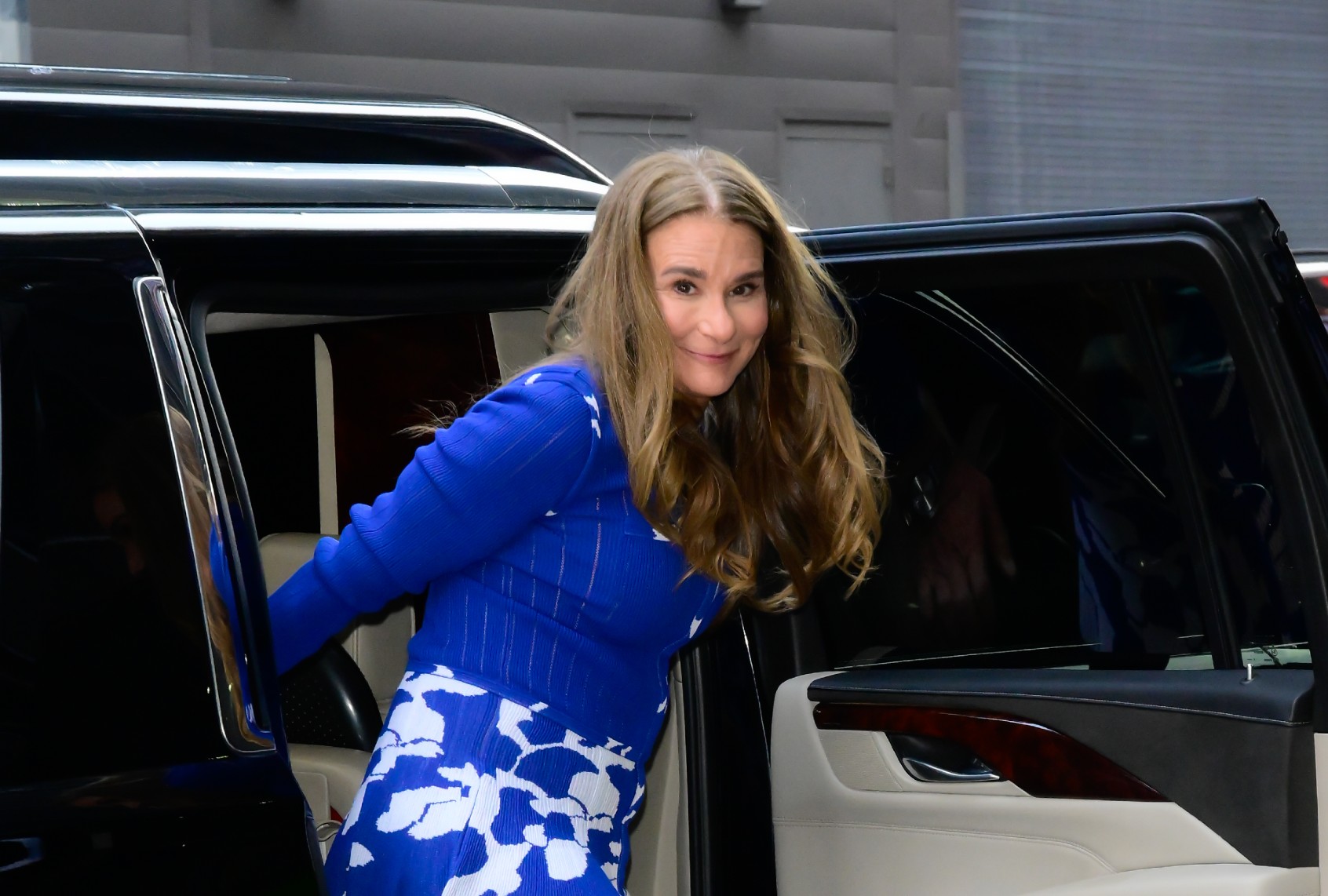
Even the wealthiest, health-savviest women with no systemic barriers to care face this void of information, as Melinda French Gates wrote in a June 4 guest opinion column in The New York Times titled “Women, we deserve better than this.” “When I first noticed signs I was starting menopause, it fell to me to raise the topic with my doctor and push for options to manage my symptoms,” she writes. “Even though I have access to excellent health care, and have spent the past 25 years as a women’s health advocate, there was a lot I simply didn’t know.” If even a high-profile billionaire global philanthropist is in the dark, what does that mean for the billions of women with less than a fraction of her resources?
The $215 million dollars French Gates recently announced she was donating to women’s-health causes includes her first significant investment in funding for menopause research. In the vastly underfunded space of women’s healthcare, which captures less than 6% of private investment, almost 90% of capital goes toward funding initiatives for reproductive health, maternal care and cancers that primarily affect women. Meanwhile, global policy initiatives on aging like the United Nations’ Decade of Healthy Ageing overlook menopause entirely. Her conclusion: “We need a menopause revolution in this country.”
She’s not the only woman calling for one; doctors, researchers, and advocates regularly use this term to describe the paradigm shift necessary to ensure fewer women suffer. Oprah Winfrey titled her 2025 TV special featuring Halle Berry and Naomi Watts “The Menopause Revolution.” Numerous books on perimenopause and menopause have some version of the phrase as their title. Physician Kate Muir, author of “How To Have a Magnificent Midlife Crisis,” writes on her Substack that, with one billion women currently somewhere in perimenopause, menopause and post-menopause, “we need a cultural and health revolution.”
They’re all correct, with one important caveat: Before there can be a revolution, there has to be a reckoning: not only with how little we know about perimenopause and menopause but with why. French Gates references living in a time “when women’s rights are under attack” and where women themselves are “treated as an afterthought,” but never mentions sexism, or gendered ageism, or medical misogyny. Without naming the disregard and even contempt for women who continue to exist once their reproductive years have passed, can the revolution any of these women want happen?
“Perimenopause made me realize how much sexism and ageism women internalize, including women who aren’t straight,” says Bryn, 49, who says she was terrified to broach the subject with her partner, who is 8 years younger. “My view of myself as sexual and active and up for whatever changed so fast, and all I could think of was, What if I’m done?” Leah, 54, remembers bringing up the subject of menopause to her mother and aunts, to their horror. “Huge faux pas,” she says. “For my mother, me acknowledging menopause was like writing I no longer have value to men across my forehead.”
The various medical terms used over the course of women’s reproductive lives haven’t done much to make menopause sound less depressing. Diagnostic terms like “ovarian failure,” “vaginal atrophy” and “senile vagina” paint a picture of the menopausal woman as a crumbling, useless vessel. But the terminology has seen some refreshing in recent years, with the blanket term “genitourinary syndrome” now encompassing a range of challenges to physical, urinary, and sexual function.
So the needle can move. In the 2010s, conversations about women, chronic illness, and the pain gap reached critical mass. A combination of medical research and cultural impact, including celebrities like Selena Gomez and Lady Gaga disclosing their conditions, shone a spotlight on these discussions, made the topic sticky, and kept it alive in the news cycle.
In a 2024 interview, Dr. Elizabeth Comen, a breast-cancer oncologist and author of “All In Her Head: The Truth and Lies Early Medicine Told Us About Women’s Bodies and Why It Matters Today,” pointed out that unraveling medicine’s treatment of women as smaller, defective men requires time and effort. For a long time, she said, “The idea of women’s health was really just gynecology in my mind. I was a product of the reductionist thinking that I’m trying to fight against now — that we’re not just ‘our boobs and our tubes.’”
And the reduction of women to their reproductive organs has made seeing the full picture of menopause difficult. “The word menopause has never been used in a cardiology textbook, ever,” said cardiologist Dr. Jayne Morgan on a recent episode of the podcast Menopunks. Identifying her own perimenopause symptoms, she recalls, was a medical guessing game. She reported her vertigo to a neurologist, described her joint pain to a rheumatologist, complained of bloating to her primary-care physician. They all had guesses: maybe arthritis, maybe lactose intolerance, maybe stress. “Not a single person used the word ‘perimenopause,’” she says. “I’m still seeing my OB-GYN for my regular visits; they’re not bringing it up. Nobody ever said, ‘Did you know you’re about to have 50 or 60 different symptoms?’ You’re doing this reset on your life, like I guess this is just how I have to live now.”
Along with medical misogyny, decades of misinformation and disinformation about the safety of hormone therapy in perimenopause have constructed a cone of silence among both women and doctors. Many doctors still default to an anti-HRT position, usually mentioning the cancer risks of estrogen replacement but not the long-term risks of estrogen loss, which also include cancer as well as heart disease, osteoporosis and suicide. (In the United States, women 45–54 have the highest risk of suicide across age groups.)
A menopause reckoning requires a range of perspectives, a spectrum of platforms, and, perhaps most important, a willingness to be uncomfortable — both with practical details and with the indictment of institutional sexism and ageism. “People have shut down when I talk about menopause as a taboo,” says Leah. “It’s not just that they’re like, Ugh, why are you telling me about dried-up old women? They feel like I’m holding them personally responsible for something that’s cultural. And that’s why I feel like I have to keep talking about it.”
For Menopunks creator Alicia J. Rose, the reckoning requires an easily accessible pipeline of information; she reports that Planned Parenthood of Columbia-Willamette recently came on board to sponsor the podcast: “They got in touch with us and were like, ‘Did you know that Planned Parenthood nationally offers midlife care?’ I was like, ‘You prescribe HRT?’ They’re like, ‘Of course!’ Did you know that? I didn’t!”
Our Summer sale is on!
Support Salon’s bold journalism. Annual members save 58%The reckoning requires more women like Melinda French Gates talking about why it took their own struggles getting information and resources to open their eyes to the problem of silence and shame; it involves the investment of more than one wealthy woman. It requires as many stories as statistics to draw attention to how debilitating menopause is for some women.
Gloria Steinem famously said that if men could give birth, abortion would be a sacrament. And if men experienced perimenopause, even a few years in which no specialized clinics were built, no public-service announcements were plastered on buses, and no medical residents were properly trained would be considered a grave injustice. Without confronting that, even the biggest investments in women’s midlife care won’t lead to systemic change. The women speaking up for a new approach to menopause aren’t blowing smoke. But without asking why women are abandoned when they’re no longer the source of boners and babies, they can’t ignite the revolution we need.
[CORRECTION: A previous version of this article included a statement about an upcoming Kate Spade documentary that is still in development and has not released any details as to its specific subject matter, treatment or scope. The line has been removed. Salon regrets this error.]