In the 1940s and 50s, art was revolutionised by a generation of young Americans who redefined what painting could be and, in doing so, laid the ground for today's art of installation, performance and space invasion. Jackson Pollock, Barnett Newman and Mark Rothko painted on such a scale and with such an enriched idea of space that they left the traditional idea of painting behind.
At least, that's the official story. Pollock's champion, the critic Clement Greenberg, contrasted the new "American-type painting" with European "easel painting". He conjured an image of European artists sitting in their studios doing fiddly depictions of nature while American artists acted in the wide open space of nature itself.
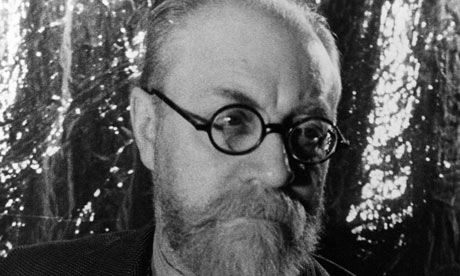
But a new book from Taschen reveals how wrong this is. It is a large format boxed set about the late works of Henri Matisse, and the first thing you realise looking through it is that Greenberg was talking baloney. In the early 1930s, Matisse created his murals of The Dance for the Barnes Foundation in Philadelphia – and gave America a model for exactly the kind of liberated painting Pollock and the rest would become famous for. Then in the 40s and 50s he himself, in the south of France, decisively broke away from the easel tradition, indeed from conventional painting, by concentrating on large-scale paper cut outs.
Today, Matisse's cut-outs don't look any less modern or revolutionary than what was happening in America. On the contrary, he looks more contemporary for one key reason: he was removing or relaxing the physical touch of the artist, replacing gesture with cutting out, creating shapes in colour without the grandiose male authorship a Picasso, or a Pollock, insisted on.
The next generation of abstract artists was visibly influenced by Matisse: think of the work of Ellsworth Kelly. Matisse anticipated minimalist abstraction and through that looked forward to today. He is the true father of this century's best art.