Masters of the Universe defend use of US bailout cash
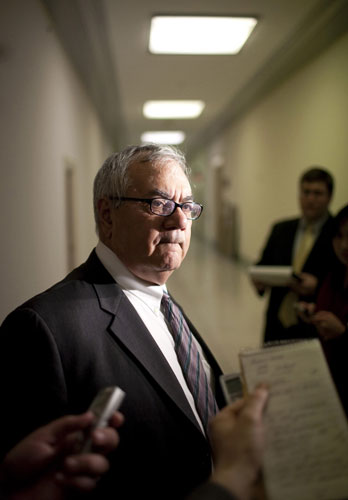
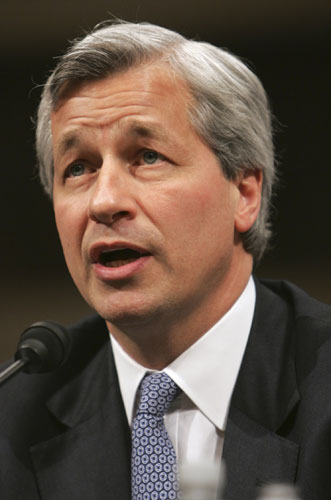
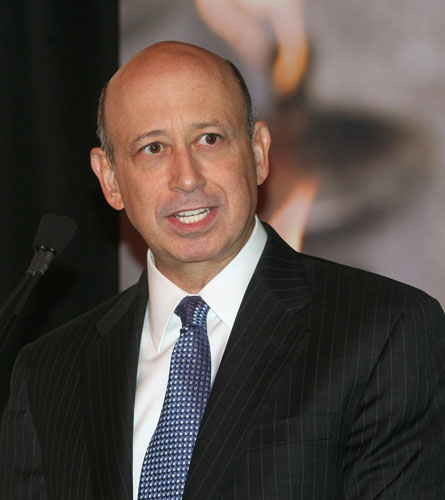
Barney Frank, who chairs the US House financial services committee, has a reputation as one of Washington's wittiest and brightest politicians. However, the 68-year old Democrat has also faced criticism for accepting campaign donations from Fannie Mae. “Here’s the dilemma: there is in the country a great deal of anger about the financial institutions, including those represented here,” Frank told bank bosses during a committee hearing todayPhotograph: Joshua Roberts/ReutersJamie Dimon is one of a select band of Wall Street chief executives who have held onto their jobs through the financial crisis. He has run JP Morgan Chase since 2004, and is credited with pulling the bank out of the subprime mortgage securitisation market before it blew up. Last March, when rivals feared for their futures, he swooped to take control of Bear Stearns for a bargain price. Dimon, aged 52, is also a defender of bank bonuses, claiming it it “unfair” to lump all bankers together. "Today's economic crisis is a result of a lot of mistakes by a lot of people," Dimon told lawmakers during testimony before a congressional committee todayPhotograph: Lawrence Jackson/APAnother Wall Street survivor, Lloyd Blankfein took over at Goldman Sachs after Henry Paulson was appointed treasury secretary in 2006. One of the better-paid people on Wall Street, the 54-year old has reportedly taken home $231m over the last eight years. Goldman itself had profited from the early days of the credit crunch after betting that the US property market would crash, but by the end of 2008 it was suffering large losses and had to drop its investment bank status. “It is abundantly clear that we are here amidst broad public anger at our industry.” Blankfein said before a congressional committee today. “Many people believe — and, in many cases, justifiably so — that Wall Street lost sight of its larger public obligations”Photograph: David Karp/AP
Ken Lewis has run Bank of America since 2001 and worked for the company for almost four decades. The 61-year old Lewis is a multiple winner of the Banker of the Year award. But he has been criticised for his purchase of Merrill Lynch last autumn, once the full scale of Merrill's losses later emerged. He ousted Merrill's boss, John Thain, last month. "We urged the Merrill Lynch executives that were involved...to reduce the bonuses substantially, particularly at the top,” he said during a congressional hearing todayPhotograph: Paul Sancya/AP'Mack the Knife' has run Morgan Stanley since 2005, after a four-year break from the company following a boardroom battle. John Mack has a reputation for an aggressive management style – including shouting matches on the trading floor – a passion for cost-cutting, and a hefty pay packet. However, the 64-year-old has waived his bonus for 2008, a year in which Morgan Stanley received $10bn from the US government. “We love what we do. If you gave us no bonus, we would still be here,” he told lawmakers during testimony before a US congressional committee todayPhotograph: Mary Altaffer/APVikram Pandit, 52, is the youngest banker at the hearing. Seen as intelligent and polite, he took over at Citigroup at the end of 2007 following the ousting of Chuck Prince. Pandit is now taking steps to dismantle the Citi empire, undoing his predecessor's work and cutting tens of thousands of jobs. Born in India, Pandit studied electrical engineering in the US and later ran a successful hedge fund. “I get the new reality and I will make sure Citi gets it as well," he said while testifying before Congress todayPhotograph: Peter Morgan/ReutersBob Kelly grew up in Nova Scotia, and later studied for his MBA in London. He took over at Mellon Financial in 2006 – and quickly sold the firm to Bank of New York. Last month animal rights activists held a protest outside his home, calling on Bank of New York Mellon to sell its shareholding in Huntingdon Life Sciences. Kelly promised "a very good return on the investment for taxpayers" but said "we still have a long way to go" during a congressional hearing todayPhotograph: Brendan McDermid/ReutersRon Logue has run Boston-based State Street since 2004, after a long career at the money management firm. Last week he announced that executive pay at State Street was being slashed. In 2007, Logue's basic salary of $1m was swelled to over $20m by bonus paymentsPhotograph: Rex Features/Rex FeaturesAn active Republican, John Stumpf has worked for Wells Fargo for more than two decades and became chief executive in June 2007. He recently defended the company's policy of hosting events to recognise 'top performers' following criticism that this was a bad use of the $25bn that Wells Fargo received from the US government. “We have never been wasteful,” he said during testimony before Congress todayPhotograph: David T Foster III/AP
Sign up to read this article
Read news from 100’s of titles, curated specifically for you.