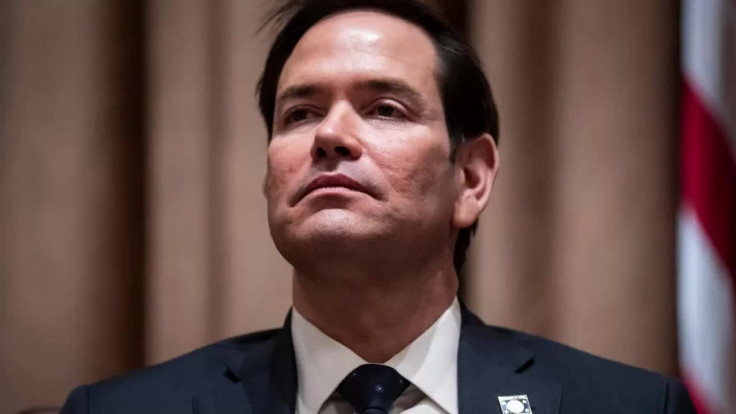
Secretary of State Marco Rubio announced on Thursday a new set of sanctions against the Cuban regime, this time targeting its military-industrial complex, its leader and a natural resources company ran by the state.
"These sanctions are part of the Trump Administration's comprehensive campaign to address the pressing national security threats posed by Cuba's communist regime and hold accountable the regime and those who provide it material or financial support," Rubio said in the announcement.
Concretely, the sanctions target Cuba's Grupo de Administracion Empresarial, or GAESA, which controls most of the country's economy and Rubio described as the "heart of Cuba's kleptocratic communist system." Ania Guillermina Lastres Morena, a senior member of the company's board of directors, has also been sanctioned.
The last sanction package targeted Moa Nickel, known as MNSA, and which operates the country's metals and mining sector. Rubio said its joint venture with Sherritt International Corporation "exploited Cuba's natural resources to benefit the regime at the expense of the Cuban people."
"It profits from assets that were originally expropriated by the Cuban regime from U.S. persons and corporations," he added.
Rubio also addressed relations with Cuba this week, saying at a press briefing that the status quo in the country is unacceptable and the U.S. would address it. He also said the country would give more aid to Cuba but distribute it through the church.
Axios also reported that the State Department recently began detailing personnel to the U.S. Southern Command in Miami in anticipation of potential hostilities with the country. The department is also increasing its disaster-preparedness supply center in South Florida.
The Senate rejected in late April an initiative that would prevent the Trump administration from taking military action against Cuba without congressional approval.
The vote was 51-47, with John Fetterman being the only Democrat to vote against the measure. Rand Paul and Susan Collins, in turn, were the Republicans who backed it.
Democratic Senator Tim Kaine, a lead sponsor of the resolution, claimed that ongoing measures, including efforts to block oil shipments to the island, are already a form of military action.
"If anyone were doing to the United States what we are doing to Cuba, we would definitely regard it as an act of war," he said. "My argument is that under the terms of the resolution, we are already engaged in hostilities with Cuba because we are using American force, primarily the Coast Guard, but other assets as well, to engage in a very devastating economic blockade of the nation," he added.
Republicans have consistently shut down such attempts by Democrats, especially after the Trump administration has conducted such actions in Venezuela and Iran.
There have been contacts between Washington and the Havana regime over the past months as the former looks to get the latter to implement economic and democratic reforms.
However, Cuban President Miguel Díaz-Canel said negotiations with the United States will not move forward unless Washington agrees to Havana's conditions.
"If the United States does not accept negotiating on Cuban terms, there is no negotiation," Díaz-Canel said in a televised interview recorded at Havana's Palace of the Revolution last week. He emphasized that dialogue must be built on "respect" for Cuba's political system, sovereignty, and independence, adding that "imposing does not allow negotiation."