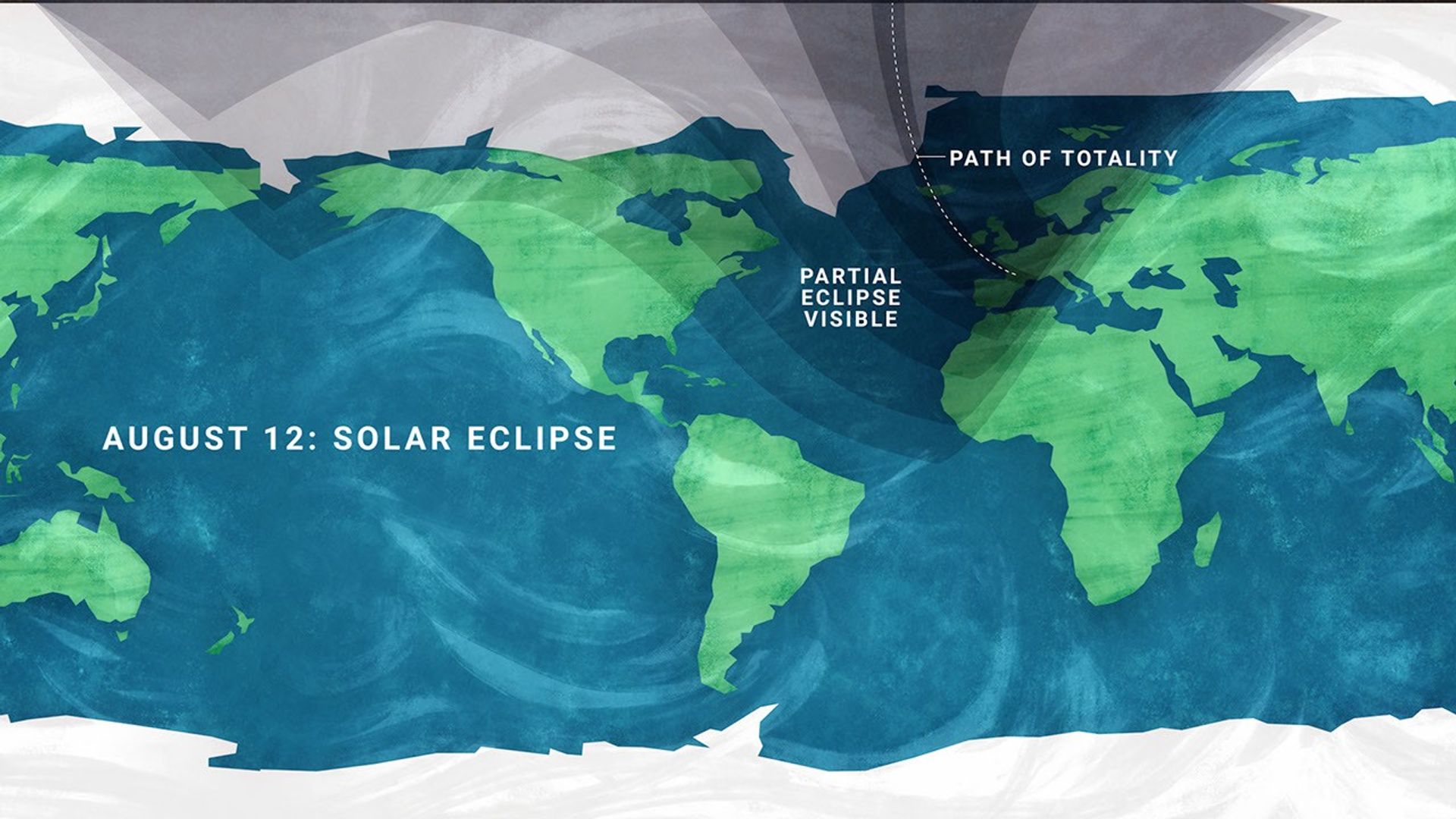
A total solar eclipse is expected over much of Europe today - but even parts of the U.S. will get to experience the sight with a partial eclipse along the East Coast.
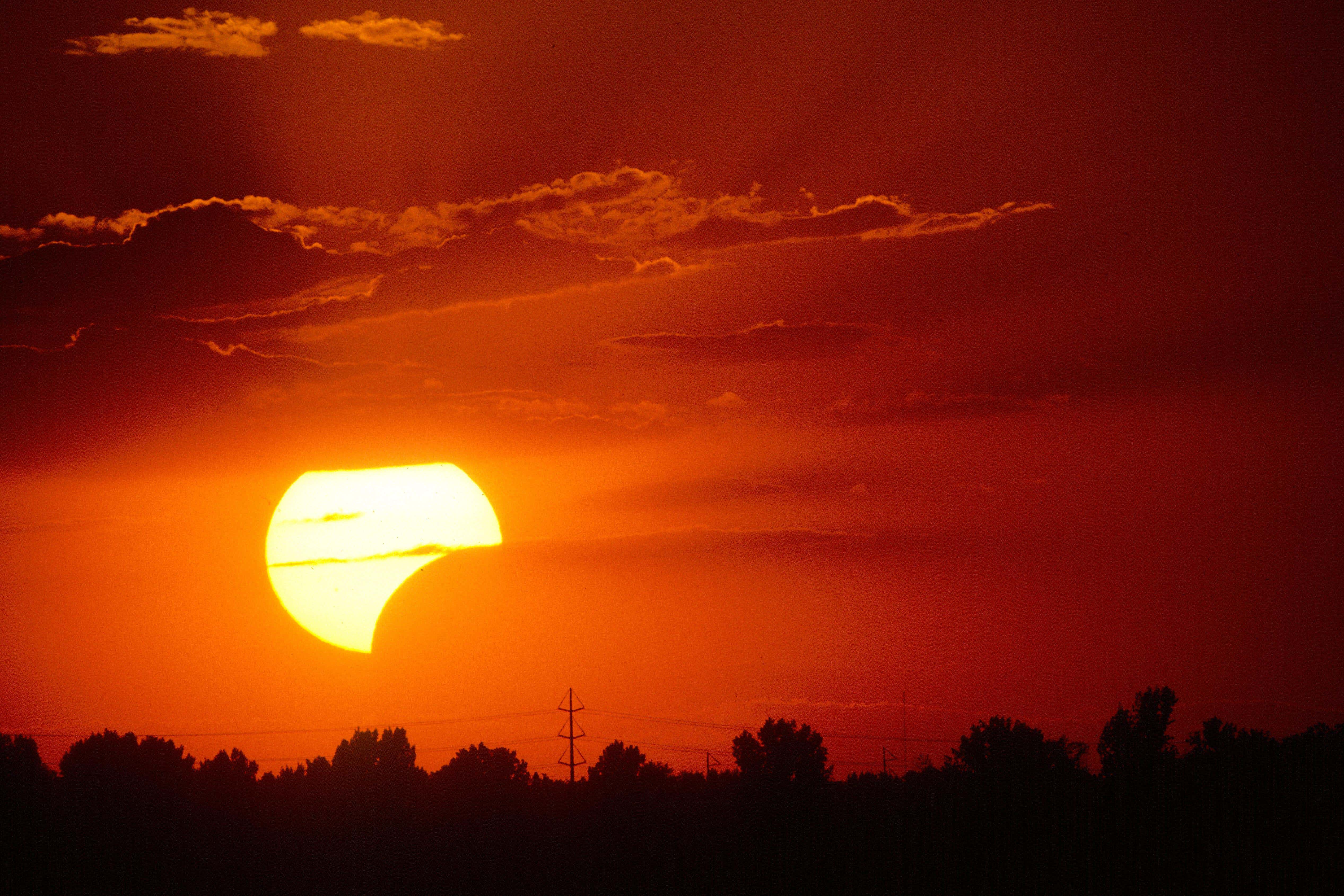
The phenomenon in the U.S. will look like a bite has been taken out of the sun by the moon. It will be visible across the northern U.S., with a viewing area stretching from Alaska to North Carolina.
Even though Americans aren’t getting the whole enchilada this time around, they’ll still want to take a gander — with the appropriate eyewear, of course. Without specialty glasses, viewing an eclipse can damage your eyes.
Americans better get a good look at today’s event because it will be a bit of a wait for the next one.
The next total solar eclipse in North America isn’t scheduled until March 30, 2033, and it will only be seen in Alaska, according to the National Solar Observatory.
After that, Americans will have to wait until August 23, 2044, for an eclipse that will also pass over Greenland and Canada.
On Wednesday, the eclipse is expected to peak at around 1:54 p.m. EDT, according to the National Aeronautics and Space Administration. The celestial spectacle will end at around 2:30 p.m.
A partial solar eclipse occurs when the moon passes between the sun and the Earth, but all three aren’t perfectly aligned.
“Only a part of the sun will appear to be covered, giving it a crescent shape. During a total or annular solar eclipse, people outside the area covered by the Moon’s inner shadow see a partial solar eclipse,” NASA says.
All solar eclipses occur when the sun, moon and Earth line up either fully or partially. This happens a couple of times a year around the world.
But whether the eclipse is total or partial, you shouldn’t be looking at it with only your eyes unless you want to risk permanent damage. Even sunglasses don’t offer full protection. Certified eclipse glasses are crucial any time any part of the sun is visible. These glasses are thousands of times darker than regular sunglasses.
Also, binoculars and telescopes are a no-go without a special solar filter.
“Do NOT look at the Sun through a camera lens, telescope, binoculars or any other optical device while wearing eclipse glasses or using a handheld solar viewer — the concentrated solar rays will burn through the filter and cause serious eye injury,” NASA warns.
An indirect viewing method that involves not directly looking at the sun can work, too.
Leaves on trees act as natural pinholes, projecting images of the eclipse onto the ground beneath them. There is also the classic pinhole-in-a-box trick that allows people to view the eclipse and is popular with schools.