
In 2025, a 60-year-old Spanish man, a lifelong resident of Castellón, Valencian Community, was told that he had brain cancer.
However, the real answer hiding inside his skull was something far more disturbing, and one that medical professionals could not diagnose until they took a closer look.
The man’s brain had become host to a living organism that was quietly burrowing into the tissue.
The baffling medical case was published in the journal Emerging Infectious Diseases in July 2026, with a complete analysis of the man’s condition and how to avoid it.
“This is a great reminder that not everything on a scan is what it first appears to be,” one netizen commented after reading the article.
A brain MRI revealed the scary truth behind a 60-year-old man’s persistent headaches

In 2025, the patient sought treatment after struggling with sudden, progressive headaches for two weeks.
An initial scan revealed “ill-defined intra-axial lesions with marked vasogenic edema” in the brain, according to the study, which led the doctors to believe he had metastatic cancer in his brain.
Metastasis is the spread of cancer from its site of origin to other parts of the body.

However, extensive oncologic testing, including a whole-body screening, did not show any primary malignancy, leaving the medical team perplexed.
Then, the doctors performed an MRI of the man’s brain, which finally helped them make the correct diagnosis.
The man had suffered from a parasitic infection caused by pork tapeworm larvae.

After confirming the diagnosis, the medical team successfully treated the man with appropriate medication without complications.
As the story of the Spanish man’s diagnosis spread on the internet, many viewers cautioned others about consuming pork from unreliable sources.


“Must’ve been something he ate,” one said. “Cook your food, people.”
“You’ve got to cook those pork chops to well done,” another person commented.
However, there is a twist: the infection the man contracted was not transmitted through raw or undercooked pork.
The doctors believe the man might have contracted the disease more than a decade ago

Pork tapeworm, or Taenia solium, is contracted by both humans and pigs in a cyclical form.
Pigs ingest the parasite’s eggs via human feces-contaminated water or food. The eggs hatch in the animal’s intestine and develop into larvae or cysticerci.
If a person consumes raw or undercooked pork from an infected pig, the young tapeworm attaches to the small intestine, matures into an adult, and causes an infection called taeniasis. Segments of the ring-like bodies of adult tapeworms are occasionally passed out with stool.

Symptoms of taeniasis include mild abdominal pain, diarrhea, or constipation.
A person can also directly ingest the tapeworm eggs, even if they do not eat pork, via human feces-contaminated water or food, because of poor hand hygiene, in which case the eggs hatch inside the human’s intestine.
The young tapeworms then travel to various parts of the body, triggering an infection called cysticercosis. It becomes neurocysticercosis (NCC) when it reaches the central nervous system and the brain, which is what happened to the 60-year-old patient.
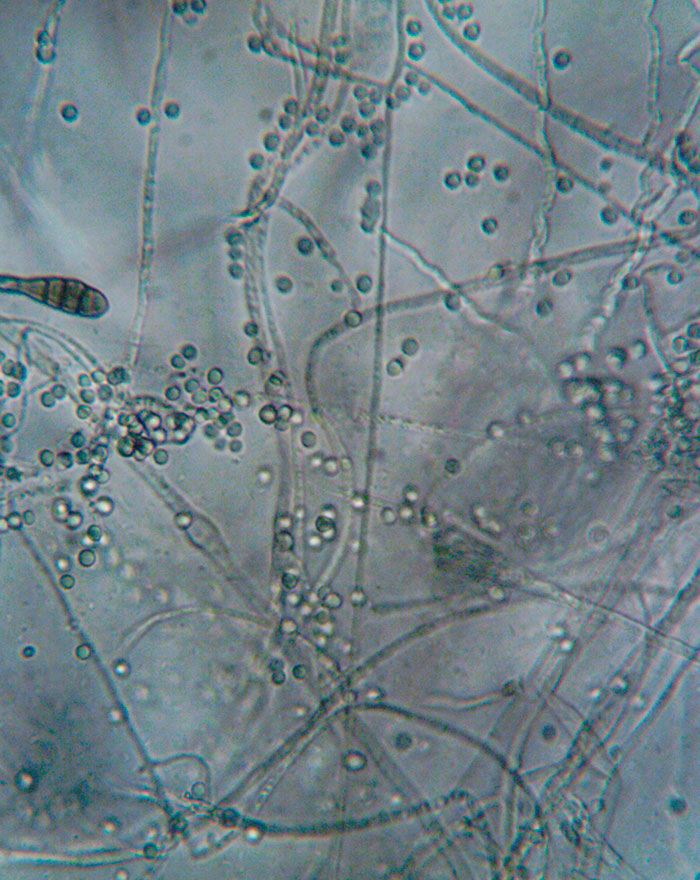
According to the World Health Organization (WHO), NCC “mainly affects the health and livelihoods of subsistence farming communities in developing countries of Africa, Asia, and Latin America.”
Given that the patient and his household members lacked any travel history to Taenia-endemic regions, the doctors concluded that he may have contracted the parasite while working as a construction laborer a decade ago.

“In that occupation, he frequently shared meals and communal sanitary facilities with migrant coworkers from regions endemic for Taenia solium tapeworms, presenting a potential setting for cryptic fecal–oral transmission,” the study said.
People who have contracted NCC remain asymptomatic for a long time before showing signs such as severe headache, blindness, convulsions, and epileptic seizures. It can be fatal if not treated.
NCC is a leading cause of epilepsy in underdeveloped regions

While NCC is found worldwide, it has rarely occurred in Europe or the United States in recent years.
The Emerging Infectious Diseases study said that in the US, “domestically acquired cases account for <2% of all NCC diagnoses, usually linked to close contact with a household employee or family member from an endemic area.”
In Western Europe, there had been only 18 confirmed cases of NCC between 1990 and 2011.
However, the picture looks very different in the regions where the disease is prevalent.

According to the WHO, NCC is the most frequent preventable cause of epilepsy worldwide and is estimated to cause 30% of all epilepsy cases in countries where the parasite is endemic.
In some underprivileged and underdeveloped communities, the association between NCC and epilepsy goes up to 70%.
In 2015, the WHO Foodborne Disease Burden Epidemiology Reference Group identified Taenia solium as a leading cause of foodborne disease fatalities, resulting in 2.8 million disability-adjusted life-years (DALYs).

In 2026, the total number of people suffering from NCC, symptomatic and asymptomatic, was estimated to be around 4.36 million.
Studies have found that although 70% of patients with NCC-triggered epilepsy can lead a normal life if treated correctly and in time, the lack of awareness, sanitation, and infrastructure often presents an obstacle.
“Scans beat symptoms.” The internet reacted to a 60-year-old man’s pork tapeworm infection getting misdiagnosed