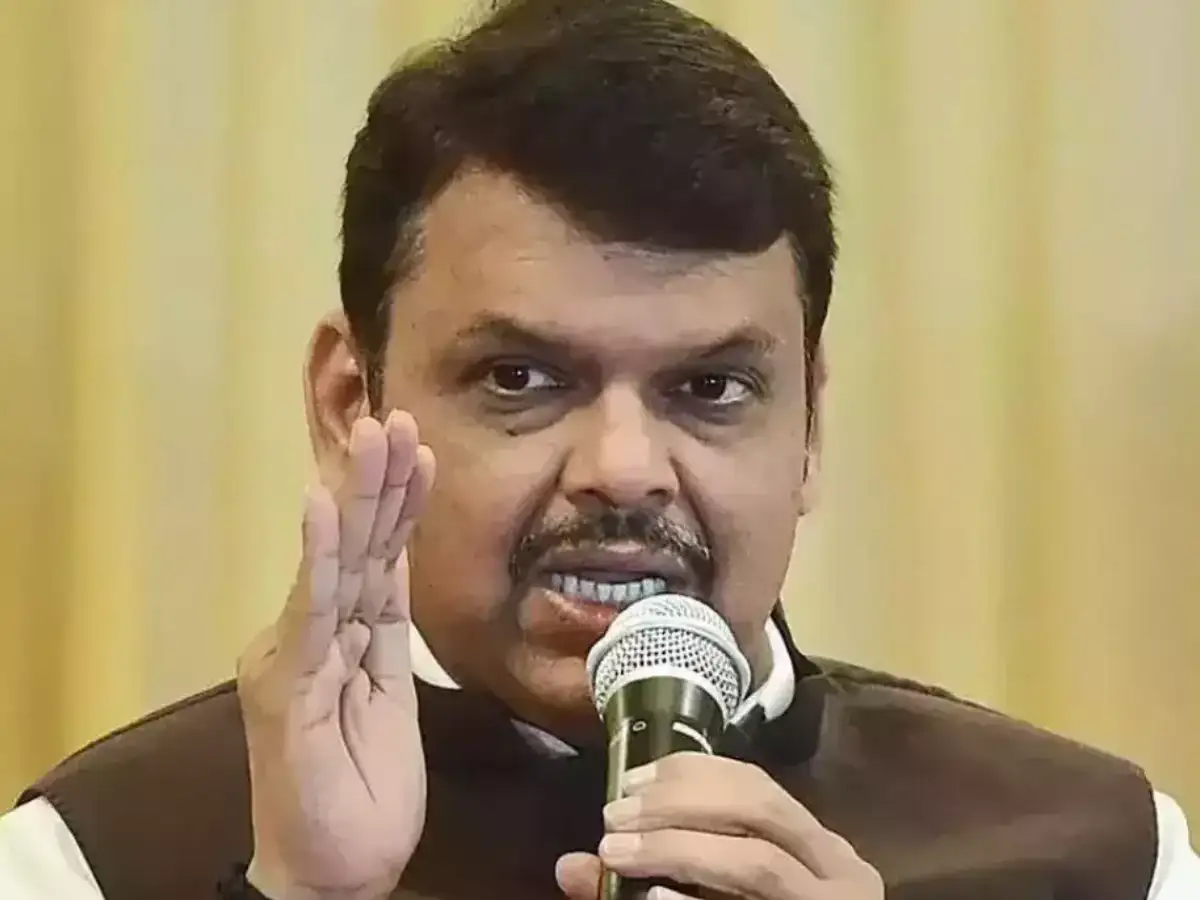
Mumbai: Maharashtra Chief Minister Devendra Fadnavis on Wednesday strongly defended the Mumbai-Pune Expressway 'Missing Link' project after a recent landslide near the route, saying initial challenges are inevitable in major infrastructure works.
Replying to a discussion in the state assembly on heavy rains and flood management, Fadnavis accused the project's critics of spreading falsehoods on TV and social media through hired trolls, and warned those defaming Maharashtra with misinformation would not be spared.
The project includes India's widest cable-stayed bridge and massive viaducts capable of withstanding wind speeds of up to 170 kmph, the CM noted, adding that because of it, accidents in the ghat section have come down and traffic movement has become much smoother.
Read More: Water discharge begins from Khadakwasla dam in Pune after heavy rainfall in catchment areas
Drawing a comparison with the construction of the Konkan Railway, he rejected criticism of the 'Missing Link' project and said the government would implement additional safety measures suggested by experts while asserting that the engineering achievement should not be judged by a single incident.
Traffic on the Mumbai-Pune Expressway's Missing Link section remained shut for more than 18 hours following a landslide triggered by overnight heavy rains on Monday.
The Missing Link, which opened to traffic on May 1, is a 13.3-km alignment on the busy 94-km-long expressway featuring two twin tunnels and a cable-stayed bridge. It bypasses the winding Lonavala-Khandala ghat section and is designed to reduce the travel distance by 5.7 km and cut journey time between Mumbai and Pune by 20 to 30 minutes.
Fadnavis said, "It was because the Mahayuti government had the courage that we built the connecting (missing) link. Some people started saying that such a road should never have been built because landslides can occur. If governments start thinking like that, no major infrastructure project can ever be undertaken."
Drawing a parallel with the Konkan Railway, he said when it was proposed, many people had said it could never be built. They argued that landslides would make it impossible. But there was one person, Madhu Dandavate (regarded as the "architect" of the Konkan Railway), who had the courage to say that it would be built, he noted.
Read More: Maharashtra rains: Amit Shah dials CM Fadnavis, assures all help
"After the Konkan Railway became operational, landslides occurred almost every year for nearly 15 years. Every year, we learned from those incidents, carried out corrective works and gradually ensured such landslides stopped. If we had allowed fear to dictate our decisions, then the Konkan Railway would never have come into existence," he said.
Fadnavis said the proposal for the Missing Link had been prepared during the previous government, but his government decided to execute it after detailed consultations with experts.
"We discussed the project with experts. They told us it was technically possible and that it could be executed safely. We went ahead and completed it. This is not merely a connecting road. It is an engineering marvel," he asserted.
"I congratulate all the engineers, contractors and every person associated with the project who created such engineering benchmarks," the CM said.
Referring to the recent landslide, Fadnavis said the government immediately consulted experts from the Indian Institute of Technology (IIT), who recommended additional protective measures.
"The IIT experts have identified a few more vulnerable locations where wire mesh and slope protection should be installed. We will implement these recommendations so that such an incident is not repeated in future," he said.
Fadnavis claimed the project has significantly improved safety in the ghat section.
"Because of the connecting ink, accidents in the ghat section have come down substantially and traffic movement has become much safer and smoother," he said.
The chief minister also accused critics of deliberately spreading misinformation about the project.
"The very next day after the connecting link was opened, some people appeared on television and started making false claims. They are habitual liars. Some people on social media are also spreading misleading information after taking money. Those who insult Maharashtra by deliberately spreading lies will not be spared," he said.
On Mumbai's flood management, Fadnavis said his government has prepared a comprehensive Rs 13,000-crore Integrated Flood Control Plan.
"It has been submitted to the central government and, after approval, implementation will begin. Once completed, around 370 flood hotspots across Mumbai will be eliminated," he informed.
Explaining the challenge, Fadnavis said Mumbai's drainage system has to discharge rainwater into the sea, but high tides often prevent stormwater from flowing out.
"When extremely heavy rainfall coincides with high tide, water cannot flow into the sea. This integrated plan is designed to address this challenge precisely and provide long-term relief to Mumbaikars from recurring flooding," he said.
He also said the government has tightened monitoring of desilting works, imposed heavy penalties on contractors for lapses and introduced greater transparency in civic contracts and project execution.
The government's objective is not merely to respond to floods after they occur but to build permanent infrastructure that would minimise disruption during extreme weather events, the CM said.