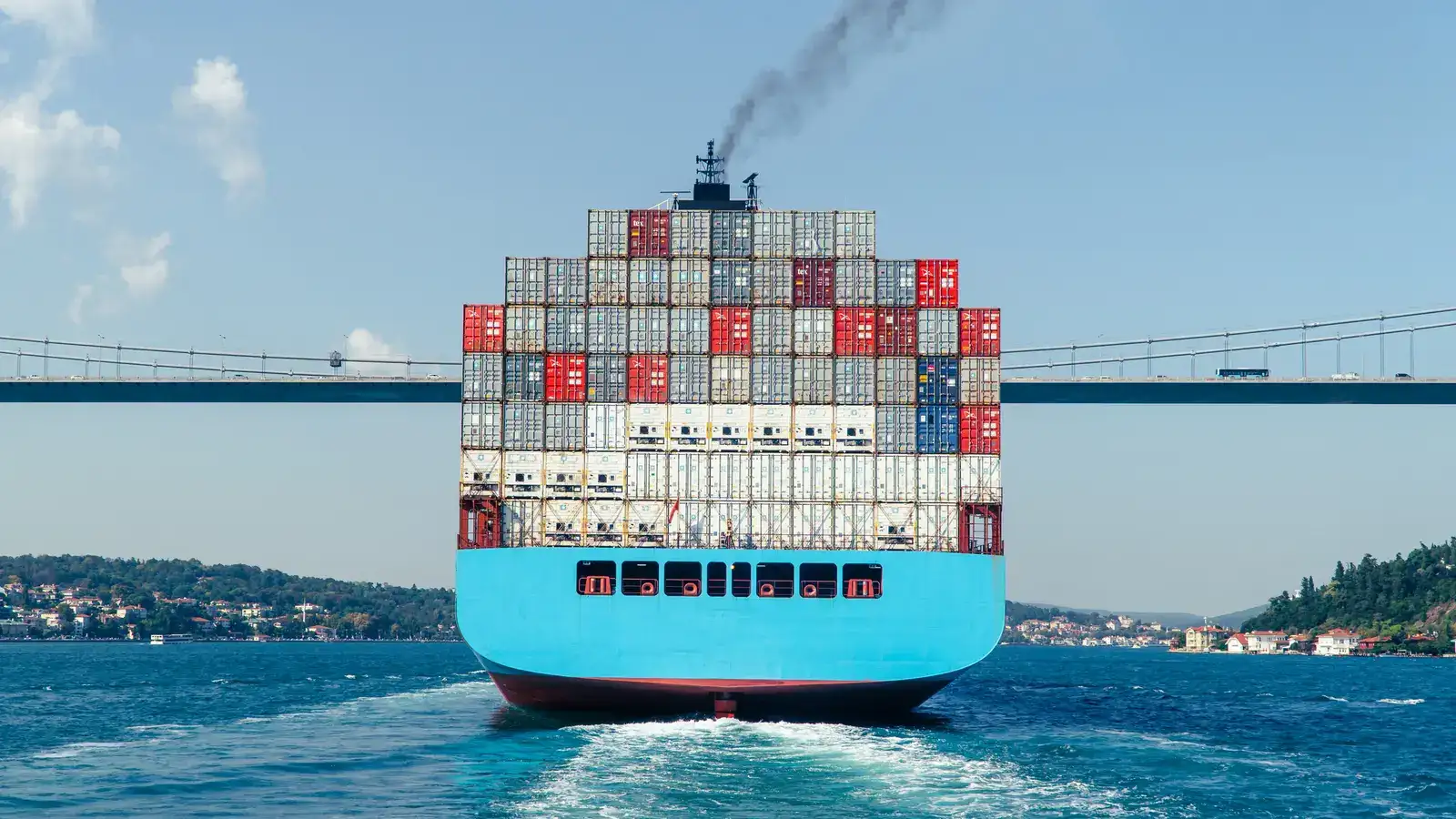
The chief executive officer of A.P. Moller-Maersk A/S said the oil shock caused by the Iran war will significantly raise costs this quarter and next, which the world’s No. 2 container carrier will seek to fully pass on to customers.
The conflict has raised expenses by about $500 million a month, Maersk CEO Vincent Clerc said in an interview on Bloomberg Television on Thursday.
“So far we are able to maintain our guidance because our experience is that we’re able to pass those costs on to our customers,” he said. “We’re positive that we can maintain this in the quarters to come.”
Maersk shares fell as much as 4.7% in Copenhagen.
Clerc said demand has been one of the “strong features in the markets for the past couple of years” and should continue through the second quarter. But that’s harder to predict later in 2026, with an outlook largely dependent on how long the war drags on and energy costs stay elevated.
“There is, of course, a lot of uncertainty if we look further into the year, with respect to what are going to be the secondary impacts of this war — inflation, possibly a reduction in demand,” Clerc said. “There are some question marks about how this is eventually going to flow through the economy.”
Earlier the Copenhagen-based company said in a statement that the conflict in Iran had a “limited impact” on results in the first quarter. The US-Israeli attacks began in Feb. 28. Maersk kept its 2026 forecast of global growth in the container market of 2%-4%.
Freight rates have edged up since the outbreak of the Iran war, though the increase hasn’t been as sharp as in previous supply-chain disruptions, including the Covid-19 pandemic.
At the same time, shipping companies, among the world’s largest oil consumers, are suffering from higher fuel prices and vessel insurance costs, which is offsetting the gains from rates.