
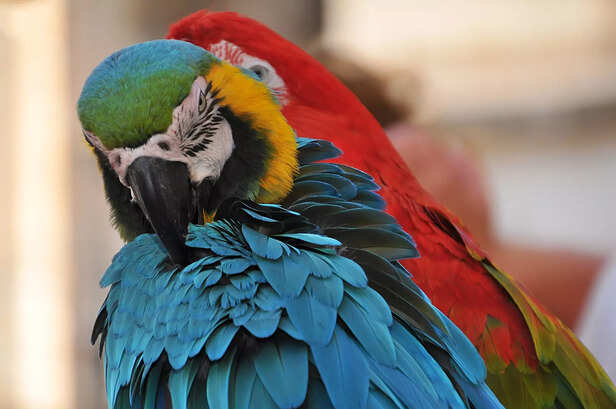
Brief History of Macaws as Pets
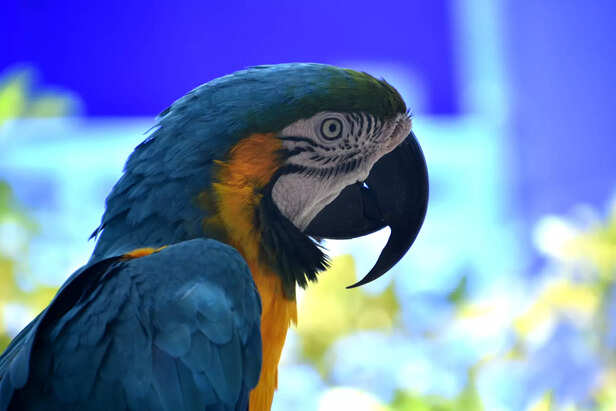
Macaws have shared a relationship with humans for thousands of years. Indigenous cultures throughout Central and South America revered these birds, valuing their brilliant feathers for ceremonial dress, symbolic art, and trade. Archaeological evidence shows that macaws were kept in captivity by ancient civilizations such as the Mayans and Aztecs, highlighting their long-standing role as companion animals. The vibrant plumage of macaws was highly prized and often reserved for nobility or religious ceremonies, illustrating their cultural importance.
Over time, their intelligence and social nature made them sought-after pets beyond indigenous communities, eventually becoming popular in Europe and around the world after the Age of Exploration. Despite domestication, macaws have always retained many wild behaviors. This historical context underscores why, today, macaws as pets require knowledgeable and respectful owners who can meet their complex behavioral and physical needs.
What Colors Are Macaws?
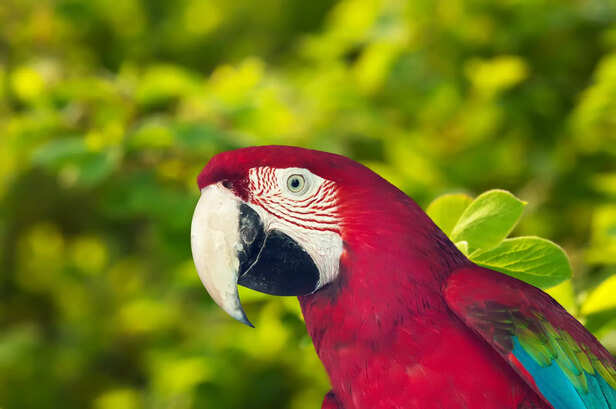
The 17 species of macaws, which originate from Central and South America, come in a rainbow of color combinations. They currently care for seven types of companion pet macaws at the rescue.
This gives you a good snapshot of the most common types and colors of macaws kept as pets. These include:
- Blue-and-gold: As the name says, blue and gold!
- Military: Green with a red unibrow
- Buffons: Green with a red unibrow (and smaller than the Military)
- Scarlett: Bright red body with orange, yellow, blue, and green on the wings
- Green-winged: A deep red body with blue and green on the wings and tail
- Hyacinth: Deep blue body with yellow outlines around the eyes and beak
- Harlequin: A mix between the Blue-and-gold and the Green-winged
How Can I Bond with My Macaw?
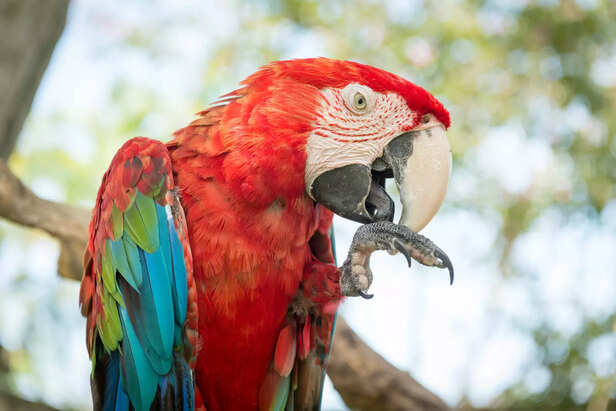
Macaws love to socialize with humans and other macaw friends. However, this can take time and patience. When you initially bring your pet home, she may become suspicious and try to bite. Avoid sudden movements, as well as loud noises, and let the bird familiarize herself with her new space.
Then create a daily routine that allows you and your bird to bond over familiar tasks, including refilling fresh water, offering new food, and tidying up the aviary. "The best way to bond is to spend time with the macaw. Sit with it, even if it wants to be caged, in the same room with it. Talking with it, singing with it. They love that," she explained. And of course, macaws enjoy tasty treats. "Some macaws are very food motivated. Sometimes, if you're eating in the same room, the macaw may wander over and try to snag a bite of your pizza. It has happened one too many times with me". Good treats to offer your pet during bonding time include whole walnuts or almonds in the shell for the bird to crack open. As she works on the nut, talk with her in a calm voice to help build a trusting connection.
What Sounds Do Macaws Make?
Macaws can vocalize in a few ways, with talking and screaming happening most often. And they do it loudly. Macaws, like toddlers, lack volume control! They are incredibly loud if they want to be. Some species can get up to 106 decibels". For comparison, that's a little louder than a motorcycle or a jackhammer! Wild bird calls measure around 44 decibels.
She says macaws call out at the tops of their lungs when a new person walks by the aviaries at the rescue, and when volunteers leave the room. Some macaws learn to mimic human language and even use the words in context to show off their intelligence. "One of our macaws loves to play. He will purposely drop a nut or a toy and then say, 'Uh oh.' He knows that he almost always gets a reaction, so it encourages his behavior," she added. "Some of the macaws say 'Hi,' 'Hello,' 'What doing?,' 'Peek-a-boo,' 'Night night,' 'Stop it!,' etc."
Celebrate the bond with your pets, explore Health & Nutrition, discover Breeds, master Training Tips, Behavior Decoder, and set out on exciting Travel Tails with Times Pets!
Frequently asked questions (FAQs)
-
Why are macaws considered high-maintenance pets?
Macaws need a lot of time, social interaction, mental stimulation, and a proper diet. They are also loud, can be destructive, and require large living spaces, making them high-maintenance pets.
-
How much time should you spend with a macaw daily?
Macaws need at least 2–4 hours of daily interaction. Without enough attention, they can develop behavioral issues like screaming, feather plucking, or aggression.
-
What is the cost of owning a macaw?
Owning a macaw can be expensive. Costs include the initial purchase, a large cage, toys, high-quality food, and regular veterinary care. Long-term expenses can be significant