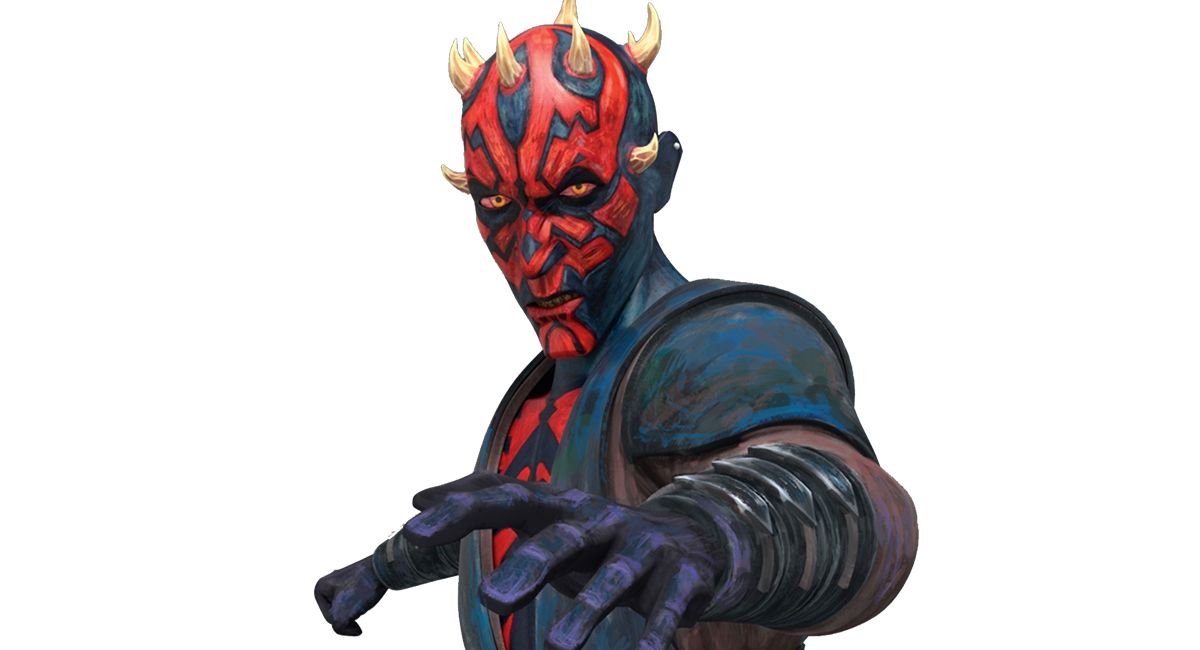
A striking and unsettling presence who has been part of a galaxy far, far away for nearly 30 years, Maul (previously Darth Maul, a creation of George Lucas) has embodied a fierce, tragic and intelligent fusion of mind and body since being introduced in the movie Star Wars: The Phantom Menace.
Well established as a favourite character, Maul’s trajectory underwent a fascinating development in the new animated serial Star Wars: Maul – Shadow Lord for Disney+. We spoke with Lucasfilm Animation art director Andre Kirk about the visual language the series and the conceptual visual iterations that were developed to create its distinct aesthetic.
If you need tools for your own art, see our picks of the best drawing tablets.
Andre, how did the design language for Maul – Shadow Lord build on what audiences know while pursuing something new?
With Maul – Shadow Lord, [Lucasfilm president] Dave Filoni was very involved in the look and what he wanted it to be. A lot of that was going back to the work that we had done on the early series of The Clone Wars and that painterly style that we wanted back then, but a lot of the technology was fighting us in terms of getting it to move and feel like a painting. Now we’re at a point where we can actually fully realise that.
Subsequently, it was about training the team in oil painting, explaining to them this look that we wanted and how you would traditionally paint it. For example, we don’t want to see the paper underneath the paint. Think of this as oil painting. If you want light, it’s the colour; it’s not the paper revealing itself. Showing them the distinctions between watercolour, gouache, oil painting and acrylic, to try and push the oil-painted style of things was really important.
For some of the younger designers who haven’t had as much exposure to traditional media, it was about training them up so that we could have that be present in the designs and follow all the way through the assets, through lighting, through texture, through everything and appear like that on screen.
We get the feeling of the thickness of the paint on surfaces, which previously in early episodes of The Clone Wars might have just been texture. Now we’ve got so much more that we can use. And with our incredible work and effect, we can get some of those edges to reflect the painterly nature that we’re after.
In relation to Janix, is there a particular architectural space that you can unpack in terms of that design process?
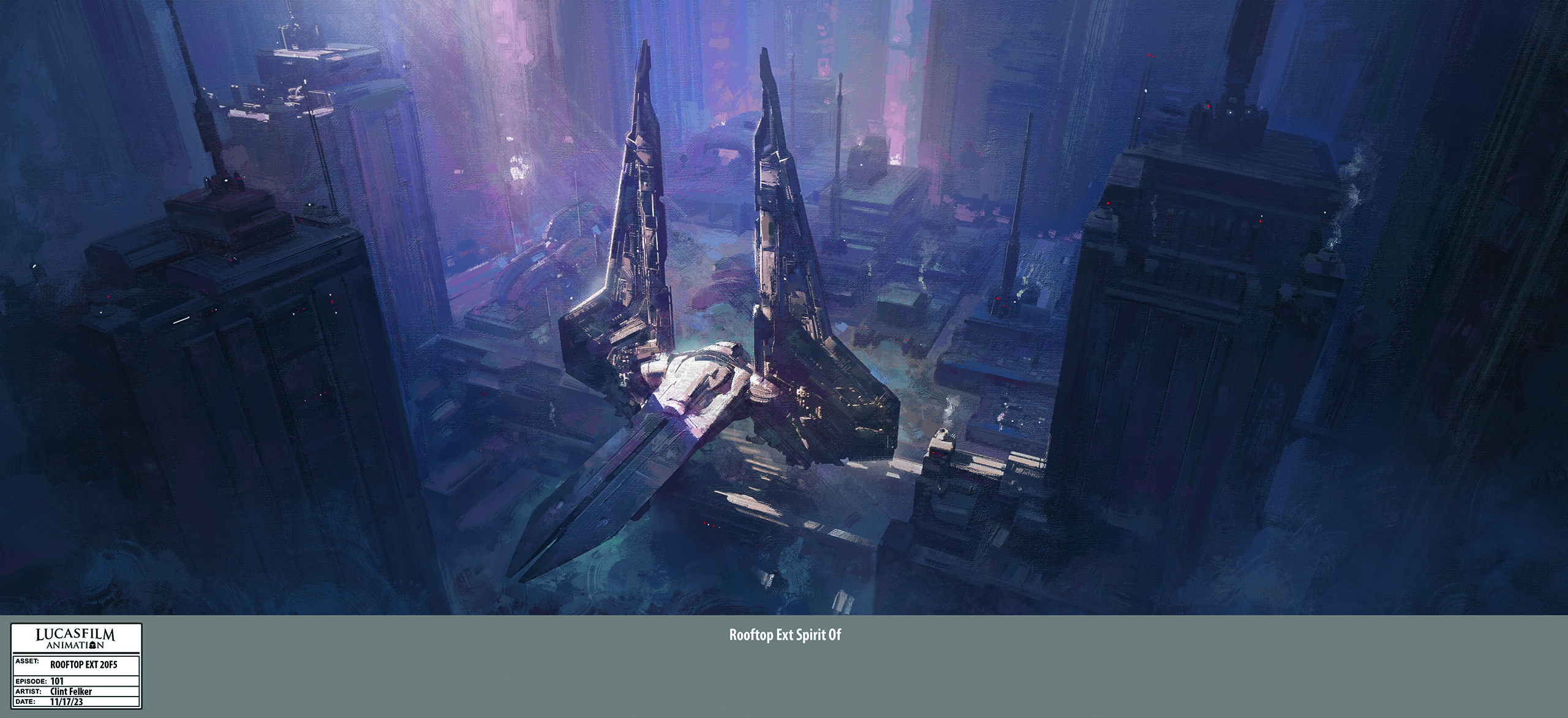
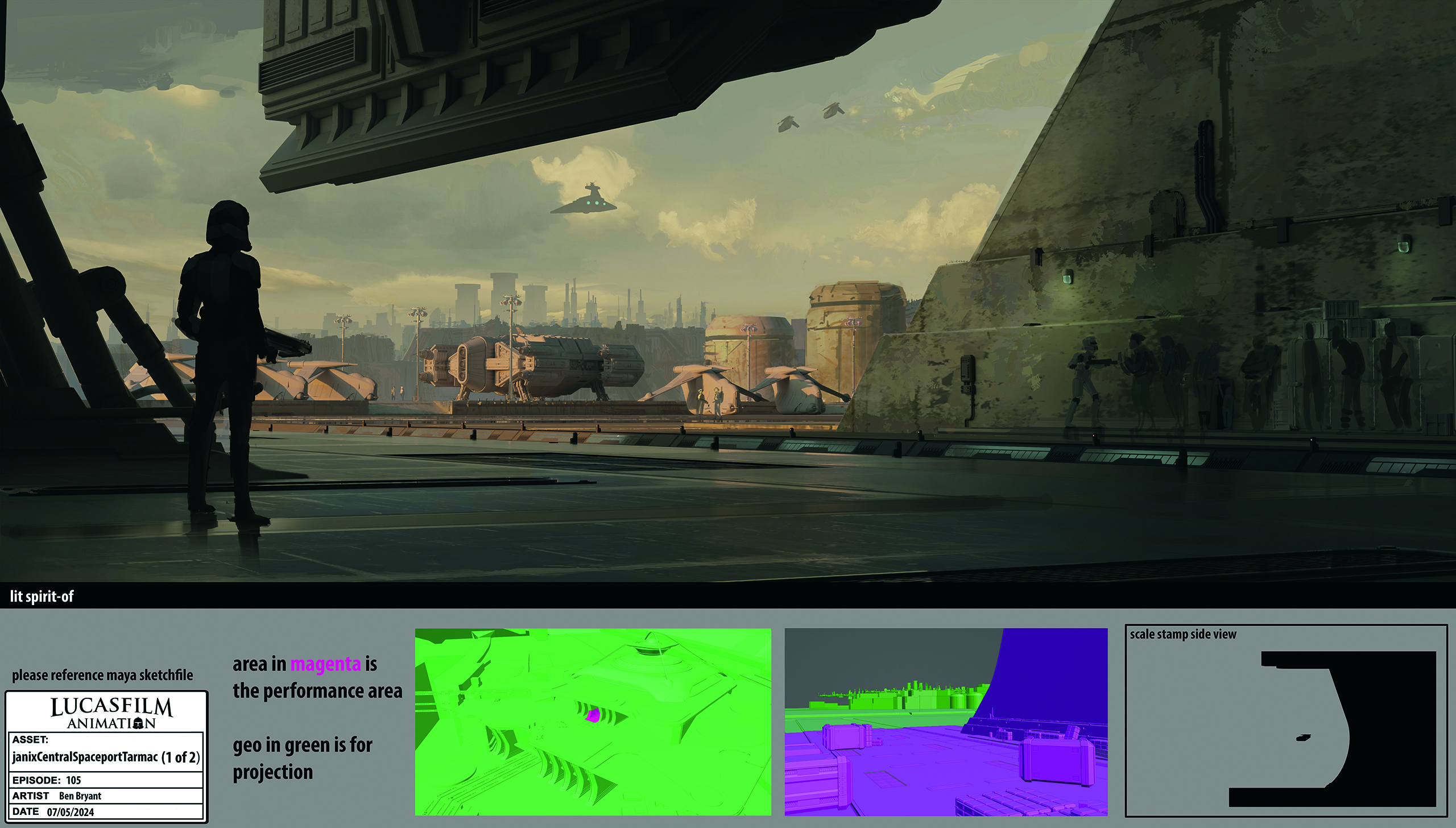
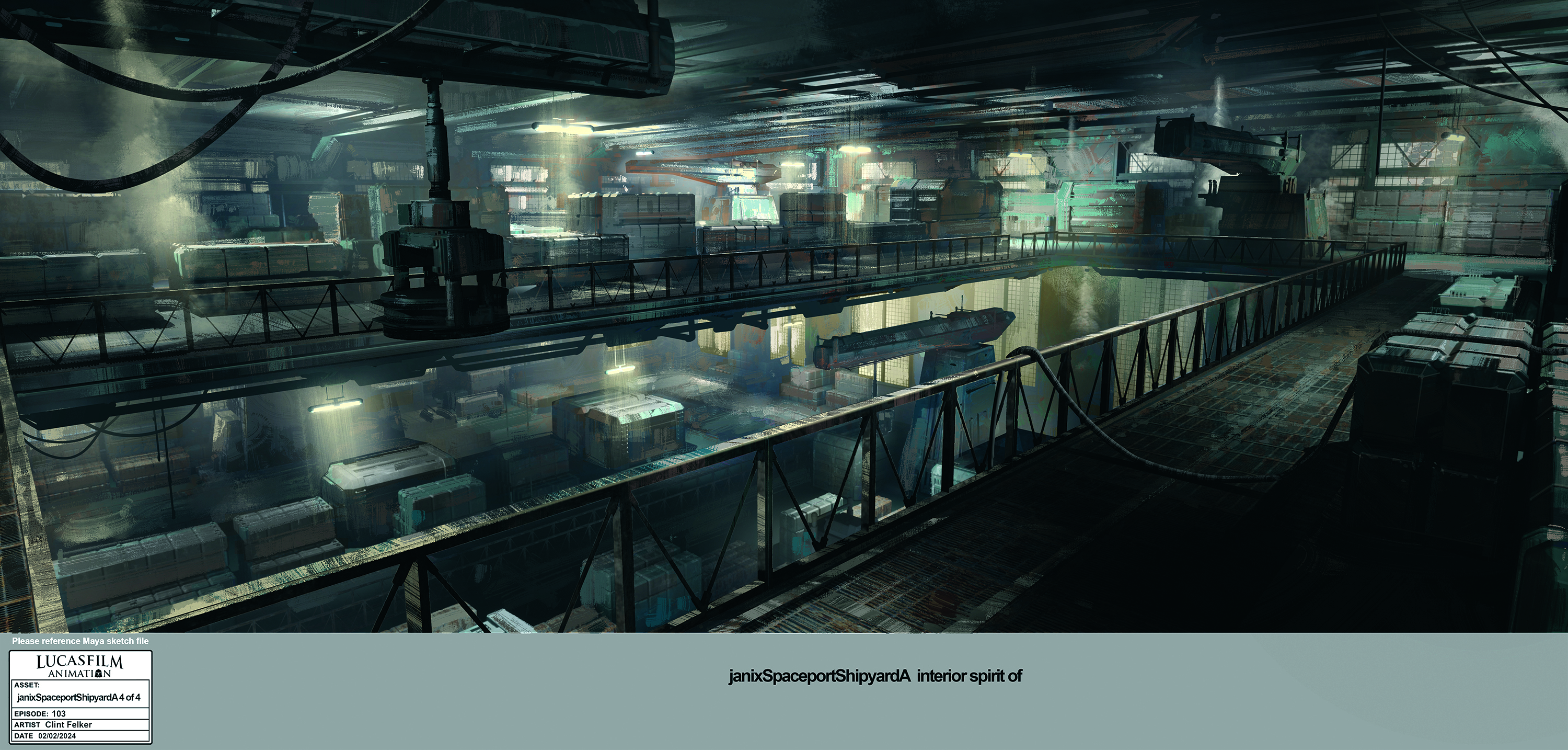
Dave Filoni was very set on what he wanted Janix to look like. He had done several sketches that outlined the city, which is set in a crater that was formed on this jungle planet a long time ago and the city has developed in there with outlying sister cities around it.
He was very specific about us looking at different architectural styles for the different locations in the city. We looked at a lot of retro-futurism, the future we were all promised and never received. Filoni also wanted Janix to have a lot of terrestrial transportation as opposed to air transportation, which is more reminiscent of Coruscant, and so we were figuring that out as well.
We had to ask questions like ‘Do you have a tube transportation system? How do people get around? Do we need to make room for pedestrians? Is this a walkable city?’ All of these thoughts make their way into the designer’s individual tasks, providing a broader understanding, even if they’re not working on a train system, but they’re working on a street.
They’ll know ‘Oh, okay, I should put a subway entrance in here. I should put in crosswalks. Is there a central island in the road?’ Things that we deal with in our day-to-day life, but don’t necessarily pay attention to in the Star Wars universe. The people on Janix would have the same problems.
What did the design process emphasise in the work for the character of Maul?
There was a lot of work on coming up with the look for the show, like the brief of getting that living painting feeling, and Maul was one of the test characters that we would iterate, in terms of asking ‘What is this look that we want to achieve? And how can we anticipate it moving?’
It set the challenge for all of the departments, and we asked ‘How would you build a texture, model it, animate it and light it? We did a lot of iteration on Maul’s face but without losing who Maul is. He is immediately recognisable, but we also want to be able to say ‘That’s our Maul.’
We want to be able to pick him out of a crowd, or if you walk into a store and you see a bunch of action figures, you can easily say ‘Oh, that’s our Maul’.
What are the essential character iteration approaches that your team works through?
With our character designs, we have about seven days to work on a character, and what the designer has to factor in is that at the end of those seven days you’re sending off a design that needs to be turned into a 3D asset with no questions asked. So, we don’t want to risk the delay that a question can pose.
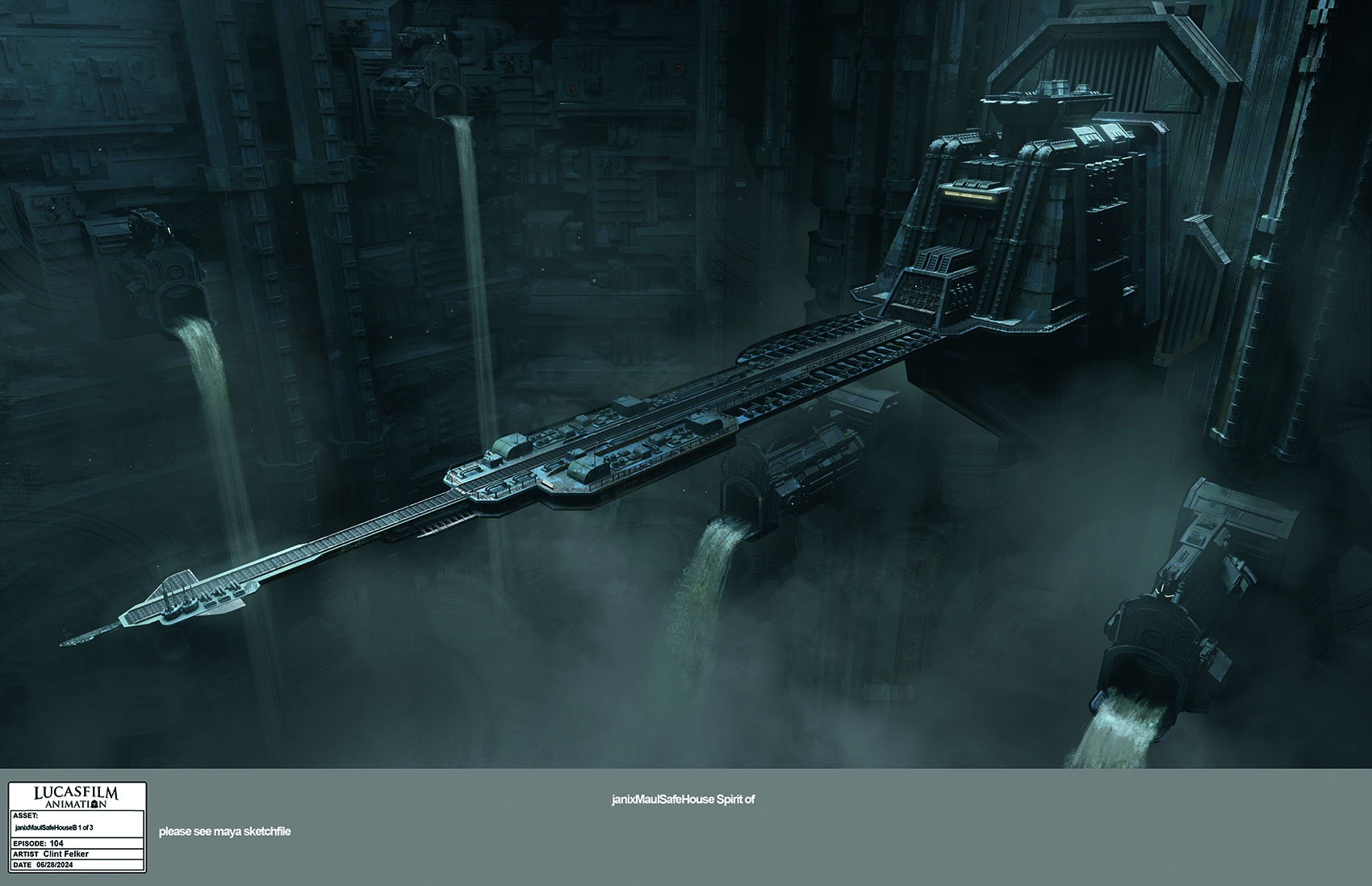
We’re trying to answer everything we possibly can on that sheet. So, at the end of that seven-day build period, we’ll turn in a design sheet with orthographic turns, which is the more technical part of the delivery, but we’re also going to make a ‘Spirit-Of’ image.
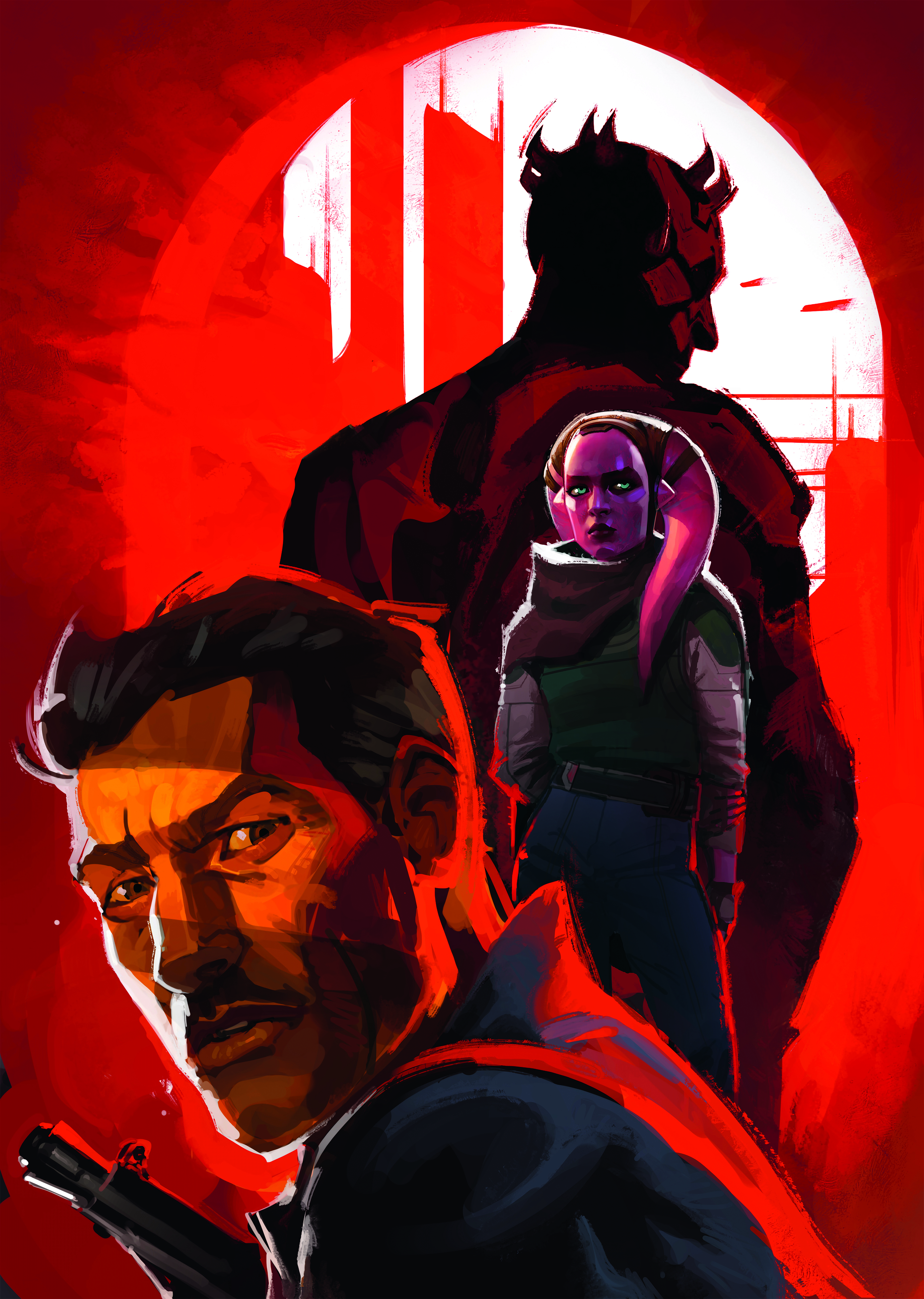
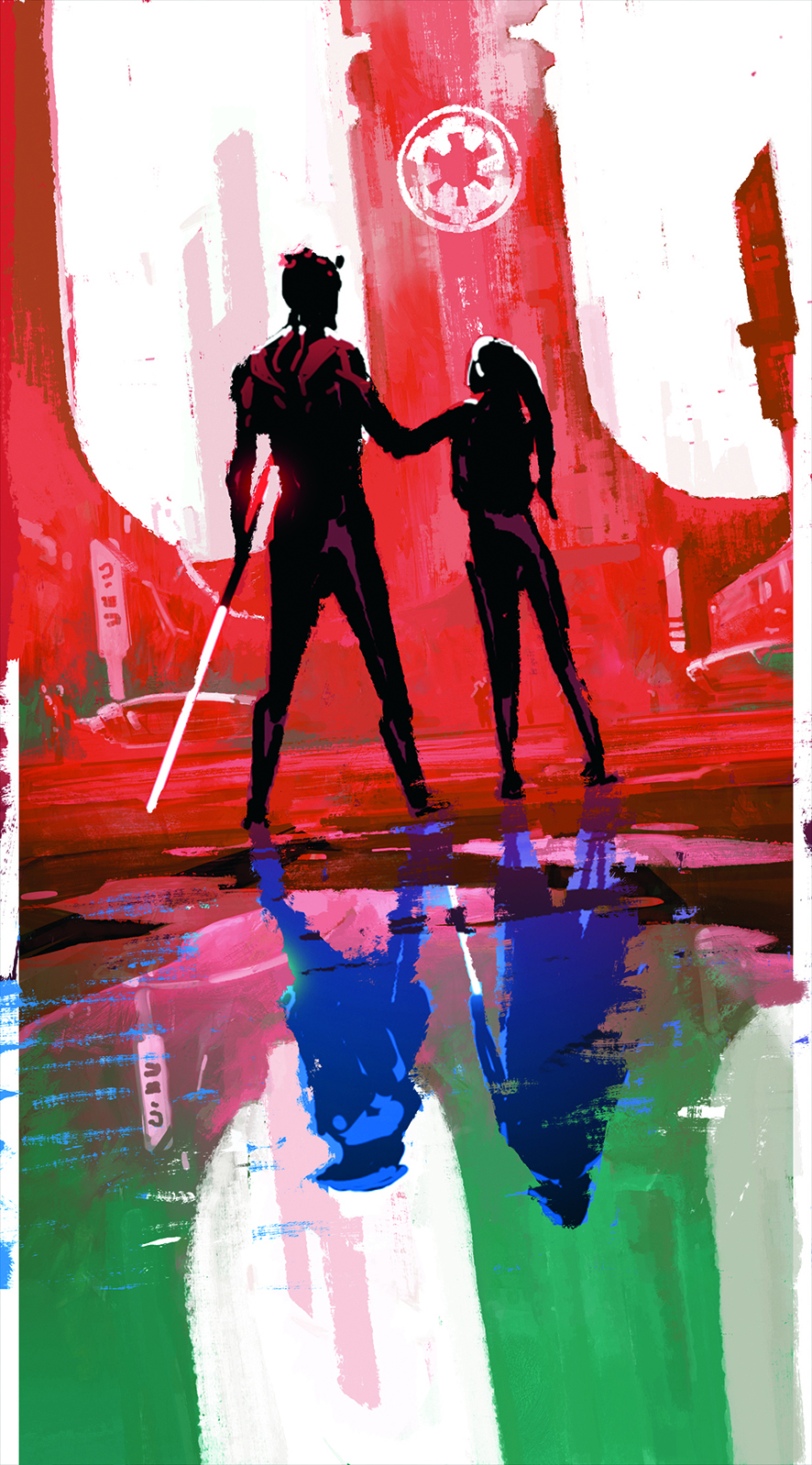
The Spirit-Ofs will show off the mannerisms of the character and more vibrant and stylised colours. The main designs are often fairly technical with characters in an A-pose to make them easier to build, and the Spirit-Ofs will be more expressive. When you add them together, it gives the crew a full picture of what and who a character is.
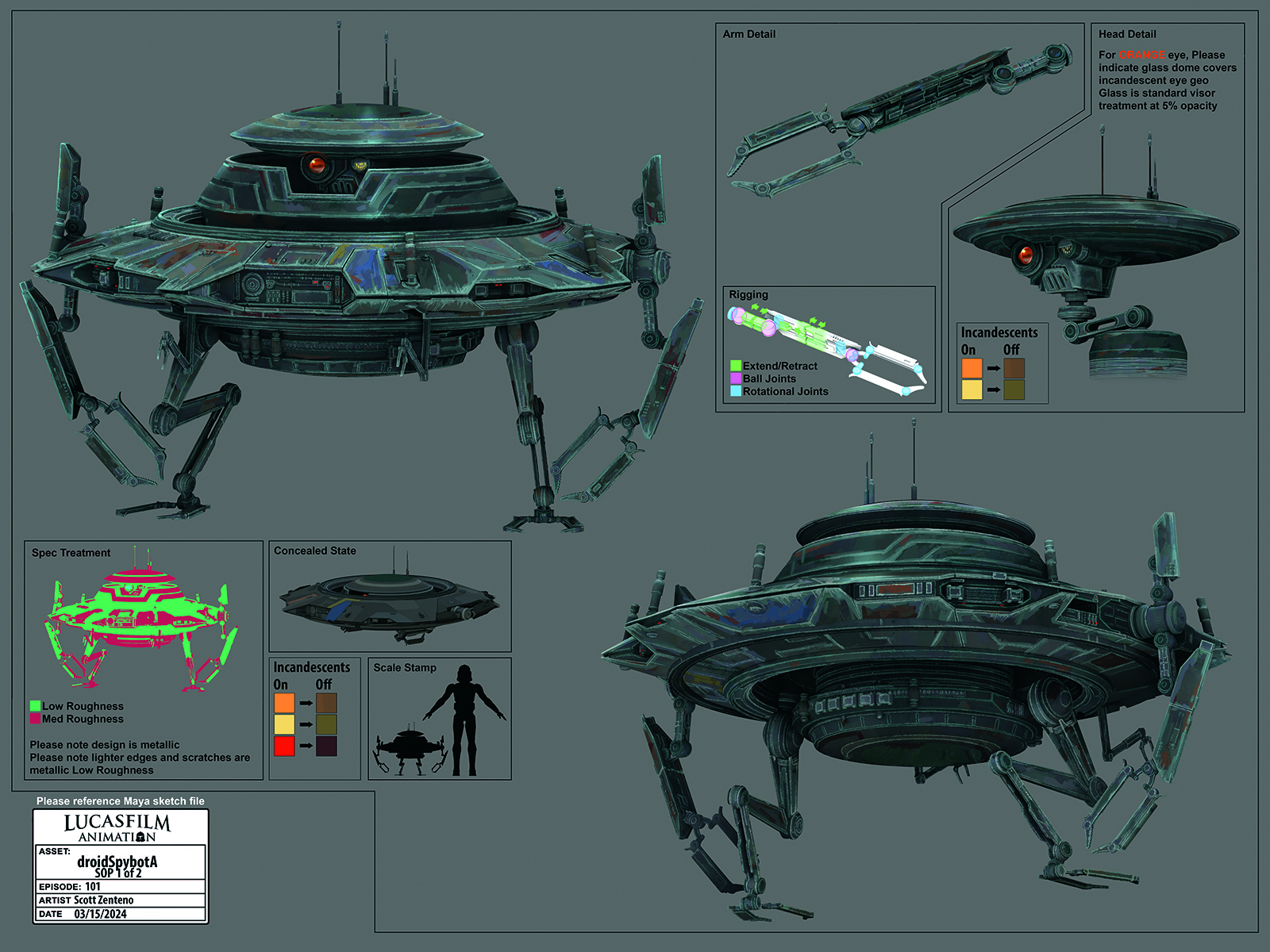
The main pages of the technical designs will show details on the line work, colour, and orthographic views – for those we’ll send in a front, back, and side-view angles. The front and back image will be lit, but the left and right side-views are flat-coloured so that we can provide the most accurate information on how to interpret a design’s textures.
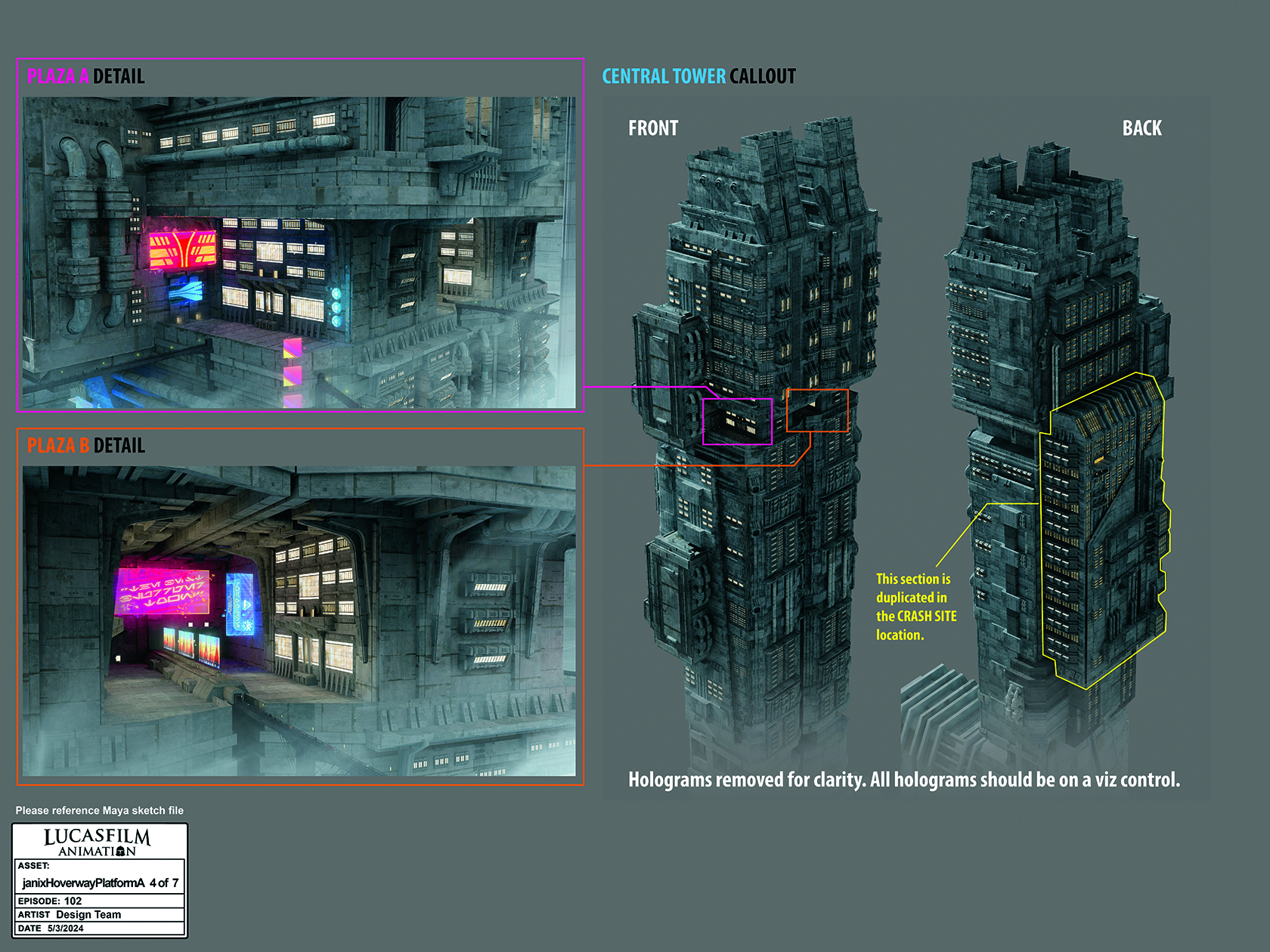
We don’t want to have someone accidentally eye-drop a colour somewhere where we’ve created a highlight. Our artists also indicate a hex number for a character’s base skin tone, so that we know it will accurately appear in a number of different lighting environments. The eye and pupil size on the designs will also indicate if it’s a human or alien creature.
Any information that we want to draw attention to, we would call out on these sheets. Whether it’s calling attention to an animation supervisor, an asset-supervisor or an effects-supervisor, saying, for example, that ‘This character has a glowing right hand.’ We would indicate that, and we’d indicate what colour the glow is as well.
Our designers have to keep their build timelines in mind as they work over their seven-day periods. Usually we like to aim for getting rough sketches out on the first day so that I can get and give approval on everything. Silhouette roughs are great; the rougher the better so we can get those iconic images. For example, you don’t want it to be mistaken for someone else if it’s backlit.
You want it to be recognisable as its own character. If it’s in a scene with a bunch of other characters, it’ll be very good to show those characters their silhouettes as well, next to your line-up of characters that you’re wanting to get a buy-off on.
It’s good to do about five or six roughs of the character you’re designing and then, as we work forward on our character, we get to the point where we can finally deliver that package at the end of the seven-day period.
Could you talk us through the visual development for alien characters?
It’s always challenging, but really rewarding once we figure out how to solve the complications of a design. Looking at Jedi Master Eeko-Dio Daki as an example: we wanted to create a new species of alien for this character, and there was a lot of iteration because we didn’t want to make just a standard dinosaur, we wanted something more unique and ‘Star Wars’.
We wanted an alien character that could emote, which is always tricky the further you go away from the human. In its neutral conversational turn, it should be able to hold a conversation with you. You want it to be a speaking character and you want to be able to relate to them.
These are all things that are very difficult to do. It’s easy enough to do cute with not much speaking. But to design someone that you could hold a conversation with and not either laugh or not be afraid of is a challenge.
Eeko Dio Daki has the potential to be scary, but he has the potential for all these other emotions too; it was about striking a balance. And then it gets even more tricky when you’re told to have a character that can blend into a crowd. So, you always have to balance the character by themselves as unique and interesting, but not so bespoke and unique that they can’t still disappear in a crowd.
A lot of that is solved by making sure that the rest of the world also has aliens in it so that you’re asking ‘Oh, what’s their back story?’ You don’t want them to steal the scene, but you want to set the stage that this isn’t the only alien in this world. It’s just another alien that you’re talking to. But, through their performance and the emotion in their face, they can illustrate that they’re capable of all these varied emotions, actions and motivations.
How would you describe the overall process of the work accomplished for Maul: Shadow Lord?
There’s no filter between us and the final product being made. The design team starts as the first group of artists to work on the show after the script is written – we get to interpret all the engineering, the blocking, how the world is built and comes together to visualise what’s written in the scripts.
It’s something we do on all our shows, but for Maul – Shadow Lord specifically we wanted to make sure we were keeping ownership of the character and how he fit in with the world we were creating. It’s not just this unique and well-known character, but it’s our version. It’s distinctly Maul – Shadow Lord.
This article originally appeared in ImagineFX. Subscribe to ImagineFX to never miss an issue. Print and digital subscriptions are available.
For more animation news, see why one former Pixar artist is now making generative AI animation with Google DeepMind.
Creative Bloq is now easier to access than ever before with our on-the-go app, which brings you all the content you know and love from our website, but in a super-streamlined design.
Download the Creative Bloq app for iOS
Download the Creative Bloq app for Android