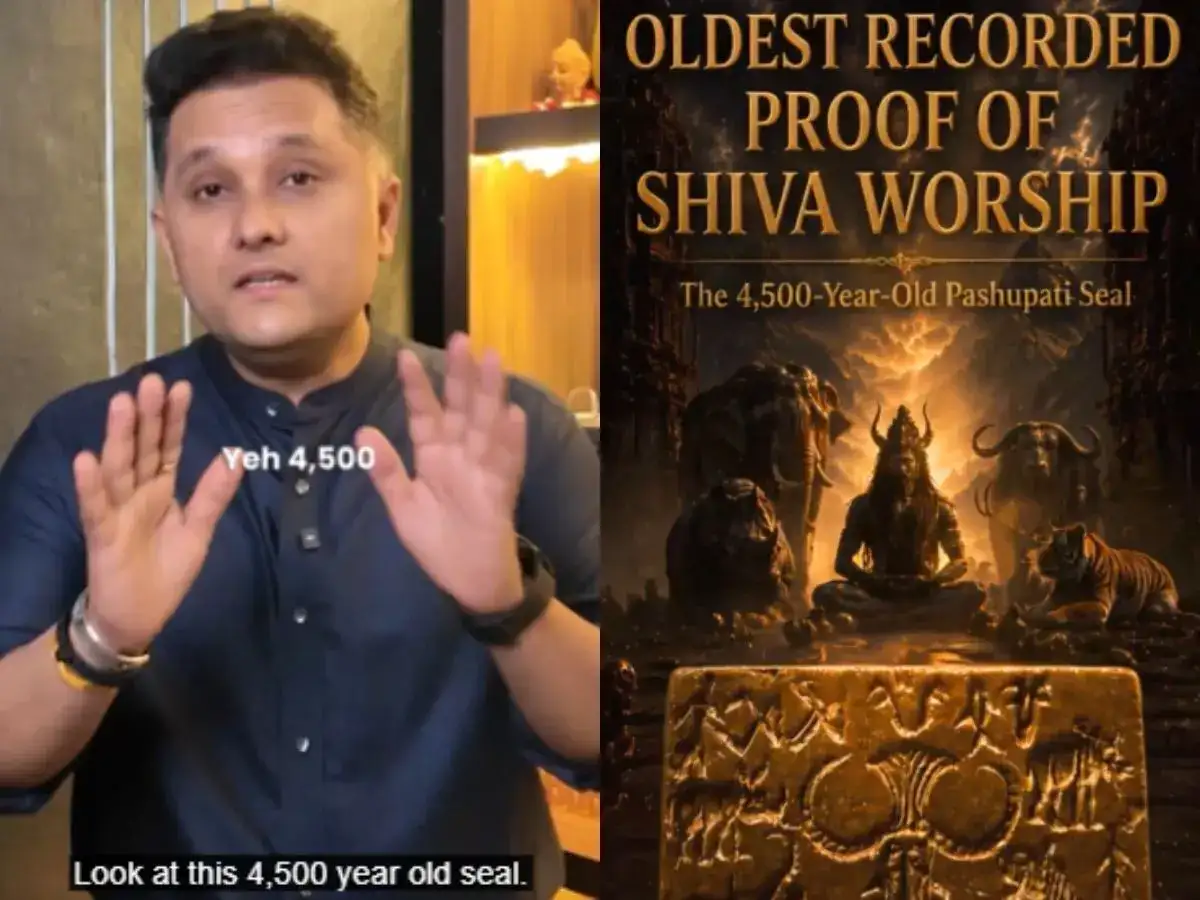
A 4,500-year-old seal discovered in the ruins of Mohenjo-Daro is once again at the centre of a fascinating debate after author Amish Tripathi shared claims that it may contain one of the oldest known prayers to Lord Shiva. The breakthrough, according to Tripathi, came not from archaeologists but from an Indian computer scientist who approached the mysterious Indus script like a cryptographic puzzle.
The ancient artefact, famously known as the Pashupati Seal, has puzzled historians for decades. Unearthed nearly a century ago from the Indus Valley Civilisation site in present-day Pakistan, the small steatite seal shows a horned figure seated in a yogic posture and surrounded by animals including elephants, buffaloes, rhinoceroses and tigers. Many scholars have long linked the figure to a “Proto-Shiva” or Pashupati, the Lord of Animals, but the script carved beside it remained undeciphered.
Techie’s unusual approach sparks fresh interest
The latest excitement around the seal comes from Dr Bharath Rao, a computer scientist known online as @yajnadevam. During the COVID-19 lockdown, Rao began studying the Indus script using concepts from cryptography, pattern recognition and information theory instead of conventional linguistic methods.