What would happen if you put two estranged people in a room together and told them to maintain eye contact for five minutes without speaking?
Would it break the impasse? Would there be a release of tenderness without a word being uttered? Or would anger and resentment resurface?
And what about the experience for the viewer? Surely watching people looking at each other without speaking would make for terrible television?
This is the premise of Look Me in the Eye, a new six-part series on SBS. According to the show, around 3 million people in Australia are estranged from a loved one. The show seeks to put people in the same place so they can make a decision: either cut the cord and move on, or reconnect with each other.
This show is compelling perhaps in spite of its premise (it calls to mind Marina Abramović’s The Artist is Present), it is beautifully shot and unsentimental in its way, yet I challenge you to watch it without crying. Ray Martin’s hosting is restrained and careful: it is the stories of the participants that are allowed to shine.
The first story is incredible, partly because it does not go down the route of reuniting estranged loved ones, although many of the other stories in the series do.

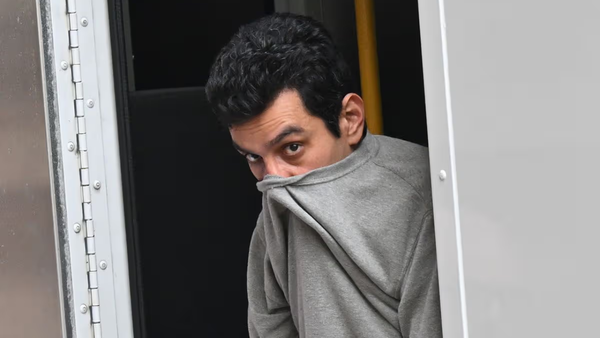
Ayik Chut is a South Sudanese man now living in Australia with his young family. Growing up as a child soldier, Ayik tried to escape his compound many times. When he was caught, he was whipped and tortured by a guard.
Fast-forward 20 years and Ayik is worshipping at his church in Brisbane when suddenly he sees the guard in the congregation. His first impulse is to kill him. He flees the church.
Ten years pass, but Ayik can’t stop thinking about the guard. “If I don’t talk to him, if I don’t face him, then I can’t forgive him,” he says. “And that will be in my mind and that will hurt me.”
To forgive is to be released. It’s not like the dreaded American self-help term of “closure” – it’s some impulse that’s much older and deeper.
Then the experiment: Ayik is greeted by host Ray Martin outside a big warehouse. He’s about to go in and meet his torturer. The tension and emotion are sky high, yet nothing about this scenario feels exploitative. We, the audience, are deeply invested: we want Ayik to see it through and will stick by him until he does.

In this episode we also meet Sue and Gary – a long-married couple who have drifted apart and separated.
“When you don’t look after something you lose it, and that’s what happened,” says Sue, in tears.
She realised she still loves Gary and wants him back: “And even if he doesn’t love me, that’s OK. I just have to say it.”
The experiment she and Gary are about to undertake reminds me of a passage in Helen Garner’s Tower Diary essay: “Couldn’t there be a room somewhere, where ex-couples might briefly meet from time to time, just to sit at a table and laugh together or cry – to tell the small stories and the big, to remind each other of the things they learnt together … ?”
Watching this couple sit together in silence and just look at each other is unexpectedly moving and intimate. Reality TV shows for so long have tried to create similar tension by creating false or heightened realities. A contestant has their cake judged by a celebrity chef for example, and there is dramatic music, her bottom lip wobbles as the cake is eviscerated, and the tears fall.
Look Me in the Eye is in a different league. The emotions and situations these people are dealing with don’t have to be artificially enhanced or given the TV steroids of a swelling soundtrack and close-up shot of tears (although there is that too).
It is in some ways the emo cousin of True Story with Hamish & Andy: so-called everyday people have inner lives and stories of incredible depth and richness, and by telling those stories, Look Me in the Eye shines with authenticity and truth.
• Look Me in the Eye is on Wednesday nights at 8:30pm on SBS and available to watch any time On Demand