WASHINGTON _ The longtime progressive stronghold of Minnesota has become a battleground in the presidential race, as the Trump campaign targets the anxieties of the state's rural voters in an urgent push to expand the political map and mitigate the president's erosion of support in key states he won in 2016.
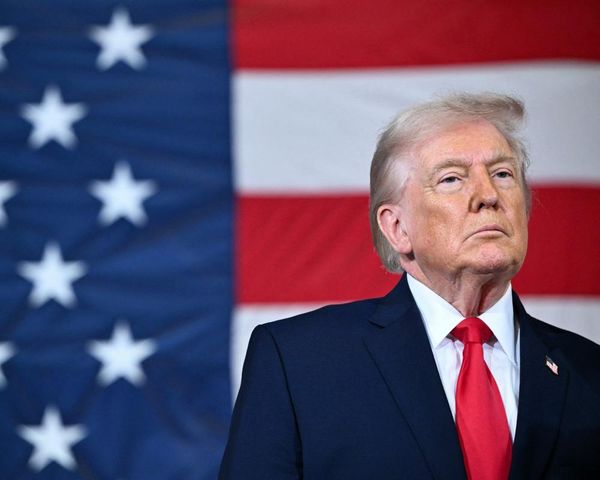
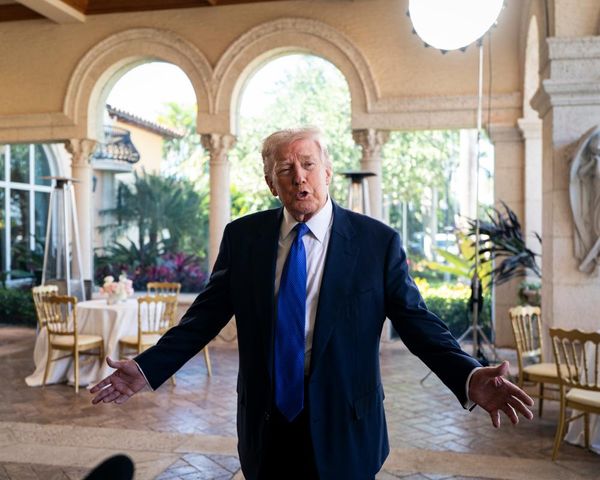
Trump and his Democratic rival, former Vice President Joe Biden, touched down in Minnesota on Friday as early voting began in the state.
Trump is making an aggressive play for Minnesota, which he narrowly lost in 2002, and Democrats are working to lock down the moderate lead they have held there this year.
Trump hopes to lure new voters in the economically distressed communities in the state's northern "Iron Range" who have grown disillusioned with the environmental and racial justice policies of the Democratic Party.
But it is a steep hill for the president to climb in a state that has not chosen a Republican for president since 1972.
While the Real Clear Politics polling average gives Biden a 10 point lead in Minnesota, a survey posted this week by Morning Consult found the race to be significantly tighter, down to four points.
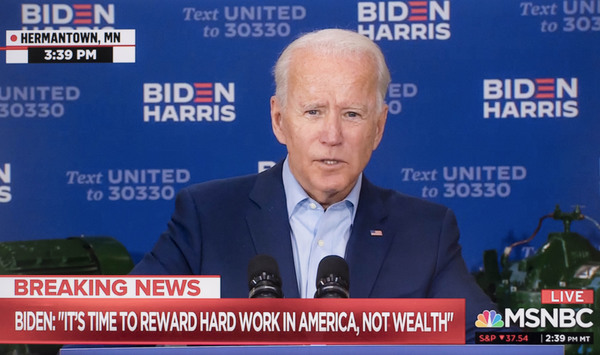
Speaking Friday at a union training center in Hermantown, outside Duluth, Biden sought to counter the president's pitch to Minnesota's working class voters, ticking off Trump policies and remarks that Biden said reflect the president's disdain for them.
"Like a lot of you, I spent a lot of my life with people like Donald Trump looking down on me," said Biden, stressing his modest upbringing in Scranton, Pennsylvania, and state college pedigree.
"These are the guys that always thought they were better than me, better than us, because they had a lot of money," Biden said. "Guys who inherited everything they got and still managed to squander it. I have to admit I have just a little bit of chip on my shoulder about these guys."
Biden, his voice growing angry, shifted from attacking a Trump tax plan he warned would leave billionaires paying a lower rate than the laborers in the room, to what he portrayed as the president's bungled and cavalier response to a pandemic that has killed nearly 200,000 Americans.
"He doesn't have a clue how to be president," Biden said.
He condemned Trump's frequent citing of stock market gains to gauge the well-being of American workers. About 52% of American families have some investments on Wall Street, mostly through retirement accounts.
"Trump says, 'Everyone is in the stock market.' What the hell is he talking about?" said Biden. "I have a different measure from which I judge the health of the American economy. My measure is Scranton, Duluth, Hermantown. I see hardworking women and men just trying to earn an honest living to take care of their families."
The battle lines in Minnesota reflect those that stretch across much of the Industrial Midwest.
As Democrats solidify gains in urban and suburban communities, rural areas dominated by non-college educated white voters are more receptive to Trump's "law and order" message and demonization of anti-pollution rules that inhibit mining and manufacturing.
The Trump campaign sees the state as especially fertile ground in the aftermath of the racial justice protests that erupted there in response to the police killing of George Floyd, an unarmed Black man, in Minneapolis on May 25.
Yet the president's warnings that a Biden White House would encourage more unrest is not resonating in the metropolitan areas where protests have taken hold, but in rural communities like Bemidji, where Trump was scheduled to speak Friday evening.
"There is very high polarization, and very high mobilization on both sides," said James Read, a professor of political science at the College of Saint Benedict/Saint John's University, near St. Cloud. The vote in the state is "going to be close, and it's going to be very high turnout."
Rural farming areas that once had Democratic lawmakers, Read said, have "become a Republican monolith."
"It's a cultural opposition and mutual suspicion between small towns on one hand and metropolitan areas on the other," Read said of the state that embraced such progressive giants as the late Sen. Paul Wellstone, the late Vice President Hubert Humphrey and former Vice President Walter Mondale.
Mining has creating a potential opening for Trump. Union workers in the sector are dismayed with environmental policies pushed by Democrats that restrict extraction of metals like nickel and copper, which can create environmental hazards.
The environmental damage threatens tourism, which supplies more jobs in the area, but lower-paying jobs. It's also increased disdain for urban areas the miners blame for valuing green policies over their livelihoods.
One such fight is playing out near the Boundary Waters Canoe Area Wilderness, the most visited wilderness area in the country.
Over the objections of environmentalists, the Trump administration is trying to push through approval of a mine proposed by Twin Metals, a company owned by Chilean mining giant Antofagasta.
The push has the potential to boost support among a key group of voters in a hard-fought state, as does another sudden major policy initiative the president announced this week that has political implications in Florida, another battleground where Trump is struggling.
He announced $13 billion in federal aid for Puerto Rico, a sudden reversal after years of refusing to authorize more hurricane assistance to the territory in the face of stinging criticism from its elected leaders.
The move was an appeal to Puerto Rican voters in the Sunshine state, which Trump made clear when he attacked Biden while announcing the aid from the White House.
In Minnesota, Biden has worked to make inroads in the Iron Range by focusing on how much the steel industry has suffered under this administration.
The Biden campaign blames a Trump trade policy that has led to steel shipments plummeting and the idling of mining operations.
But a linchpin of the Biden agenda is an ambitious, $2 trillion climate and environmental justice plan that is a tough sell in places like the Iron Range, where workers worry the planed regulations will cost their livelihoods.
Biden's strength in the suburbs appears to be counteracting the damage threatened to his campaign by such voter skepticism. And his strong union ties and Scranton roots are blunting Trump's attempts to paint the Democrat as an unhinged socialist in the communities the president has targeted for gains.