The London local elections could see the Greens make major gains in the capital for the first time.
Zack Polanski’s Green Party is on track to grab control of Hackney from Labour, according to past polls, with the party’s mayoral candidate for the borough, Zoe Garbett, also forecast to win over incumbent Labour mayor Caroline Woodley.
The results of the local election won’t prompt massive changes in national policy, but party values and beliefs will determine how councils apply council tax, shape planning decisions, and manage public spaces.
In a final plea to Londoners, Mr Polanski said: “Let’s make history and elect a record number of Green councillors, who will work hard to make London an affordable place to live, and to make London the greenest city in the world.”
But what does “green” actually mean? And what does the Green party stand for?
Cost of living
On a national level, the party manifesto proposes increasing Universal Credit and legal benefits by £40 a week and abolishing the two-child benefit cap.
Like all the other parties, the Greens are also targeting energy costs. Local Green councils will push for the retrofit of homes to lower gas and electricity consumptions as well advocating for solar energy networks.
Ms Garbett has also mooted food networks and initiatives in Hackney to ease the burden of grocery inflation.
Legalising drugs
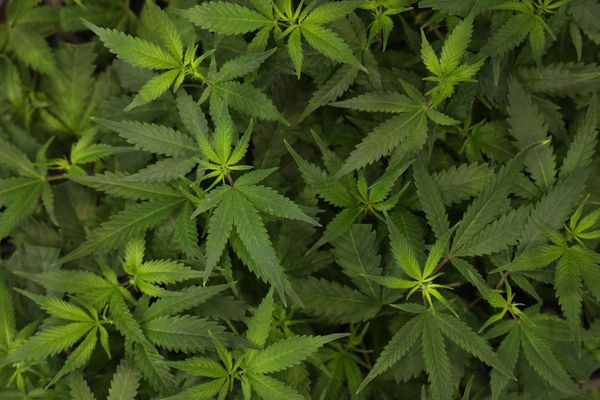
The Green Party has pledged to legalise all drugs as part of a new approach to fight London’s war on illegal substances.
Drugs would still be heavily regulated, but could become accessible to all under the Green Party’s proposals.
Substances such as cannabis and low-dose MDMA would be available through local authorities, while harder drugs such as cocaine and heroin could be accessed via specialist pharmacies with a prescription.
By decriminalising drugs, the party hopes to dismantle drug trafficking chains and improve public health.
The number of drug-related deaths in the capital has been on the rise for over a decade.
The proposal would have to go through parliament if it was ever to pass, but local councillors are taking action to destigmatise drugs and to fight the capital’s rising drug crisis.
Ms Garbett, who wrote the policy, has pledged that if she was appointed Mayor of Hackney, the council would lobby for overdose prevention sites in the borough and better linked health services.
Housing
A central part of national policy for the Green Party has been to provide “fairer, greener homes for all.”
If all goes well for Mr Polanski in the 2029 general election, they have proposed solar panels and heat pumps on all new homes and a £33 billion investment into insulating homes.
The Greens would also give power to local authorities to introduce rent control.
Locally, the Green councillors in Tower Hamlets have proposed only building social housing on public land and have lobbied for the end of the Right to Buy scheme.
Demolition of buildings would also be seen as a last resort in Green-controlled councils, with the party prioritising refurbishment to avoid the mass release of embodied carbon.
Health and social care
The health and social care system would become “fully public” and “properly funded” under Green Party proposals.
The party would push for a reduction in waiting lists, guaranteed dental access, and an immediate boost to NHS wages.
In Hackney, the Green Party has proposed “Neighbourhood Care Hubs” to provide a multi-generational approach to health and social care. These hubs would offer social care support, respite, and advice to families.
The party has also pledged to bring residential care homes back into council management, to avoid money being given to multinational companies and private equity-backed firms.
Immigration
The Green Party has always boasted a “welcoming” attitude to migrants and refugees, according to its manifesto.
The party wants to end immigration detention for all migrants, offer safe routes for those fleeing persecution, and to allow asylum seekers to find job opportunities.
Illegal migrants would also be given access to the NHS and provided shelter.
On a council level, the Greens may look to reduce homelessness amongst migrant families and expand council initiatives to welcome migrants into the community.
Reform UK has campaigned to target Green-controlled council areas for placing migration detention centres.
Environment
One of the Green Party’s policies includes reducing the speed limit on motorways to just 55mph. The party would also increase taxes on motorists and reduce parking spaces in an effort to protect the planet.
Local councils may be in favour of Low Traffic Neighborhoods (LTNs) to stop drivers using quiet side streets and implementing low-emission zones.
Things such as food waste systems may also be introduced into boroughs. Local planning could also become more eco-focused with more considerations towards how new buildings might impact the environment.
Foreign Policy
The Greens have campaigned to slash Britain’s defence budget, including cancelling the Trident programme, which would see the UK dismantle all its nuclear weapons.
The party would push for resolutions and an immediate bilateral ceasefire in Israel and Palestine, as well as continuing its support for Ukraine against Russia.
Mr Polanski has also advocated for leaving NATO and spending less on American weapons, though has suggested rejoining the European Union.
On a local level, Green councillors will be lobbying for ceasefires and using their seats on Local Government Pension Scheme committees to disrupt funding for foreign conflicts.
Schools
Green manifesto says that the party would abolish Ofsted and scrap school league tables. They would also ban religiously run state schools.
In these local elections, Green-controlled councils could direct local funds for SEND support and mental health resources.