Colombians are at the polling stations on Sunday in a tightly contested presidential runoff, and by early afternoon the day had unfolded with broad calm and no single notable disruption to electoral material with both finalists having already voted. The contest pits right-wing outsider Abelardo de la Espriella against ruling-coalition Senator Iván Cepeda, with the winner due to be sworn in on August 7.
Voting hours and when results land
Polling stations opened at 8:00 a.m., and the urns stay open until 4:00 p.m. Anyone already in line or who has handed their ID to the jurors before the cutoff is still allowed to vote. Once the tables close, the preliminary count, known as the preconteo, begins and delivers the first provisional figures of the night. Those early numbers carry no legal force; the binding outcome comes from the slower official scrutiny conducted by electoral commissions, a process that can stretch over a couple of days. The ballot itself offers three choices—the Espriella ticket, the Cepeda ticket, and a blank vote. Roughly 40 million Colombians were eligible to vote across more than 118,346 tables nationwide, while about 1.4 million citizens in 67 countries could cast ballots abroad starting June 15.
Both candidates—and the president—have voted
El Espectador reports that Cepeda cast his ballot at the San Lucas school in Bogotá's Kennedy district, accompanied by allies including María José Pizarro and Camilo Romero. He said his camp would recognize the results in line with the scrutiny but warned that his party's witnesses would keep "scrupulous" watch over the count, and his team plans to await the night's numbers at the Royal Center in the capital.


De la Espriella voted at the La Enseñanza school in northern Barranquilla. President Gustavo Petro, who is barred from re-election, voted alongside his daughters and remarked on leaving, "I don't think I'll run again in any other election." Petro has signaled he will only acknowledge the figures once the formal scrutiny concludes rather than from the preliminary tally.
Security holds, with one logistics scare
Officials reported general calm in public order after activating the Unified Command Post. The lone significant disruption involved electoral supplies: a boat ferrying voting material caught fire due to mechanical failure, an episode authorities at the command post later placed in the municipality of Nechí, in Antioquia's Bajo Cauca, where the affected material was destined for three rural areas serving roughly 400 voters. Election officials said their delegates were unharmed and that a replacement vessel was dispatched to deliver fresh material. No sabotage targeting candidates or polling sites was reported through the early afternoon.
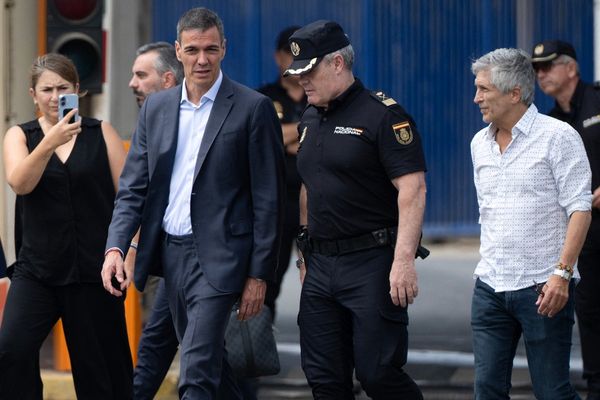
The day rests on an extensive security footprint. Defense Minister Pedro Sánchez described 408,000 personnel deployed nationwide—248,000 guarding polling places and the electoral day, and 160,000 more running other operations. He flagged the main threats as vote-buying and disruption of the day, both carrying prison terms of four to nine years.


Sánchez also said authorities would seize phones or cameras used illegally inside polling areas. Separately, the ombudsman's office deployed 2,342 officials to accompany 2,126 polling sites across 408 municipalities. Bogotá Mayor Carlos Fernando Galán urged residents to turn out early and in force, framing high participation as "the answer to the violent ones and those who want to harm democracy," according to El Tiempo.
With polls before the vote favoring de la Espriella by a margin ranging from under four points to nearly eight, attention now shifts to turnout and the evening's preliminary count.