Summer is here and brings for many a welcome opportunity to spend time on the beach immersed in the pages of a good thriller. Well, if you’re off to the coast let me recommend two crackers from the ‘underworld’ of science. Both spin yarns full of unlikely twists and turns about brilliant detective work that has uncovered the chemical and coding secrets of life on Earth.
The Vital Question
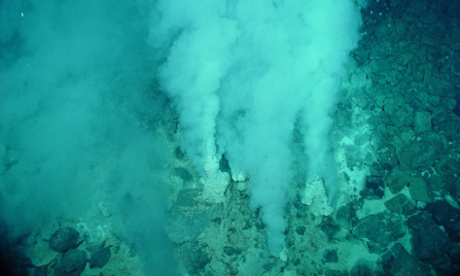
Nick Lane’s The Vital Question goes straight to the energetic heart of the matter, which most readers will be surprised to discover is located in uncharted waters. To the commonsensical eye life on Earth seems to owe its existence to the sun – it warms the planet and powers the photosynthetic plants that sustain all animals. But science, which likes to trip up common sense with observation and experiment on its zig-zag path to figuring out the world, tells a very different story. As Lane explains in this gripping book, life most probably came into being in the murky depths at the bottom of the ocean.
In the beginning was the word and the word was ‘energy’. It turns out that harnessing a reliable source of energy was the key to kick-starting the reproductive chemistry that drives all living things and that first happened – probably – in the microporous rocks formed as warm alkaline fluxes rising from the planetary crust mixed with acidic seawater. Crucially, at this interface between the solid and liquid Earth, the encounter of the excess hydrogen ions (protons) that acidified the sea with the proton-depleted waters rising from beneath allowed proton gradients to be trapped and maintained within tiny pores in the rock formations. The steady flow of protons down these gradients established conditions that favoured reactions between the abundant hydrogen and carbon dioxide dissolved in the waters. These reactions were most likely catalysed – accelerated – by iron-sulphur compounds embedded in the mineralised pores and provided both the energy and the more complex organic chemicals needed to generate the first self-replicating molecules. Chemiosmotic coupling, to give this convoluted process its full name, was born and it has remained essential to life ever since.
Cellular life in the form of bacteria (prokaryotes and archea) emerged – somehow – once these mineral cells on the ocean floor had acquired the protein machinery to generate their own proton gradients, and lipid membranes that allowed them to peel away from their rocky home and become free living.
And then these early single-celled life forms got stuck in an evolutionary cul-de-sac for a billion years or so because they were restricted to an existence at the limit of their energetic means. It’s not that bacteria were simply marking time. Some learned how to photosynthesise, for example, while others developed tremendous metabolic diversity, much of which we ‘higher’ life forms rely on today in the form of the microbiotic bacterial communities that reside within us. But they were trapped in single-celled simplicity until a rare encounter allowed an archeal cell – somehow – to engulf a bacterium without destroying it and gave birth to the first eukaryotic cell, the stuff that we are made of.
From that unlikely intermingling, there was no looking back. The engulfed bacterium morphed and multiplied into mitochondria – the fuel cells of the cell. The mitochondrion has since lost most of its genes to the host cell genome but, in return for a stable home, granted the emergent eukaryotes an enormous power boost. A typical eukaryotic cell contains hundreds or thousands of mitochondria, each converting nutrients into proton gradients and then, through the machinery of chemiosmotic coupling, to the chemical energy needed for the biochemistry of life. A later fusion imported the photosynthetic capability of cyanobacteria into a subset of eukaryotes.
Those unlikely fusions have made all the difference to life on Earth because they finally gave evolution the energy to go exploring far beyond the bounds of what was possible with single-celled organisms on a limited energy budget. Life effloresced magnificently and the results are evident in the superabundance of multicellular flora and fauna that we see today. In further twists of Lane’s remarkable story, the energetics of the rise of the eukaryotes plausibly account for humankind’s greatest preoccupations: sex and death.
The Vital Question is packed with stirring, speculative stuff. Much of what Lane argues is unproven — it is simply not possible to go back in evolutionary time to study the singular events in the drama of life. But he fills in the ‘somehows’ and the ‘probablys’ with plausible and carefully constructed theories, many of them backed by ongoing experimental work in his and other labs.
For some the lack of clear cut answers might be frustrating but what I loved about this book is that it is an argument. There is a epic and symphonic quality to the play of ideas here. Some passages may be difficult on first encounter but Lane’s total enthusiasm for his subject will carry you through. He seems to have spent a lifetime’s supply of exclamation marks in the first few chapters alone but I found that easy to pardon in the informational swirl of his story.
The book also delights with spectacular and surprising detail. I learned that I am a massive unikont; that my mitochondrial membranes are studded with proteins containing molecular iron-sulphur clusters captured from life’s rocky origin to maintain my proton gradients (there is no better illustration of the can-do and make-do spirit of evolution); and that those membranes have a total area of 14,000 square metres – about four football pitches. I told you I was massive.
For Lane, DNA has for too long dominated the story of evolution. The Vital Question provides a riveting corrective by shifting life’s energetics to the front and centre of the revised narrative.
Life’s Greatest Secret
Despite the attention rightly grabbed in Lane’s book for the vital question of energy, DNA shows little interest in quitting the stage. In Life’s Greatest Secret, Matthew Cobb gives the world’s most celebrated molecule yet another spot in the limelight by illuminating the story of its unmasking as the molecular basis of heredity from a fresh and refreshing perspective.
The history of genetics is a well-trodden road but Cobb’s tale fascinates anew because the rise of DNA is told as the collision of two worlds that were born and struggled to maturity in the 20th century – cybernetics and information theory on the one hand, and the untidy business of molecular biology on the other.
Like The Vital Question, Life’s Greatest Secret fizzes with big ideas but Cobb’s story is much more human because the theories, arguments and experiments are fleshed out by the characters involved. Cobb has a sharp eye for personal and historical detail and gives real insight into the workings of scientific research which, as often as not, involve clashes of personalities as well as ideas. These interactions can have positive and negative effects but are never uninteresting. Cobb shows us Avery’s long battle with the uncertainty surrounding his demonstration that DNA and not protein is the stuff of genes; we see Nirenberg, who cracked the first word of the genetic code*, at turns being brushed-off by Szilárd (who had never heard of him), lauded by Crick when he presented his first results at the International Biochemical Congress in Moscow in 1961, and then suffering the agony of competition when he learned that Ochoa’s bigger, richer lab had entered the race to complete the code; Cobb even gives us a taste of Seymour Benzer’s mischievous sense of humour when he writes to congratulate Monod for winning the Nobel prize.
Life’s Greatest Secret is a cracking read. It is especially good at giving a sense of how, in the aftermath of the triumphant determination of the structure of DNA, researchers really struggled to get a handle on the coding problem: how did the molecule store and relay the information to direct protein synthesis in the cells? The beguiling simplicity of the double-helix provided an entry-point for physicists and information theorists to speculate on mechanism that might permit a sequence of four DNA bases (A, C, G and T) to code for protein molecules, which were known to be made up of long chains of 20 different amino acids.
First on the scene was George Gamow. Though better known for his work in particle physics and cosmology, the garrulous Russian muscled in with brilliant but ultimately fruitless ideas about how DNA might control protein synthesis by serving directly as a template for the formation of chains of amino acids. His approach was typical of the information theorists. Although they provided a succession of inventive and challenging ideas, and concepts that suffused and fermented within the emergent discipline of molecular genetics, their approaches leaned too heavily on mathematical logic. It was a tactic that had long worked well in the ordered world of physics and engineering – still does – but failed to cope with the fact that evolution proceeds by accident rather than by design, even at the molecular level. Life, not logic, is its main preoccupation.
Ultimately the mystery of the genetic code was solved by those who were prepared to take on board the messy details of biology and biochemistry. Over all of these towered Crick, mostly as the unassailable genetic thinker of his generation though occasionally also as a experimenter. He had no official role in directing the race to crack the code but seemed always to be present at key moments. He was the first to articulate the idea of a ‘code’ (astonishingly in a letter to his 12-year old son), debated with all-comers (Gamow included), regularly surveyed the field in review articles (dismissing in 1966 a slew of theoretical papers as ‘best forgotten’), and contributed key insights. I would rank his adaptor hypothesis – that there must be an intermediate molecule to enable the ‘translation’ of DNA sequences into amino acid sequences in proteins (later discovered as tRNA) – alongside Dirac’s prediction of the positron. And Crick’s realisation on Good Friday in 1960, jointly and excitedly in an epiphany with Brenner, that RNA is the messenger molecule that relays the information stored in DNA to the ribosomes, the protein synthesis machines of the cell, is a beautiful illustration of one of those rare moments when scientists who have been flailing in the dark emerge suddenly into the brilliant light of discovery. Although Cobb eschews the ‘great man’ view of history – and his narrative is richer, subtler and more diversely populated than my crude synopsis would suggest – Crick remains the bright star around whom so many others found coherent orbits.
The latter part of the book changes gear to explore the ramifications of the code that have played out since the detective work to crack it was completed in the late 1960s. It may lack the pulsating drive of the code breakers’ story but that seems inevitable because Cobb has to reach in different directions to cover the myriad ways in which the rise of genetics, molecular biology and biotechnology have transformed – and are still transforming – our understanding and control of the living world. The recent ethical conundrum raised by the advent of gene-editing technology based on CRISPR is just the latest in a series of important debates about how far we should go in turning our knowledge of the code of life on ourselves and other living things. In such debates it is as necessary to understand the conduct of science as the science itself. Anyone looking to navigate this new and uncertain genetic territory would be well advised to consult Life’s Greatest Secret.
*Nirenberg showed that the triplet of bases, TTT (UUU when transcribed as RNA), stands for the amino acid phenylalanine. The complete genetic code has 64 such triplets (or codons), 61 of which code for amino acids and three ‘stop codons’ that define the end of the protein chain by instructing the ribosome to stop.
Update (30 July 2015): In a follow-up post, you can watch Lane and Cobb talk about the ideas in their books at the Royal Institution. I also get to ask the question I wanted to put to them on the night…
Nick Lane’s The Vital Question and Matthew Cobb’s Life’s Greatest Secret are both available from the Guardian bookshop. @Stephen_Curry’s DNA encodes a professor of structural biology at Imperial College.