
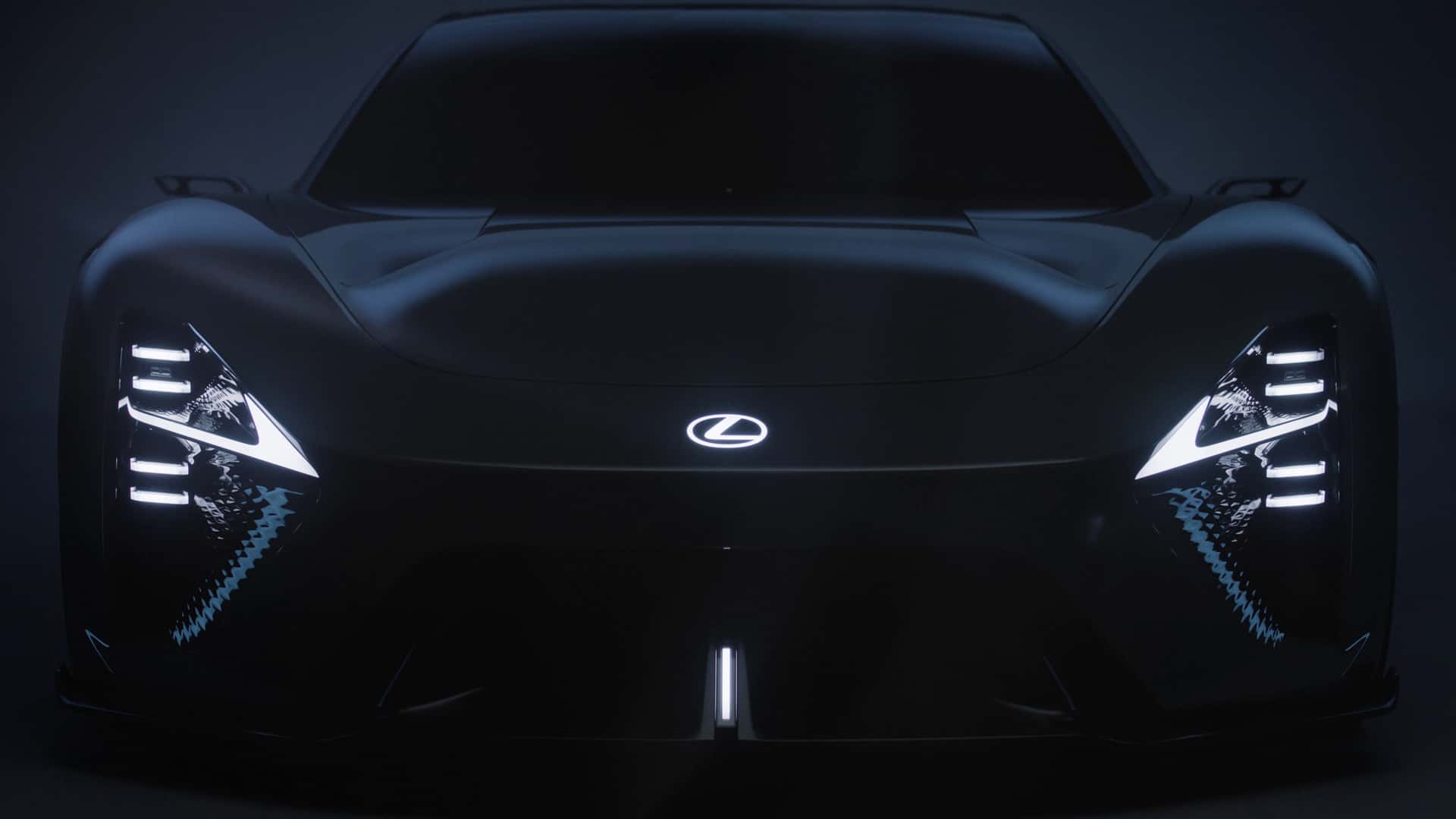
The original Lexus LFA has become the supercar version of a cult classic film.
Praised by some (typically, those who actually drove it) and widely misunderstood by others (pretty much everyone else), it's taken years of internet hype for car enthusiasts to finally appreciate the signature howl of its V-10 engine and its state-of-the-art carbon-fiber construction. Only 500 were made, so consider yourself lucky if you've ever even seen one. You're even luckier if you've spent time behind the wheel.
Now, after 15 years, the LFA is back—maybe. Lexus last night unveiled a new LFA concept, but this is electric. To say that its mechanical cousin, the V-8-powered Toyota GR GT, got a bit more attention is a gross understatement. This new LFA Concept seems to be as misunderstood as the original was. Maybe more so.
And even as someone who now runs a publication about electric vehicles, I get the trepidation. Like an EV-swapped Ferrari Testarossa, swapping that engine for a battery pack borders on sacrilege. Is this really what a potential high-end enthusiast clientele would want?


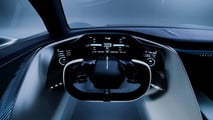
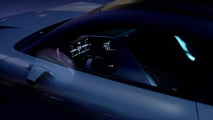
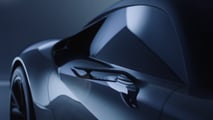
But I'd argue this: it can be. If Toyota can make an electric LFA really good—truly, convincingly good—they should go for it. And perhaps that automaker is the one who can really pull off a great extreme-performance EV.
Let me explain where I'm coming from. Even I have a hard time caring about electric supercars. Why would I? Why would anyone? Right now, you can go buy an electric Volvo hatchback that'll do 0 to 60 mph in 3.4 seconds. Old-school gearheads hate to admit this, but EVs have reset the paradigm on straight-line speed, such any electric Kia or Chevrolet will dust the supercars I grew up admiring.
But Mate Rimac is right. EVs, the few supercars out there, don't provide the same experience that gas-powered supercars offer. The sound of an engine, the feeling of unity with your machine, exceptional handling unburdened by a battery pack—EVs haven't pulled that off yet. And maybe they don't need to yet. From a societal standpoint, we need more great, affordable zero-emission options for people, not more six-figure electric toys. It's why the Lucid Gravity, as impressive as it is, leaves me a bit cold.
An electric Toyota Corolla is a far more impactful and meaningful achievement than an electric supercar. But I'll also admit that in a long career covering gas-powered cars before I came to InsideEVs, I was never much of a supercar guy. I've played around with a few, and they're neat, but ultimately fleeting.
The Lexus LFA, however, was different. I drove one once, a decade ago—a customer-owned car acquired by a mutual friend in Austin. And that was an experience that I will never forget.

Forget what you think you know about the original LFA. It was much more Ferrari than Toyota. That V-10 had the best and most memorable engine howl I've perhaps ever experienced. The interior is heavily unique to that car. The handling is far more aggressive than you'd expect, rewarding skill and never suffering fools. The single-clutch sequential gearbox feels racecar-ready. Even a street drive quickly shows you why this thing crushed a Nürburgring lap record in its day.
Oh, and people stare when you pass by in ways they don't when you're in a Lamborghini. You look like Batman in this thing. And you feel like him, too.
Within Toyota itself, the LFA is a special machine—more so than most people realize. It was pushed through by Japan's gearhead-in-chief, Akio Toyoda, not long after he became CEO of the company and was determined to shed its beige and staid image. He and other top drivers at Toyota were instrumental in developing the machine, including Toyoda's mentor, Hiromu Naruse. Sadly, the company's original "Master Driver" died while testing the LFA at the Nürburgring, but his legacy can be felt in countless performance-focused Toyota and Lexus models made since.
That's why I'm as surprised as anyone that Lexus would give the LFA name to a long-simmering EV sports car concept. After all, Toyota historically has been the most electro-skeptical major automaker, choosing to focus more on hybrids and hydrogen cars than making bold commitments to an all-electric future. But the EV tides at Toyota seem to be changing recently. It has new EVs due out in America soon, and so far, they seem impressive. It knows it needs to compete in Europe and China as EV adoption rises. And it knows it needs to make good on those years of promises about solid-state batteries.
I've driven electric prototypes in Japan with simulated LFA V-10 engine sounds and an honest-to-God simulated manual gearbox, complete with a clutch pedal and stall-outs. Trust me, they're better than you'd think. The Toyota people I’ve spoken with seem to feel that if even the world’s most EV-skeptical automaker has to build electric cars, then those cars should at least be engaging and fun to drive. They need to not suck.
To be fair, this LFA concept could go nowhere. I'm still waiting on that definitely-not-an-electric-MR2-thing that's been gestating for years, and Toyota's walked back promises on electric cars before.
But what if Toyota's onto something now? Maybe this new, battery-powered LFA can do something no electric supercar has done before—be convincing. If the car company that says it's determined to keep cars fun to drive forever is willing to put that name on an EV, maybe it really is something special.
A transmission we've never experienced before. Lighter weight, thanks to new kinds of batteries. Multiple, selectable simulated engine sounds. It probably won't be what the gearhead faithful want, but Toyota has the GR GT for that now. (Plus, those people never actually buy these cars anyway.) Maybe this company could make an EV that enthusiasts actually want, and didn't feel like it was made under duress thanks to emissions regulations.
So even as someone who's pro-EV, bored by most EV supercars and a bit baffled that the LFA could go electric, I say Toyota should go for it. If the car is good. If it can win hearts and minds about EVs, and be something truly memorable and unique to drive.
That's what the original LFA was. If this thing can really live up to the name, I say: why the hell not?