As Thai Mother's Day approaches, we rightly praise mothers for their love, sacrifice and seemingly endless patience. Flowers are presented. Children kneel. Photographs are taken.
But perhaps mothers and society deserve something more practical: sons who eventually become men capable of carrying their share of household and societal load.
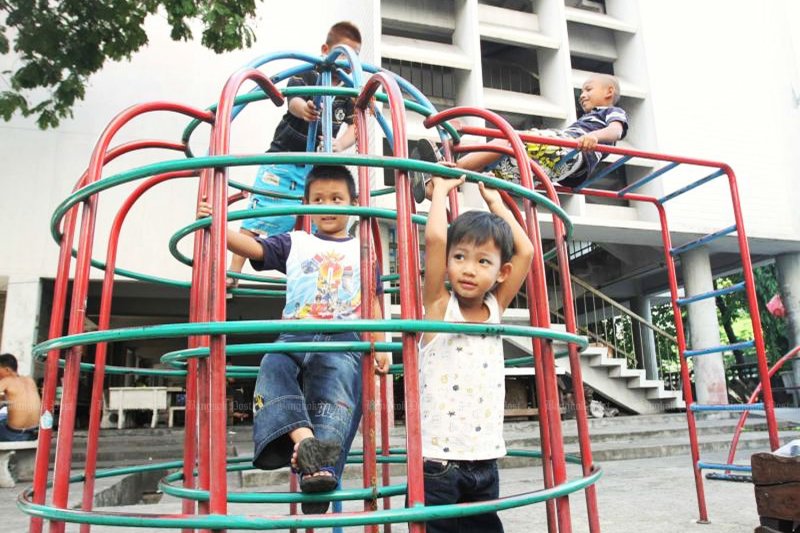
Let boys be boys. Let them run, fall, play sports, sweat, lose, try again and occasionally do something that appears idiotic. Let kids experience discomfort while the consequences remain small. Let children solve problems before rushing to solve problems for them. I do not support aggression, entitlement, or the old idea that "boys will be boys" excuses bad behaviour. Quite the opposite. Boys need freedom as much as boundaries. Boys need to learn about their abilities and limits, self-control and being responsible for their actions. The problem is that some boys are loved but inadequately prepared for life.
Children pass through different stages of influence from mother, father and family, and then to friends and wider society. In the first five or six years, mothers often provide a strong foundation of care, guidance and security. Between seven and 12, fathers and other male role models become more important. During teenage years, friends increasingly shape behaviour, identity and expectations. St Ignatius said, "Give me a child until he is seven and I will give you the man" and Jim Rohn said, "Show me your friends and I will show you your future."
Fathers can be physically present but parentally absent. Some men leave mothers to organise everything: meals, homework, school and discipline. Mothers are exhausted, fathers are distractions, while sons sadly learn that women carry the household while men are served. Boys become princelings. In my neighbourhood, I see sons who cannot ride a bicycle properly, yet their dads cycle regularly. Moms buy them an electric bike, lessening their obligations and the physical activity needed for proper development and hormonal balance in boys.
While it may seem initially hard getting boys to be active around the house, the short-term inconvenience creates long-term dependence. One university student told me his mom picks out daily what he should wear.
Teaching boys to cook, clean, wash clothes, and care for younger or older relatives is neither feminine nor unnecessary; these are survival skills and, more importantly, caring skills. Masculinity is demonstrated by preparing dinner for the family, tending a sick child or caring for ageing parents without expecting applause.
Boys also need physical challenges in different forms such as competitive sports, outdoor play and opportunities to test their strength. Properly supervised rough play teaches restraint, cooperation and respect for boundaries. Mothers may not enjoy the seemingly male idiocy. That is where fathers, grandfathers, uncles, coaches and positive male role models come in.
Kids are naturally resilient learners, but this resilience needs practice to develop. Parents take away growth opportunities for their children with curated lifestyles.
At university, I see the consequences. Many students struggle with ordinary face-to-face conversation. Many male students cannot speak directly, comfortably or with intent with female students. I now include a conversation session in every course, every semester, simply so students can practise talking to one another. Something earlier generations learned at home, in the street and on the playground. Listening, reading expressions, tolerating awkward pauses and accepting disagreement are skills that must be practised.
What should mothers (and fathers) do? Be positively involved by making the effort to teach boys to contribute to household chores and take care of themselves. Reading and discussing books as a family, including Hardy Boys classics, experiments and adventure-type books, is good. Let the men in boys' lives be positive role models.
There is plenty of support around. Talking with neighbours can find support. Getting involved through a school's PTA is another useful collective effort. Various government organisations and NGOs also provide help for parents seeking guidance. A few parenting and fathers' groups (Bangkok Dads) exist in Thailand; find them and see what they offer. It does not take much to help boys be boys.
Mothers who make the effort are not only raising better sons but also raising the number of men who become dependable partners, engaged fathers and responsible members of society. And perhaps, one day, it will mean fewer women carrying everything alone.
Mariano Miguel Carrera, PhD, is a lecturer at the International College at King Mongkut's University of Technology, North Bangkok.