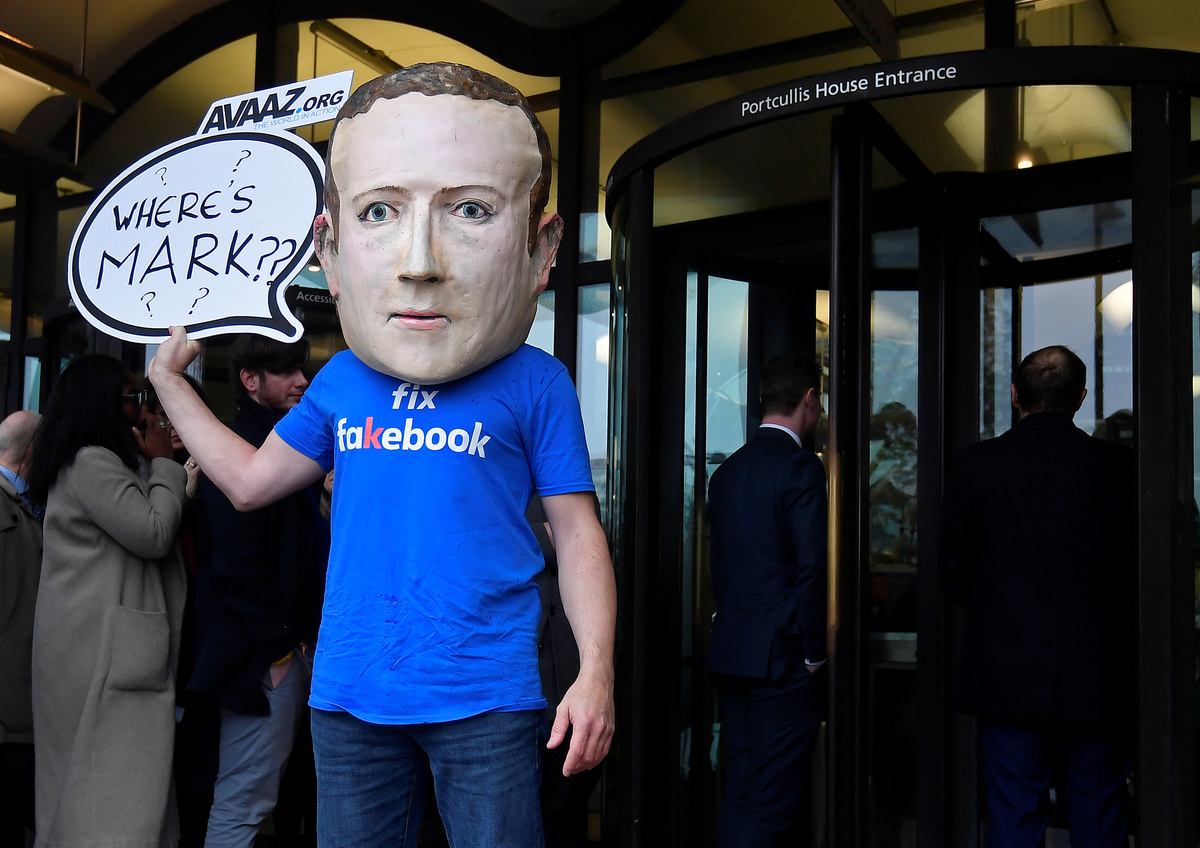
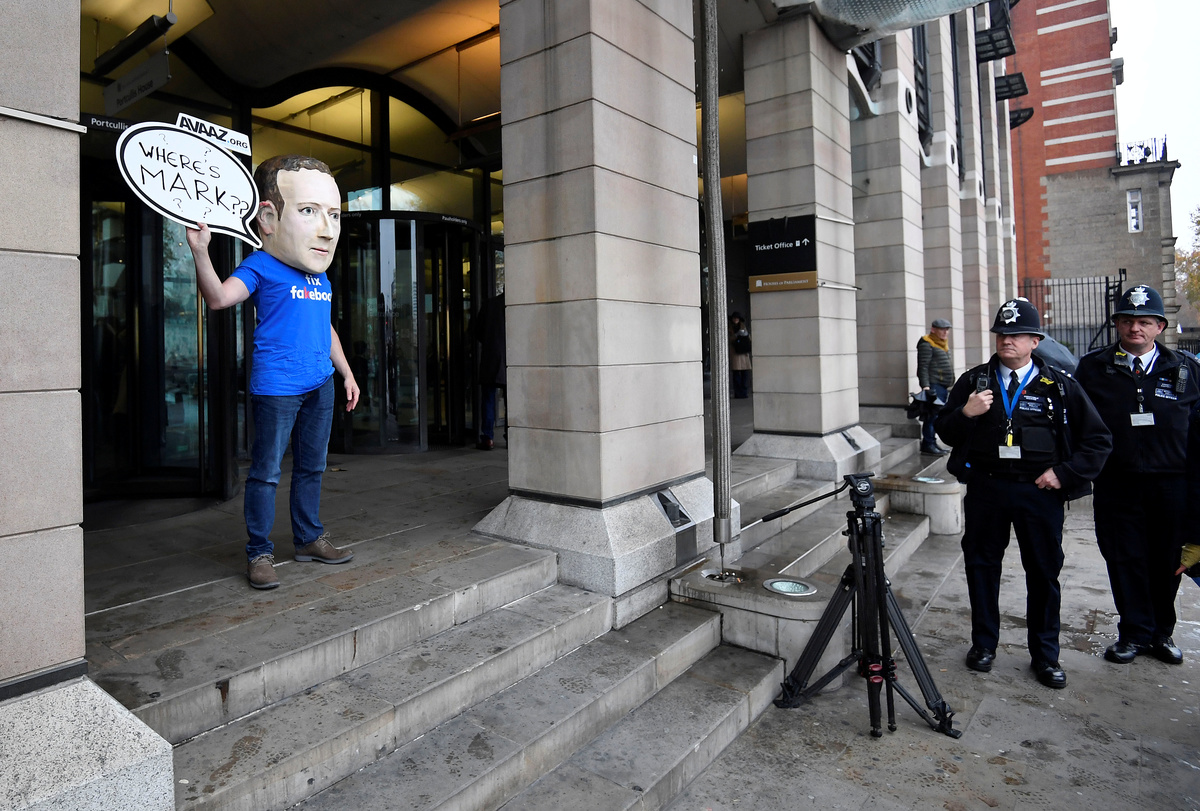
LONDON (Reuters) - Facebook <FB.O> came under fire on Tuesday from lawmakers from several countries who accused the firm of undermining democratic institutions and left out an empty chair for chief executive Mark Zuckerberg after he declined to be questioned.
Facebook is being investigated by lawmakers in Britain after consultancy Cambridge Analytica, which worked on Donald Trump's presidential campaign, obtained the personal data of 87 million Facebook users from a researcher, drawing attention to the use of data analytics in politics.
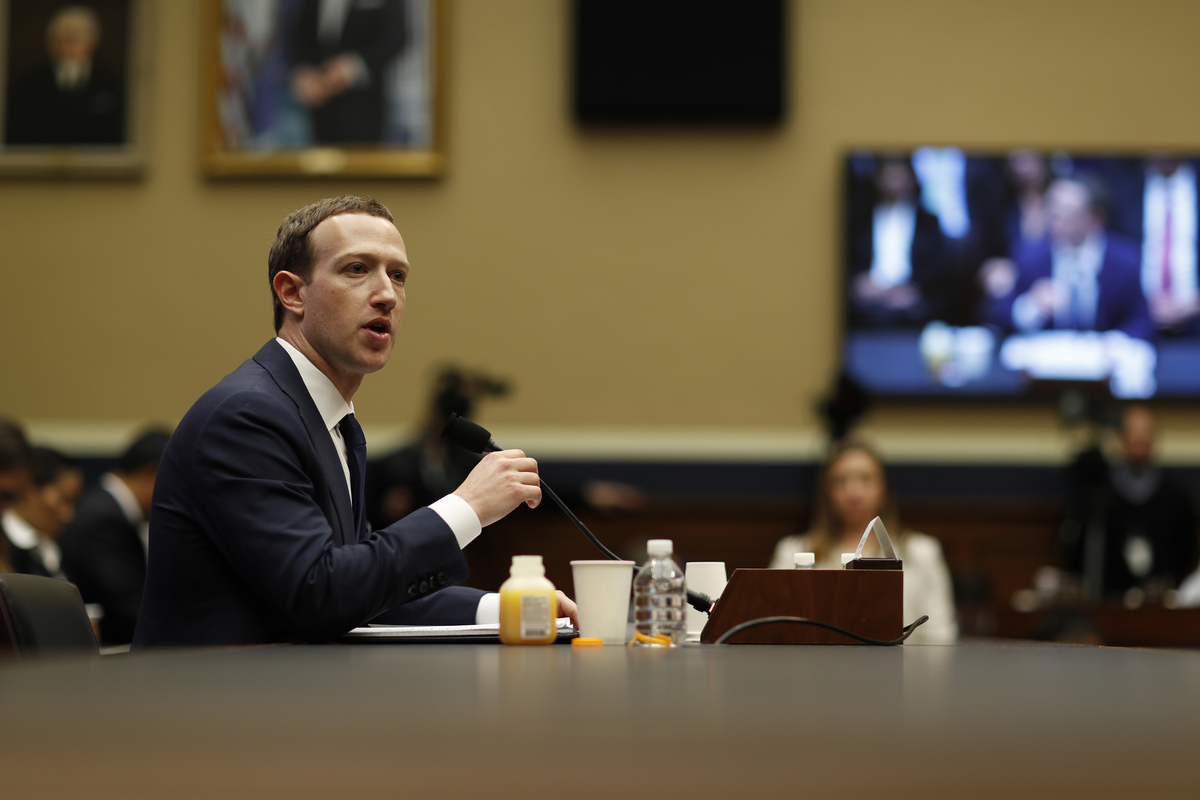
Concerns over the social media giant's practices, the role of political adverts and possible foreign interference in the 2016 Brexit vote and U.S. elections are among the topics being investigated by British and European regulators.
"We've never seen anything quite like Facebook, where, while we were playing on our phones and apps, our democratic institutions ... seem to have been upended by frat-boy billionaires from California," Canadian lawmaker Charlie Angus said at a special international hearing at Britain's parliament.
"So Mr Zuckerberg's decision not to appear here at Westminster (Britain's parliament) to me speaks volumes," he said, later suggesting Facebook could be broken up to help address the issues.
Facebook says it complies with EU data protection laws, but Richard Allan, the company's vice president of policy solutions who appeared in Zuckerberg's stead, admitted it had made mistakes.
"I'm not going to disagree with you that we've damaged public trust through some of the actions we've taken," Allan told the hearing.
RUSSIAN IP
The 24 representatives from nine countries, who demanded answers from Facebook over its use and treatment of data, posed for a picture with an empty chair behind a desk with a nameplate for Zuckerberg on it.
Facebook has faced a barrage of criticism from users and lawmakers after it said last year that Russian agents used its platform to spread disinformation before and after the 2016 U.S. presidential election, an accusation Moscow denies.
Legal documents reviewed by Reuters show how the investigation by British lawmakers has led them to seize documents relating to Facebook from app developer Six4Three, which is in a legal dispute with Facebook.
Damian Collins, chair of the culture committee which convened the hearing, said he would not release those documents on Tuesday as he was not in a position to do so, although he has said previously the committee has the legal power to.
However, he did refer to one item in the documents, alleging a Facebook engineer had "notified the company in October 2014 that entities with Russian IP addresses have been using a Pinterest API key to pull over 3 billion data points a day."
API refers to Application Programming Interfaces, which have been restricted by Facebook in light of the Cambridge Analytica scandal.
Allan said the documents were "a partial set of information that was obtained by a hostile litigant."
"Any information that you have seen that's contained within that cache of emails is at best partial and at worst potentially misleading," he said.
In a separate response to the issue raised by Collins, Facebook in a statement said "the engineers who had flagged these initial concerns subsequently looked into this further and found no evidence of specific Russian activity".
(Reporting by Alistair Smout; Editing by Mark Potter)







.jpg?w=600)