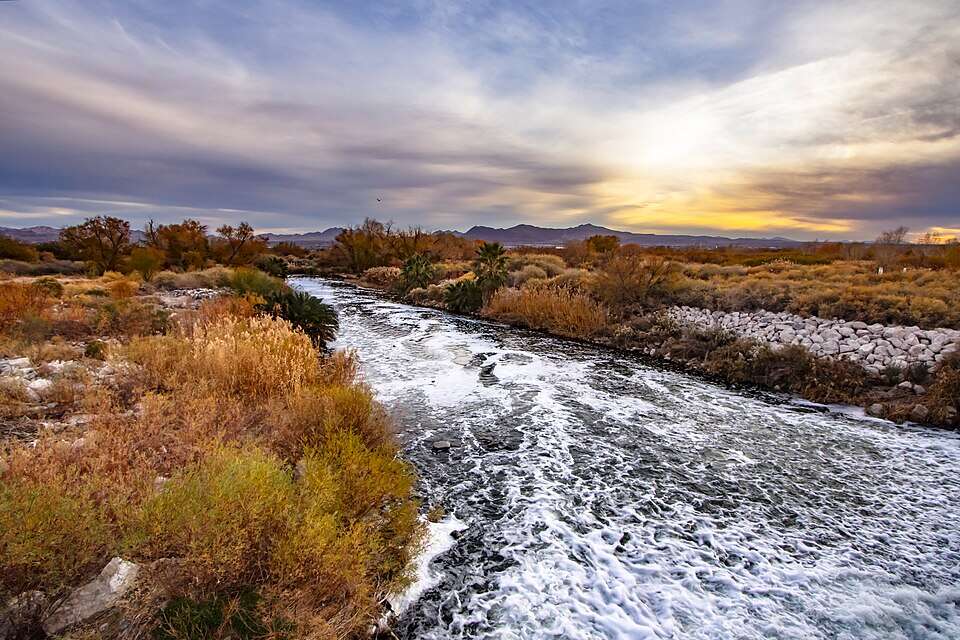
For many years, the Las Vegas Wash played an important role in southern Nevada's ecology. The channel carries excess water from the Las Vegas Valley into Lake Mead and supports wetlands and wildlife in the area. However, by the 1990s, years of urban development and heavy water flow had destroyed almost 90 percent of the wetlands in the Las Vegas Wash, according to the Las Vegas Wash Coordination Committee.
Get breaking news anytime, anywhere. Download the TOI app now!
Today, after more than two decades of restoration, the Las Vegas Wash has been transformed. According to the Southern Nevada Water Authority ( SNWA ), engineering efforts coupled with habitat restoration have reduced suspended sediment in the water by about 60 percent.
Almost disappearing wetland
The Las Vegas Wash is the main channel that carries excess water from the Las Vegas Valley to Lake Mead. According to the Southern Nevada Water Authority, the Wash discharges more than 200 million gallons of water daily, including treated wastewater, urban runoff, shallow groundwater and stormwater.
Though it contributes only about 2 percent of the total inflow into Lake Mead, it plays an important role in protecting the lake's water quality. Once there were more than 2,000 acres of wetlands in the Wash that served as habitat for different species such as birds, fish, reptiles and native plants. As treated wastewater discharges increased in the second half of the 20th century, water flow accelerated significantly.
As reported by the Las Vegas Wash Coordination Committee , at its historical peak in the 20th century, wetland vegetation covered more than 2,000 acres along the Wash. When revegetation activities began in 1999, only 200 acres remained due to increasing flows and erosion.
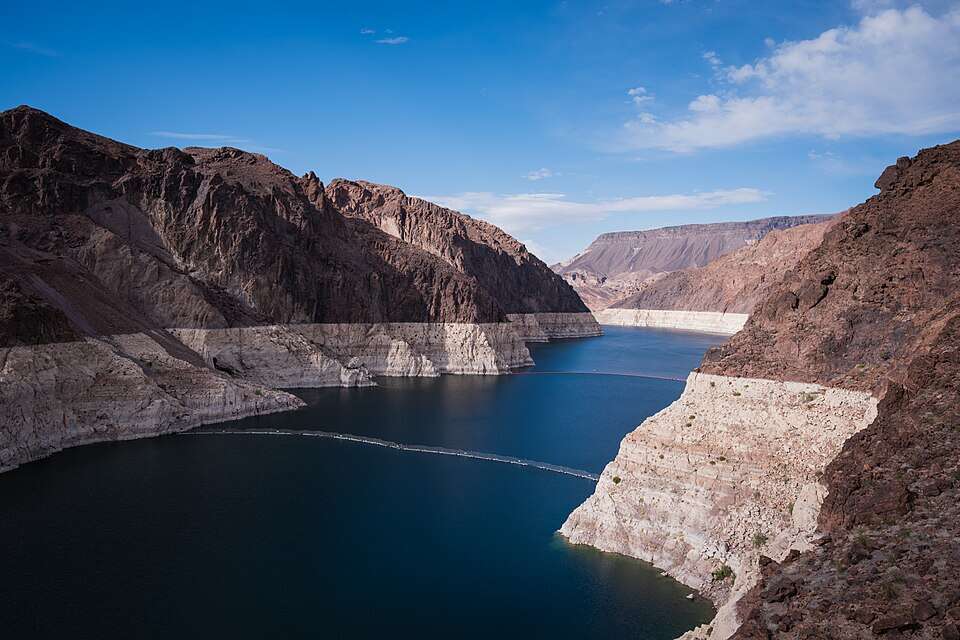
Why erosion became such a major problem
Scientists describe this process as channel incision, where fast-moving water cuts deeper into the streambed and widens the channel. As vegetation disappears, bare soil becomes easier to erode during storms and daily water flows. According to the U.S. Geological Survey (USGS), excessive sediment can reduce water quality by increasing turbidity, limiting ecological and drinking-water uses, and harming aquatic habitats. Because Lake Mead supplies water to millions of people in Nevada, Arizona, California and Mexico, reducing sediment flowing into the lake became a major environmental goal.
The restoration plan for the Wash
To address the problem, a group of organizations formed the Las Vegas Wash Coordination Committee in 1998, bringing together more than 25 agencies, environmental groups, the University of Nevada, Las Vegas, local businesses and residents. According to the Southern Nevada Water Authority, the plan aimed to stabilize the channel, conserve soil, restore native plants, improve habitat for animals and enhance water quality.
An important part of the restoration process involved the construction of 21 grade control weirs. The structures are made from steel sheet piling, concrete and stone to slow water flow and reduce channel erosion. Materials from demolished Las Vegas landmarks, including the Stardust Casino, Desert Inn Hotel, El Rancho Casino, Castaways, Westward Ho and the old MGM Hotel, were used in the concrete. The slower water flow also creates shallow pools behind the weirs, allowing wetland vegetation to grow.
Native species returned while invasive plants declined
However, the restoration effort was not limited to engineering. According to the Las Vegas Wash Coordination Committee, invasive saltcedar, also known as tamarisk, covered about 1,500 acres and made up nearly 80 percent of vegetation in some parts of the Wash.
Saltcedar is an invasive plant that raises soil salinity levels and prevents other native plants from growing. With the help of mechanical and herbicide treatments, the committee has reduced the saltcedar population within Clark County Wetlands Park to below 30 acres.
Improved water quality and better habitats
The restoration project has produced several environmental gains. According to the Southern Nevada Water Authority, stabilization of the Wash has reduced total suspended solids by about 60 percent because far fewer sediment particles are washed into Lake Mead. As a result, the Nevada Division of Environmental Protection removed the Las Vegas Wash from its impaired waters list.
Today, the restored wetlands provide habitat for birds, fish, reptiles and mammals while helping filter sediment before it reaches Lake Mead. The Las Vegas Wash illustrates what long-term collaboration among engineers, ecologists, government agencies and the local community can achieve. Even though the ecosystem will continue to require management, the restoration of the eroded channel and its wetlands has made clear progress.