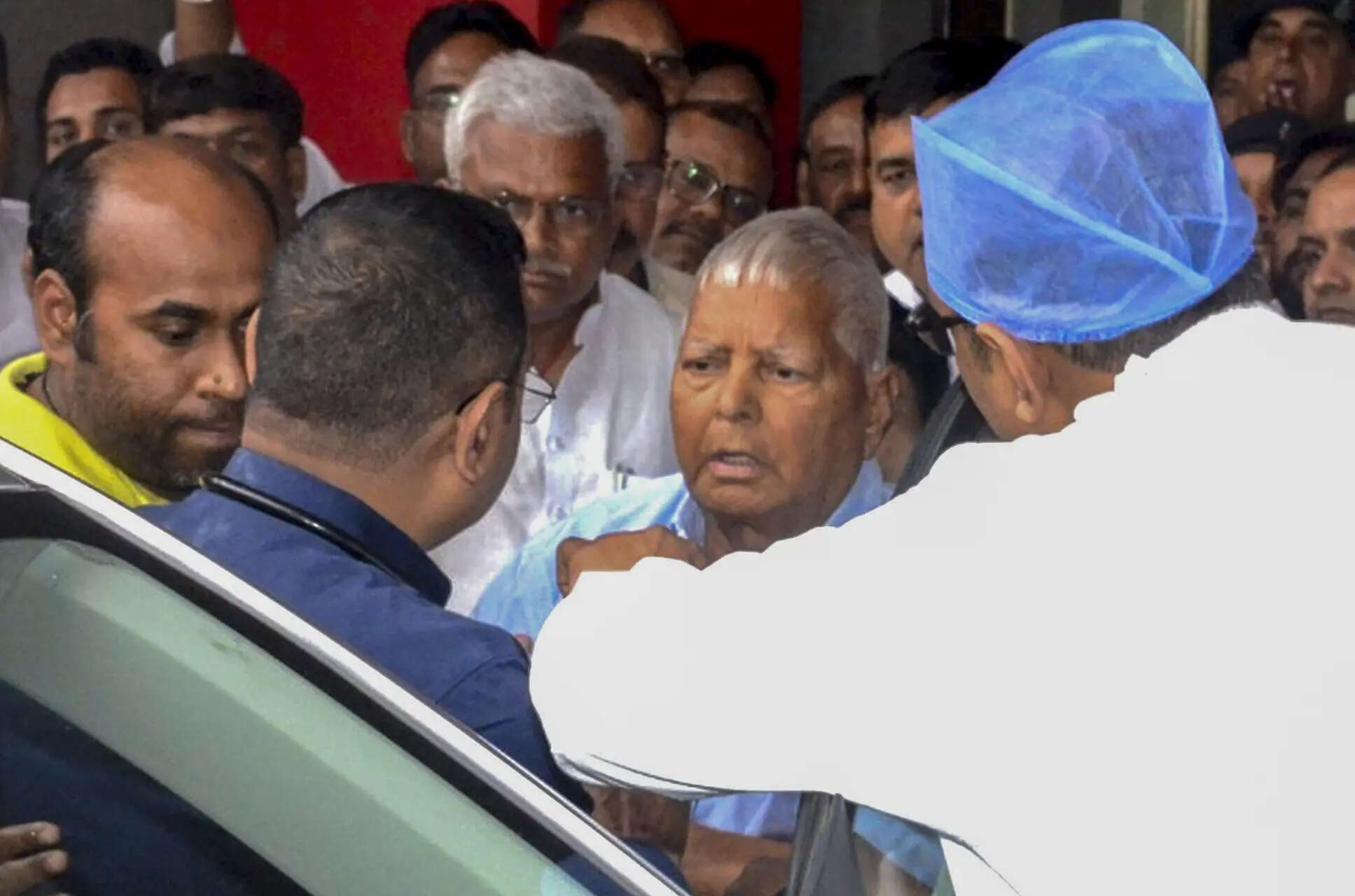
RJD Chief Lalu Prasad Yadav has arrived in Delhi, along with his wife Rabri Devi, for treatment at AIIMS, after being admitted to a hospital in Patna for a brief period. As per reports, his health worsened on Wednesday morning. He was under intensive medical observation at Paras Hospital, Patna where doctors said that his blood sugar and BP levels had spiked, leading to the sudden health crisis. Talking to reporters, his son Tejashwi Yadav said his father had developed sores on his back and an arm.
In Delhi, he is scheduled to undergo detailed medical tests where doctors will monitor his blood sugar levels and other health parameters. Dr Prakash Sinha, Head of Pulmonary Medicine at Paras Hospital, said, "He also had a fever and has been given medication for that. When he arrived, he was a little low, but soon he started responding to the treatments and became alert... He talked to everyone. He has to go to Delhi today." "He was kept in the emergency ward where his condition improved after intravenous therapy. He wanted to know if he could go to Delhi in an air ambulance. We asked him to go ahead," he added.
What causes body sores?
Body sores, also known as pressure ulcers or bedsores, develop due to prolonged pressure on the skin, leading to reduced blood flow and tissue damage. They commonly occur in bedridden or immobile individuals. Key causes include:
Prolonged pressure: Continuous pressure on specific areas, such as the back, heels, and hips, restricts blood circulation, causing tissue breakdown.Friction and shearing: Rubbing against bedding or clothing weakens the skin, increasing the risk of sores.Poor circulation: Conditions like diabetes and vascular diseases impair blood flow, delaying wound healing.Malnutrition and dehydration: A lack of essential nutrients weakens the skin, making it more susceptible to breakdown.Infections and chronic illnesses: Underlying medical conditions can slow wound healing and increase the risk of complications.
Line of treatment
Managing body sores requires a combination of preventive and curative measures. Regular repositioning, using specialized mattresses, and cushions help reduce pressure on vulnerable areas. Cleaning the sores with saline solution, applying medicated dressings, and keeping the area dry prevents infections. Topical antibiotics, pain relievers, and antiseptic creams aid healing and reduce discomfort. A protein-rich diet with vitamins and adequate hydration promotes skin repair. In severe cases, surgical procedures like debridement (removal of dead tissue) may be necessary. Early detection and prompt treatment are crucial to prevent complications and ensure faster recovery.
Health issues of RJD Chief Lalu Prasad Yadav
Lalu Prasad Yadav had an open-heart surgery in a hospital in Mumbai in 2014.
In May 2018, Yadav was admitted to the Indira Gandhi Institute of Medical Sciences in Patna after experiencing chest pain and breathing difficulties. In August 2018, Yadav was hospitalized at Mumbai's Asian Heart Institute due to deteriorating health.
In December 2020, Dr. Umesh Prasad, Yadav's physician at Rajendra Institute of Medical Sciences (RIMS), reported that Yadav's kidney function had declined to 25%, describing the situation as alarming. Dr. Prasad highlighted that Yadav's longstanding diabetes, spanning over two decades, had led to escalating end-organ damage, increasing the risk of further deterioration at any time.
In 2022, he underwent a kidney transplant in Singapore, and the donor was his daughter Rohini Acharya, who lives there.
He also underwent an angioplasty in Mumbai in September 2024.
Once a garrulous politician known for an uncanny ability to connect with the masses, the 76-year-old has been largely keeping away from public gatherings.
(With inputs from agencies)