In most European contexts, the word “migration” refers mostly to people arriving from abroad. In Uzbekistan, it refers to citizens who travel overseas to work, gain professional experience and later return home. And they are already a lot of them.
According to the Ministry of Internal Affairs, as of 1 October 2025, about two million Uzbek citizens live abroad, 1.6 million of them employed. The majority still work in Russia (around one million), but the share of workers headed to Europe and Asia for skilled roles is steadily rising.
Created a year ago on the initiative of President Shavkat Mirziyoyev, Uzbekistan’s new Migration Agency has taken on a central role in how the country manages labour mobility. The institution focuses on supporting Uzbek nationals working abroad, protecting their rights, and expanding access to skilled employment across borders.
Through the KOUZON recruitment company, more than 5,000 Uzbeks are joining this year cruise industry in gastronomy, service, medicine, and technical fields, earning between €1,400 and €3,700 per month.
A major agreement with Italy’s Lombardy Region will bring 3,500 nurses to Italian clinics starting in 2026, while in Japan, partnerships with JCAEMCE and Proud Partners aim to prepare 10,000 skilled specialists and professional drivers, supported by training centres in Tashkent, Samarkand, and Namangan.
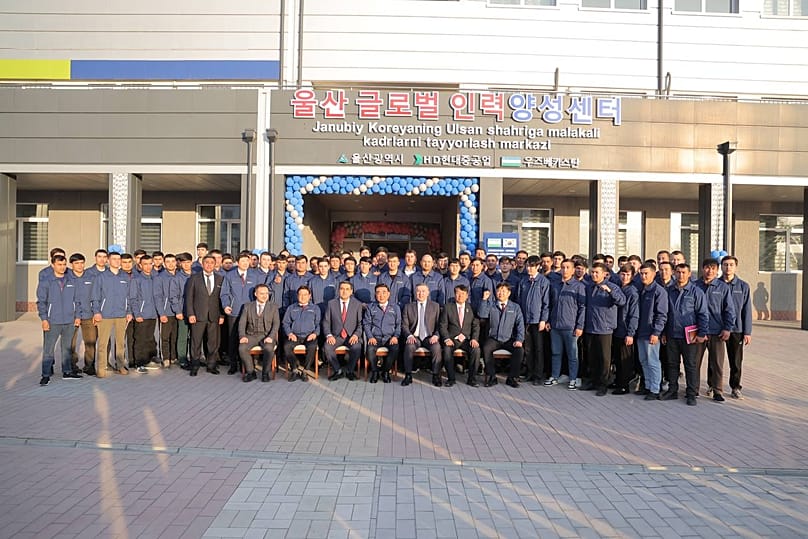
Other agreements include 2,000 workers for Austria, 200 for Portugal and 150 for the Netherlands, primarily welders, electricians, and agricultural technicians.
Benefits for both sides
According to the Central Bank of Uzbekistan, citizens working abroad sent home the equivalent of around €13.9 billion in 2024.
For many families, part of these earnings becomes the first capital for launching small businesses, from neighbourhood bakeries to carpentry workshops, helping create jobs and support local enterprise.
At the same time, regulated labour mobility enables European industries to fill shortages in essential sectors such as healthcare, construction, and logistics.
But there is another benefit for the country itself, as described by the Director of the Migration Agency, Behzod Musaev.
“Every successful migrant is an ambassador of Uzbekistan’s new image: Educated, responsible and open to the world,” he told Euronews.

Why it matters to Europe
Across Europe, employers are struggling to fill vacancies in healthcare, logistics, and agriculture. EU research, notably from Eurofound, the European Foundation for the Improvement of Living and Working Conditions, a tripartite EU agency that provides evidence and analysis to shape labour and social policy, indicates that skills shortages have become structural, with millions of positions expected to remain unfilled unless recruitment models evolve.
By training and certifying workers before departure, Uzbekistan offers a potential answer: A regulated, skilled workforce able to integrate quickly into European industries.
“Europe needs qualified people, and Uzbekistan is ready to train them responsibly,” said Musaev. “It’s not a one-way flow. It’s a partnership.”
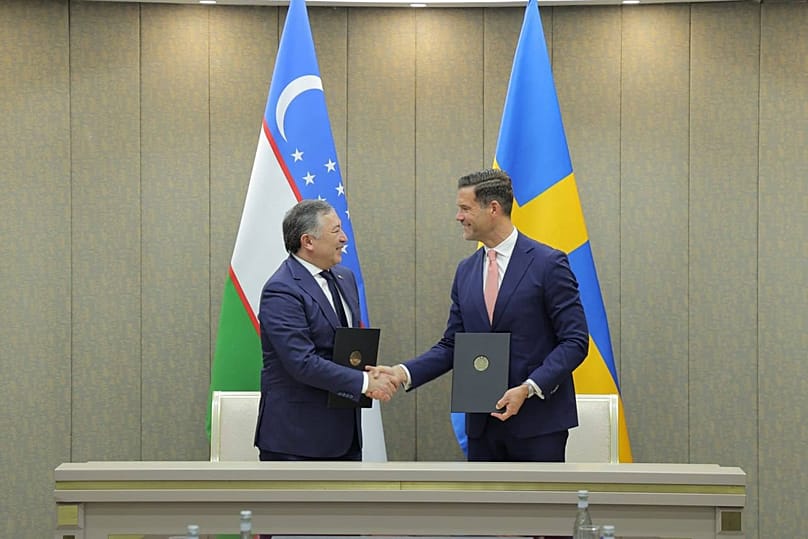
This approach is already visible in Germany, where more than 2,000 Uzbek citizens are enrolled in dual vocational programmes with companies such as Globogate GmbH, Klett EDU GmbH, NoVo Agency GmbH, RekruitMed and SBH WeST GmbH. In the UK, cooperation with the Gangmasters and Labour Abuse Authority and the Association of Labour Providers ensures that workers join the Seasonal Workers Scheme through transparent recruitment and full legal oversight, increasingly essential for European businesses under ESG compliance requirements.
Digital preparation and fair recruitment
Behind these policies lies a digital backbone. The agency launched Test.xorijda.uz, an online platform offering language and history test simulators for candidates heading abroad. The free platform includes seven modules of 150 questions and receives over 600,000 visits each month, reducing reliance on informal intermediaries.
“Digital tools bring transparency,” Musaev explained. “They prevent fraud and prepare people for real working and living conditions.”
The platform is part of a wider digital management system that tracks employment contracts, skills, and reintegration outcomes through measurable KPIs.
To ensure safe and successful adaptation overseas, the Agency and the Institute for the Development of Vocational Education introduced a free ten-hour pre-departure course. The programme covers legal literacy, social adaptation and safety, including visa procedures, rental rules, labour contracts, cultural orientation and digital security.
Protecting citizens abroad
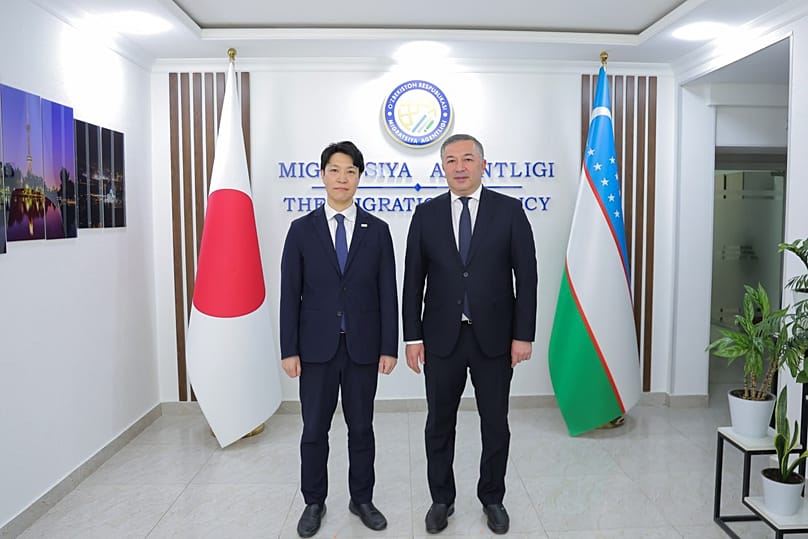
Protection remains central to the agency’s work. In 2025, its overseas missions helped more than 150,000 migrants resolve legal, social, and financial issues — from lost documents to wage disputes.
Among them were 352 citizens who recovered confiscated passports and 561 who received legal support to return home. Agency lawyers also recovered unpaid wages amounting to €1.75 million for nearly 3,000 workers.
In the most vulnerable cases, more than 2,300 citizens were repatriated and provided with emergency accommodation or medical support.
Global partnership
“The International Organization for Migration works closely with the Migration Agency to advance safe, orderly and dignified migration for Uzbek citizens,” said Andrew Gray, Chief of Mission of the IOM in Uzbekistan. “Since its formation in 2024, the Agency has opened new pathways for labour migration, responded to evolving global demand and promoted safe migration. We expect its efforts will continue to support Uzbekistan’s development and benefit migrants and their families.”