Afternoon summary
- Jim Murphy, the former Labour Scottish leader, has said that party leadership candidates will be learning the wrong lesson from the Scottish independence campaign if they decide to keep the party out of the cross-party pro-EU campaign. (See 4.05pm.) His comment seemed to be aimed particularly at Andy Burnham, who has spoken out about this.
-
Murphy has said that David Cameron is so “lame-assly dumb” he may allow the SNP to find an excuse to hold a second independence referendum. During the Q&A after his speech he said:
There will be another referendum whenever the SNP can get away with it. Why wouldn’t there? If you are an insurgent nationalist party with unprecedented power and with an absolute majority ... why wouldn’t you try and engineer a set of circumstances to get you another referendum? My frustration is that Cameron is so lame-assly dumb on it that he is set to stumble into it and give them the excuse to do it.
That’s all from me for today.
Thanks for the comments.
Earlier I quoted from Tim Bale, the academic who has written a book about the Labour party under Ed Miliband. (See 12.59am.) Bale has also been tweeting about the decision of Labour MPs to let Jeremy Corbyn into the leadership contest.
MPs get to decide today whether #Labour is still a serious political party or a sixth-form debating society.
— Tim Bale (@ProfTimBale) June 15, 2015
So #labour turns out to be a sixth-form debating society after all....
— Tim Bale (@ProfTimBale) June 15, 2015
Recently my colleague Nicholas Watt reported that Philip Hammond, the foreign secretary, has been joking in private about how the Tories could cut welfare spending and solve their EU renegotiation problems in a stroke with a single measure.
Philip Hammond, the foreign secretary, joked at a recent meeting that the government could kill two birds with one stone in two key areas – the EU negotiations and the £12bn welfare cuts – by denying all UK workers the right to claim tax credits for their first four years in work.
According to a post by Allegra Stratton on the Newsnight blog, this is no longer just a joke. She says that the Treasury has asked the Department for Work and Pensions to consider whether it could cut welfare spending by £15bn, not the £12bn planned and that the Hammond idea is being taken seriously.
I am told Treasury officials have actually asked the Department for Work and Pensions to deliver information on £15bn worth of cuts, not just £12bn. Of course this might just be a scoping exercise. But it does suggest that the Chancellor still means business.
We have reported on Newsnight that £5bn of cuts to tax credits are in the mix. One source now tells me the pot of money in the firing line might be £8bn and affect both child tax credits and working tax credits. There is also a growing view that one way to address the debate about EU migrants coming to Britain and getting in work benefits ... is just to limit in work benefits. That way there would be no discrimination against non-Brits because the Brits would be restricted too.
In a column Martin Kettle says that, despite everything, it is looking as if there will be a good contest for the Labour leadership. Here’s an excerpt.
They shouldn’t be having this election now. They are doing everything in the wrong order. The nomination system stinks. The election system is neither democratic fish nor electoral college fowl. The candidates are all a bit lacking in different ways. The race for the deputy’s job is a total waste of time. And Labour is a party in denial about going through a near-death experience. Yet apart from all that, the Labour leadership election is actually looking like a good contest as nominations close today.
The good news is that there is a decent range of candidates to choose from. Two men and two women; age and youth; a spectrum of views from old left to Blairite; a mix of ministerial experience and views from the backbenches; candidates from London, the Midlands and the north. Believe me, it could be a lot, lot worse.
Murphy warns Labour could be learning wrong lesson from Scottish referendum
In his Policy Exchange speech Jim Murphy, the former Scottish Labour leader, repeated many of the arguments about Labour’s plight that he made in his Today programme interview. (See 10.34am.) But he had new points to make too. Here are the key ones.
-
Murphy said Labour should not boycott the cross-party pro-EU campaign. It should run its own campaign, but also play a big role in the cross-party campaign too, he said. It was important not to learn the wrong lessons from Scotland, he argued, referring to the fact that many Labour people think campaigning with the Tories against independence led to the party being near-obliterated by the SNP at the election. He said:
I fear that is happening in the debate over the EU referendum.
Our mistake wasn’t that we participated in a cross-party campaign that swamped a Labour campaign. Labour could not stand back from a leadership role in the defining campaign of our lifetimes.
Our mistake was to have very little identifiable Labour campaign at all. Or more precisely to have one that lacked heart and soul despite the admirable work of our then deputy Anas Sarwar.
Even Gordon Brown’s great eve of poll speech in Maryhill wasn’t a Labour Party event – it was put on by Better Together.
We need both a mobilisation of the Labour Party and the labour movement to stay in Europe and for us to play a central role in a non-partisan campaign.
We cannot afford to leave Cameron a space to be centre stage and to claim the credit for saving Britain from a catastrophe to which a large part of his party are hand maidens.
-
Murphy said Labour should champion more decentralisation.
We have rightly abandoned nationalisation in industrial policy.
But too many politicians seem to have transferred the instinct to direct from economic policy to aspects of public policy.
That is wrong.
Liberty and freedom are great Scottish, English and British values.
We shouldn’t be protecting the public from their own lives, we should be freeing them to take more of their own decisions particularly as communities.
If the people must be trusted to choose a government they can surely be trusted to take more responsibility.
- He said the battle between Blairites and Brownites in Labour was “self-indulgent and self-destructive”.
It is time for some arguments to be out beyond use.
Principally the one between Blairites and Brownites.
And let’s be frank what a self-indulgent and self-destructive struggle that was.
In the last two months of the election I have spoken more to Ed Balls than I did in the last two decades.
And I realised how wrong I had been.
I had no closer support from any colleague during the election than Ed Balls.
How wrong to wait until so late in the days to work together properly. One of the exciting things about this leadership contest is that we can genuinely move beyond those old divisions borne of the mid 1990’s.
Yvette Cooper has also published the full text of the speech she gave this morning on her website. Yesterday she signalled that it would focus on a call for a new drive to end child poverty (see 11.55am) but, perhaps because full details of her stance on that were released in advance, in the event there was only about one sentence about child poverty. Instead it was a general speech, with a strong emphasis on the need for Labour to win back the support of business and show how it can promote employment in skilled areas like technology. The fact that 98% of coding is done by men has become on of Cooper’s favourite statistics.
What was most interesting was what Cooper had to say about her background. She reminded her audience that in 1992 she worked for John Smith when he was shadow chancellor, before joining Bill Clinton’s campaign in Arkansas when he was seeking the US presidency. And she discussed her own family background, including her own experience working as a fruit picker.
So let me start with the values I grew up with.
Born in Scotland, brought up in England, we moved around when I was young. My family are from the coalfield communities and industrial towns of the north - like the Yorkshire constituency I now represent. But I grew up mainly in Alton - a small town in Hampshire, a comprehensive girl.
My first job was about as rural as it gets, picking fruit for £2 an hour on the local farm – and learning to drive a tractor too. Yet now our children go to school in the most diverse and dynamic cosmopolitan city in the world – as we split our lives between London and the constituency.
So I know and love the diversity of our whole nation – and feel passionately that should make us stronger not pull us apart.
Granddaughter of a miner, daughter of a trade unionist, I marched with my dad on the peoples march for jobs in the early eighties. I learnt the values of solidarity – that we are stronger together than when we leave each other to sink or swim alone.
And also the values of aspiration – growing up in Alton in the 70s, where families on an ordinary wage could afford to buy their own home in the new cul-de-sacs and suburban estates.
And I’m proud to come from a long line of strong women who believed in hard work, fierce love for their families, and a strong responsibility to help others get on too.
My mum, a maths teacher, who used to interrupt her marking at the kitchen table to help my friends with exam revision, she was so determined everyone should do well.
My great auntie Lizzie – like a grandma to us – a single mum who brought up three children and worked as a cleaner. But also helped deliver the babies and lay out the bodies in the pit village in the days before the NHS, when families couldn’t afford doctors or undertakers. And I remember how angry my mum was that my great auntie, despite working all her life, never got a proper pension, never got the fair deal or the chances others had.
For me the chance to go to Oxford University was incredibly exciting – but I was shocked by how few other comprehensive girls there were. The first campaigns I joined were against apartheid and the discriminatory section 28.

On the World at One David Lammy explained why he decided to nominate Jeremy Corbyn for the leadership, to help get him on the ballot, even though he will not be voting for him.
I agree with Jeremy that MPs in this process are the gate keepers of the process but the process is handed over to ordinary members, to members of the unions and to listeners of your programme who want to pay £3 and participate in this primary contest for selecting a leader. Jeremy represents part of the PLP and part of the party and in a sense it’s important to remember that the Labour party has to be a broad coalition of ideas and beliefs...
I would be surprised if Jeremy becomes the leader of the Labour party because it’s clear following our losses in the election that we need to broaden our appeal and move beyond the Labour tribe. Nevertheless we are a coalition of interests – there are points of view that are important that Jeremy is able to make.
I’ve taken the quote from PoliticsHome.
The full text of Andy Burnham’s speech on education is now available on Burnham’s website. As I mentioned in a summary earlier (see 11.08am), he said that he wanted to make student-style financial support available for people doing apprenticeships, so they could travel around the country to take advantage of the best opportunities available. In his speech, he explained why his thinking on this was influenced by his own experience.
I was at Cambridge when the first student loans were introduced and I was part of the group organising the demonstrations against them.
I remember being visited by my younger brother John around that time, who was still living at home in Warrington.
I asked him to come and join us on the march.
He surprised me by saying there was no chance he would be marching round Cambridge with a bunch of privileged students when lads he and I had been at school with were paying to put themselves through college to get the technical skills they needed.
I have never forgotten this discussion and it has shaped my thinking about education policy ever since.

Yvette Cooper has responded to David Cameron’s speech about Magna Carta in her capacity as shadow home secretary. Here’s an extract from her statement.
The prime minister is trying to hijack this important celebration of the Magna Carta to push his ill-thought through plans for abolishing the Human Rights Act. It demeans his office.
Paddy Power have now cut their odds on Jeremy Corbyn winning the Labour leadership. He was 50/1 this morning (see 12.59pm), but now he’s on 20/1. He is still the outsider. Andy Burnham remains favourite, at 5/6, ahead of Liz Kendall at 5/2 and Yvette Cooper at 3/1.
Lunchtime summary
- Labour leftwinger Jeremy Corbyn has secured a place on the party’s leadership ballot paper by a whisker, joining Andy Burnham, Yvette Cooper and Liz Kendall. The Labour MP John Mann said Corbyn’s inclusion in the contest suggested Labour never wanted to win again. (See 1.36pm.)
- Cooper and Burnham have both given speeches setting out key priorities. Burnham called for “true parity” between vocational and academic education (see 11.08am), and Cooper called for a fresh drive to eliminate child poverty (see 11.55am). I’ll post more on those speeches this afternoon.
- The Social Mobility and Child Poverty Commission has published research saying young people from working-class backgrounds are being systematically excluded from jobs in top legal and accountancy firms. As the Press Association reports, Alan Milburn, the commission’s chair, accused firms of imposing a “poshness test” effectively excluding recruits whose parents do not have “the right sort of bank balances”. A study of 13 “elite” law, accountancy and financial services firms carried out for the commission found that 70% of job offers last year went to graduates who had been to fee-paying or selective state schools. Milburn said the findings should be a “wake up and smell the coffee moment” for employers who needed to ensure their recruitment practices were “genuinely meritocratic”.
The Labour party has published the official list of nominations for the leadership. Here are the figures.
Andy Burnham - 68
Yvette Cooper - 59
Liz Kendall - 41
Jeremy Corbyn - 36
CND has also welcomed the fact that Jeremy Corbyn is in the Labour leadership contest. This is from its general secretary, Kate Hudson.
Jeremy stands four square against Trident and its replacement and his nomination will now ensure that this issue takes a central place in the forthcoming leadership debates.
But the Green party is pleased to see Jeremy Corbyn on the Labour ballot. This is from the party’s official Twitter account.
Good to see @jeremycorbyn as part of the @UKLabour leadership race - we welcome your strong anti-austerity voice in UK politics Jeremy
— The Green Party (@TheGreenParty) June 15, 2015
And this is from Jenny Jones, the Green peer and member of the London assembly
Well done to Labour activists who made it happen. Good luck, Jeremy! https://t.co/a9c4Jr8X4w
— Jenny Jones (@GreenJennyJones) June 15, 2015
The Labour MP John Mann is not impressed by the decision of some of his colleagues to nominate Jeremy Corbyn.
So to demonstrate our desire never to win again, Islington's Jeremy Corbyn is now a Labour leadership candidate.
— John Mann (@JohnMannMP) June 15, 2015
Jeremy Corbyn has thanked those who helped to get him onto the ballot.
Message from the #jeremy4leader campaign team. A massive thank you to everyone who has helped get us here. #JezWeCan pic.twitter.com/P84KiwUaXh
— JeremyCorbyn4Leader (@Corbyn4Leader) June 15, 2015
And Corbyn has also said he wants the contest to be “comradely” and “civil”.
Please note: what's really important at this moment of relief and celebration, is that we remain comradely and civil to others in the party.
— JeremyCorbyn4Leader (@Corbyn4Leader) June 15, 2015
And here is some reaction from those with a more critical take on Jeremy Corbyn being included.
From the Sunday Times’s James Lyons
Jeremy Corbyn makes the leadership ballot. The Labour Party clearly has a death wish.
— JamesLyons (@STJamesl) June 15, 2015
From the Jewish Chronicle’s Stephen Pollard
Imagine if in 2001 Tory MPs put Andrew Hunter on ballot paper 'because many members agree with him'. That's what Lab has done with Corbyn.
— Stephen Pollard (@stephenpollard) June 15, 2015
Those Lab MPs who nominated Corbyn clearly believe their party is no longer a serious organisation.
— Stephen Pollard (@stephenpollard) June 15, 2015
From Paul Richards, a Blairite Labour former special adviser
Go home, Labour Party, you're drunk.
— Paul Richards (@Labourpaul) June 15, 2015
From the Spectator’s Sebastian Payne
News has reached Downing Street that Jeremy Corbyn has made it onto the Labour leadership ballot paper pic.twitter.com/UGyIISZtbc
— Sebastian Payne (@SebastianEPayne) June 15, 2015
The Labour MP Gordon Marsden has explained why he nominated Jeremy Corbyn at the last minute.
I nominated Jeremy Corbyn at 11 55 he wd not have got the 35 & crucial for broad contest.I ll be backing/voting for Yvette Cooper as leader
— Gordon Marsden (@GordonMarsden) June 15, 2015
I thought I had covered all the bases, but Torcuil Crichton has another theory as to who benefits from Jeremy Corbyn’s inclusion in the Labour leadership contest. (See 12.59pm.) Crichton, the Daily Record’s Westminster editor, thinks this is good news for the SNP.
In a world where there is nothing that can’t be construed as good news for the SNP the real winners of having Corbyn on the ballot paper is, you guessed it, the SNP.
Corbyn’s anti-nuclear, anti-austerity, anti-deficit agenda slots perfectly into the SNP’s own platform.
When, not if, the rank and file of the Labour party reject his prospectus the SNP will rejoice.
Who benefits from having Jeremy Corbyn on the ballot? The 4 theories
No one expects Jeremy Corbyn to win the Labour leadership contest. (Paddy Power have him as the 50/1 outsider in odds they have released today.) But the fact that he is in the contest will make a difference to the way it is conducted.
And who will benefit? There are at least four theories, two of which are very plausible, one of which is less credible, and one of which is more tentative.
Let’s start with the iffy one.
1 - Yvette Cooper or Liz Kendall benefit - because Corbyn splits the leftwing vote.
A version of this theory was floated in the Sun on Sunday just over a week ago, when it claimed that Blairites were helping Corbyn get on the ballot to handicap Andy Burnham (the current favourite) by splitting the leftwing vote. But this scenario does not really stack up, for various reasons. First, the Labour party uses a preferential voting system, and the votes of the candidates who comes last get redistributed. So, if Corbyn were to come last in the first round, and most of his supporters were to choose Burnham as the next-best choice for leftwingers, Burnham would not lose out anyway. Second, it may well be Kendall who comes last in the first ballot. And, third, although Burnham is seen in some quarters as more “leftwing” than Cooper, this is highly questionable.
2 - Andy Burnham benefits - because he is no longer seen as the leftwinger.
Burnham and Cooper are broadly similar in their politics, and the leftwing/centrist labels applied to them are not particularly helpful. But many people still currently perceive the contest through this prism, and Cooper has actively tried to portray herself as the centrist candidate, with Burnham on the left and Kendall on the right. In the light of that, Corbyn’s presence on the ballot paper helps Burnham, because it stops him being perceived as the leftwinger in the race. In his perceptive book on Labour under Ed Miliband, Five Year Mission, Tim Bale says that in 2010 David Miliband did not realise until far too late how much having Diane Abbott on the ballot helped his brother.
David Miliband’s team clearly recognised the obvious threat his brother’s positioning posed to their man, even if none of them realised till far too late that their champion’s politically correct gesture to “lend” some of his supporters to Diane Abbott in order to ensure she got nominated was an act of unthinking idiocy that made it much, much easier for Ed than it should have been to avoid being branded the stand-out leftwinger in the contest.
3 - Corbyn benefits - obviously - and the left too.
Sometime the obvious answers are the right ones. Who benefits from Corbyn being on the ballot? Well, Corbyn. To be fair, he is not an enthusiastic campaigner - he only agreed to stand after being encouraged to do so by activists - and he said this morning he did not even think the leadership contest should be taking place now. (See 11.39am.) But, now he is on the ballot, he may do surprisingly well. (He came top in a LabourList readers’ survey a few days ago.) You would still be unwise to put money on him winning, even at Paddy Power’s 50/1. But a reasonably strong showing by Corbyn could make it harder for the new leader to marginalise the left.
On that basis, you could argue that there is a fourth answer to the “who benefits?” question.
4 - The Tories - because having Corbyn on the ballot will keep Labour anchored to the left.
It is probably too soon to assert this as a definite consequence. But on Twitter some Tories are already crossing their fingers. This is from Lord Ashcroft.
Jeremy Corbyn is on the ballot for Labour Party Leader. #hopehewins
— Lord Ashcroft (@LordAshcroft) June 15, 2015
And this is from the Conservative MP Peter Heaton-Jones.
Deep joy. #Corbyn4Leader
— Peter Heaton-JonesMP (@PeterNorthDevon) June 15, 2015
Updated
The figures are:
Andy Burnham - 59
Yvette Cooper - 56
Liz Kendall - 37
Jeremy Corbyn - 35
Here is some reaction to Jeremy Corbyn getting onto the ballot for the Labour leadership.
From the New Statesman’s George Eaton
Corbyn is the most left-wing candidate in a Labour leadership election since Tony Benn in 1988.
— George Eaton (@georgeeaton) June 15, 2015
From the Guardian’s Owen Jones
Jeremy Corbyn is on the ballot paper. It costs £3 to become a registered Labour supporter. Do it now, and vote: https://t.co/h3EtmcjYnH
— Owen Jones (@OwenJones84) June 15, 2015
From Piers Morgan
If Jeremy Corbyn's the future of the Labour Party, they won't win back power for another 100 years.
— Piers Morgan (@piersmorgan) June 15, 2015
From the Telegraph’s Dan Hodges
Across the nation people are saying "Jeremy Corbyn is on the ballot. Finally, the Labour party is listening to us".
— Dan Hodges (@DPJHodges) June 15, 2015
This is from the Labour MP Chi Onwurah.
Outside PLP offices where @jeremycorbyn has made it onto the ballot thanks to support of colleagues who wanted debate pic.twitter.com/Xrj208jITq
— chi onwurah (@ChiOnwurah) June 15, 2015
We won’t get the official confirmation that Jeremy Corbyn is on the ballot for the Labour leadership until a party committee confirms this in a short while, but multiple sources have now said he’s made it.
The New Statesman’s Stephen Bush says Jeremy Corbyn is on the ballot.
Jeremy Corbyn is on the ballot.
— Stephen Bush (@stephenkb) June 15, 2015
Now Corbyn needs just one, I understand.
— Conor Pope (@Conorpope) June 15, 2015
Surreal situation here: 4 MPs in PLP office waiting for Corbyn to hit 34 to help him over line: inc @tom_watson Gareth Thomas
— Paul Waugh (@paulwaugh) June 15, 2015
Corbyn now v close. Has 33 with Neil Coyle
— Paul Waugh (@paulwaugh) June 15, 2015
Cooper says Labour should make fighting child poverty a priority
In her speech this morning Yvette Cooper said that, under her leadership, the Labour party would make fighting child poverty a priority.
Almost five million children will be living in absolute poverty in Britain by 2020 - higher than at any time this century.
That should shame us as a country. And it’s disastrous for our future. Holding back so many of our children will limit our economy, divide our communities and store up social problems for the future. And its just wrong for so many children to be denied the best start in life.
I want a Britain in the 2020s which is lifting children out of poverty and helping them on not knocking them back.
That’s why as a country we should be pledging to end child poverty in a generation. The Tories have abandoned the 2020 child poverty target and are pushing more children into hardship instead. We need a serious plan to tackle poverty pay, help parents into work, narrow inequality and support families throughout their lives.
Specifically, she highlighted various measures that could help achieve this.
- She said there should be new targets for absolute and relative child poverty, because the targets for 2020 set out in the Child Poverty Act 2010 were likely to be missed.
- She said Labour should get the Office for Budget Responsibility to assess the impact of budget measures on child poverty.
-
She identified measures that could help address child poverty, such as raising the minimum wage, encourage more employers to pay the living wage, improving childcare and making work more family friendly.
Jeremy Corbyn now just needs three more nominations.
Deputy leadership candidate Rushanara Ali has just nominated #Corbyn4Leader. Jeremy is just 3 short now. Less than 15 minutes to go
— Luke James (@LEJ88) June 15, 2015
Here’s Yvette Cooper delivering her speech this morning. I will post some highlights soon.
Cooper says election needs to be about "future of the country not just past of our party if we are to win again". pic.twitter.com/tXTIIzDVfg
— David Hughes (@DavidHughesPA) June 15, 2015
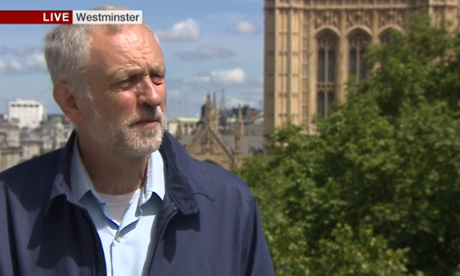
Jeremy Corbyn has just given a short interview to BBC News. Here are the the two points he made.
- Corbyn said the Labour leadership contest was taking place too early and that the party should be having a debate about policy first. He said Labour MPs had made this point at at a recent meeting, suggesting that Harriet Harman should stay on as party leader for a year or two to enable the party to have “that fundamental policy debate”. They were right, he said. There were major issues for the party to address.
-
He expressed some support for the idea of changing leadership election rules to make it easier for an under-performing leader to be challenged. Frank Field called for this in an article in the Mail on Sunday yesterday. Corbyn said this was “an interesting idea”.
It used to be that the leadership of the Labour party was actually an annual election. It was very seldom contested, but it was indeed an annual election. I don’t see any reason why we shouldn’t look at a process where it doesn’t become a challenge to the leader ... Leaders, whoever they are, need to be held closely to account.
Jeremy Corbyn is getting closer to the 35 names he needs to get onto the ballot paper for the Labour leadership.
Margaret Beckett nominates Jeremy Corbyn: He's on 30. Just five more names: http://t.co/wu6V1BmCCu
— Stephen Bush (@stephenkb) June 15, 2015
Here is Tulip Siddiq explaining her offer to nominate Jeremy Corbyn.
I'll be voting for @andyburnhammp for leader but have said to Team Corbyn that I'm ready to offer my nomination to JC to widen the debate.
— Tulip Siddiq (@TulipSiddiq) June 15, 2015
The New Statesman’s Stephen Bush says Jeremy Corbyn now needs seven more names.
Jon Cruddas will nominate Jeremy Corbyn: http://t.co/wu6V1BmCCu #jezhecan
— Stephen Bush (@stephenkb) June 15, 2015
Tuliq Siddiq takes Jeremy Corbyn to 28 names - just seven names to go: http://t.co/wu6V1BmCCu
— Stephen Bush (@stephenkb) June 15, 2015
Patrick Wintour’s tweet (see 10.56am) has generated a debate that sheds some light on the technicalities of the Labour leadership nomination rules.
@patrickwintour that's not true - they can
— Chris Bryant MP (@RhonddaBryant) June 15, 2015
@RhonddaBryant he said procedural committee ruled transfers can email but not new nominees.
— Patrick Wintour (@patrickwintour) June 15, 2015
Burnham calls for 'true parity' between vocational and academic education
Here are some of the key points from Andy Burnham’s education speech.
He said that a key priority would be to improve technical education.
.@andyburnhammp: One of the greatest failures of post-war public policy has been its lack of focus on technical education #Andy4Leader
— Andy for Leader (@Andy4Leader) June 15, 2015
He told the audience at the Arriva train maintenance centre in Crewe:
For too long, education policy in this country has been stuck inside the Westminster bubble, where the vast majority of people went to private schools and university. The result has been a debate about education obsessed about academic qualifications not giving enough attention to quality technical education.
This has left technical education in Britain as a low prestige, second class option. If we continue with this flawed approach, we will not build the highly skilled workforce that Britain needs to build a modern economy and compete in the world.
.@andyburnhammp: We'll have a school system based on one simple principle: true parity between academic and technical education #Andy4Leader
— Andy for Leader (@Andy4Leader) June 15, 2015
Specifically, Burnham announced three proposals to improve technical education.
- He said, under his leadership, Labour would consider making university-style student finance available to apprentices, allowing them to travel to another part of the UK to take up the best opportunities.
- He said Labour would draw up plans for an UCAS-style application system for apprenticeships, allowing people to find the best opportunities in the same place.
-
He said he had asked the Labour MP Pat Glass to head an expert panel developing these ideas.
Updated
My colleague Patrick Wintour says Jeremy Corbyn needs 10 more nominations by 12pm.
Jeremy Corbyn tells me he is on 25 MP nominations - dependent on MPs arriving by train to nominate him. They cannot by rule email nomination
— Patrick Wintour (@patrickwintour) June 15, 2015
Here is Andy Burnham delivering his education speech this morning. I’ll post the key points shortly.
.@andyburnhammp speech in Crewe on creating true parity between academic and technical education #Andy4Leader pic.twitter.com/OkAjglFww8
— Andy for Leader (@Andy4Leader) June 15, 2015
Jim Murphy's Today interview - Summary
Here are the main points from the Today interview with Jim Murphy, the former Scottish Labour leader.
-
Murphy said the voters were right to reject Labour at the election. This came when he explained what Labour needed to do to win back power. He said:
We have to be able to say by voting for our party, here is how we can help go on that journey [to a better future]. And, unfortunately in the general election, not enough people north or south of the border believed that the Labour party had the answers to that test.
When asked if voters were right to come to that conclusion, he replied:
The voters are never wrong.
-
He said the election had killed the idea that Labour could win power just by attracting Lib Dem votes.
[There was] this idea that somehow magically in the country there was this coalition of Labour voters and disgruntled Liberals that would get us over finishing line. I never shared that view. I always had a sense that we had to try and build a bigger tent, and a politics that appealed to one nation conservatives and those who have been previously anxious about Labour, in the way that Tony Blair and others have done in the past.
One of the tiny silver linings of a very dark cloud of Labour’s defeat is that it’s now a statistical truism that Labour has to pitch a tent that says yes to our core voters, but also has to reach out to moderate, one nation conservatives in building a coalition. Because if we try and build a coalition of Labour, traditional Labour and disgruntled Liberals next time round, it will end the same way as it has done in May.
-
He said that the reforms he introduced to Scottish Labour (principally, a one member one vote system for leadership elections) would end the “boss politics” that gave union leaders too much power.
As I left the leadership of the Labour party in Scotland, I wanted to make sure that we modernised the party and bring an end to the boss politics of the trade union leaderships who behaved, in the past, as though they owned the membership’s vote.
-
He said Labour suffered a “catastrophic defeat” in England and Scotland, and now needed a fundamental rethink. He said Labour lost two and a half elections. It was defeated by the SNP in Scotland and by the Tories in England and it lost ground to Ukip.
I don’t want a leadership contest for the UK leadership of the party that is somehow trapped in a mindset of one more heave. This was a catastrophic defeat north and south of the border and we need as deep thinking in England as we’ve started now in Scotland. If we do in the next five years is similar to what we’ve done in the previous five years, then we face real difficulties.
-
He said Labour could now move on from the era of Blairite/Brownite divisions.
One of the things we can do, at least, is put the old enmities of the Blair/Brown divisions beyond use once and for all.
He obviously did not read the Telegraph this morning. See 9.47am.
- He said the Labour leadership candidates had all made “a good start” in addressing the party’s problems, but added: “There’s a long way for them still to go.”
- He said he would not be publicly endorsing any of the candidates in the UK leadership contest or the Scottish leadership contest.
-
He said his friend David Miliband had never said anything to him suggesting he wants to return to British politics.
He’s got a big job and the job that he has at the moment; trying to rescue refugees from nations and strife all across the world, already is a remarkably important thing to do. If he wants to change his mind about that, that’s really for him to announce that. But nothing that I have heard in my private discussions with David has ever suggested that he is tempted to come back into the frontline of British politics.
-
He said during the election the SNP benefited from a “post-truth” culture in politics.
When I was doing those TV debates it sometimes felt like I was up against a quasi-religious rock concert, where no matter what truth you told it didn’t really matter in a post-truth type of argument in politics.

Updated
Lammy says he is nominating Corbyn so members, not MPs, choose Labour's leader
David Lammy has tweeted about nominating Jeremy Corbyn.
Pleased to have this morning nominated @jeremycorbyn for Labour leader. Statement here: https://t.co/vSkMOhC2Mk pic.twitter.com/0w6x8vq8ii
— David Lammy (@DavidLammy) June 15, 2015
And here is an extract from Lammy’s Facebook post explaining his decision.
While there is enough that Jeremy and I disagree on to mean that I won’t be voting for him, I believe the choice of who becomes Labour’s next leader should be made by Labour members and supporters - not by MPs.
Back in April Jeremy launched my campaign to be re-elected as MP for Tottenham. Before becoming an MP he was, of course, a Haringey councillor and has been a great friend of the area for many years. We voted together in the last parliament against Trident and against fracking, and previously worked together on his Private Members Bill on rent controls. He is a man of immense integrity and principle and will contribute hugely to the debate about the future of our party in the coming weeks.
Jeremy Corbyn has received another nomination.
David Lammy has nominated Jeremy Corbyn. Supporters of #jeremy4leader saying they are "now in the ballpark"
— Jason Beattie (@JBeattieMirror) June 15, 2015
Here is a New Statesman list showing which MPs are nominating which candidates.
There was a time when “Taliban Tory” was a slogan used by Conservative party modernisers to attack their more reactionary colleagues. Nowadays you don’t hear it, partly because “Taliban Tories” have become rather powerful in the party.
But the insult has now popped up in Labour politics. Today’s Daily Telegraph carries a story saying that Andy Burnham and Yvette Cooper camps both think that Liz Kendall’s campaign is struggling and someone - either a Burnham or Cooper supporter, the paper doesn’t say which - came out with this:
We are now seeing the end of Taliban New Labour. All of those Blairites who hoped they might get their candidate elected have failed.
The whole strategy for Liz was a Westminster strategy – she played up to the media, to the right-wing commentators, to the Blairite Taliban MPs, made a few headlines by saying she was relaxed about free schools and committing to defence spending, and just took a chance that the momentum would carry her forward.
But the trouble with that is that the fizzle and sparkle has gone already. Now the contest has moved on to the membership, who will not be interested in that kind of rhetoric or those policies, you will see her star wane very quickly.
This is what Diane Abbott told BBC News a few minutes ago about the prospect of Jeremy Corbyn getting the 35 nominations he needs to be on the ballot paper for the Labour leadership.
We think that Jeremy might just get over the line. When I ran in 2010, I didn’t get all the nominations I needed until the final hour, so we won’t know for a few hours yet.
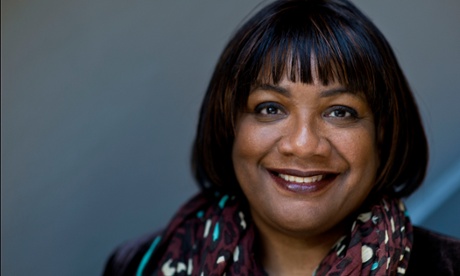
Today we reach a milestone in the Labour leadership contest; nominations close at noon, with Andy Burnham, Yvette Cooper and Liz Kendall already on the ballot, but Jeremy Corbyn still struggling to get the support of the 35 MPs he needs. Diane Abbott, one of his supporters, has just told BBC News that she think he will just make it by lunchtime.
Two leadership candidates are also giving speeches today, as well as Jim Murphy, the former Scottish Labour leader. Murphy was on the Today programme earlier, where he said that his friend David Miliband has not indicated a desire to return to British politics. Murphy also said that, during the election, the SNP benefited from a “post-truth” culture overtaking Scottish politics. He told the programme:
When I was doing those TV debates it sometimes felt like I was up against a quasi-religious rock concert, where no matter what truth you told it didn’t really matter in a post-truth type of argument in politics.
I’ll post more from the interview later.
Here is the agenda for the day.
9.15am: Andy Burnham gives a speech on education.
10.30am: Yvette Cooper gives a speech on child poverty.
11am: Number 10 lobby briefing.
Lunchtime: Jim Murphy gives a speech to the Policy Exchange think tank.
2.30pm: Nicky Morgan takes education questions in the Commons.
As usual I will be covering the breaking political news as it happens, as well as bringing you the best reaction, comment and analysis from the web. I will post a summary at lunchtime and another in the afternoon.
If you want to follow me on Twitter, I’m on @AndrewSparrow
Updated