The Labour “battle bus” is back and senior party figures are to target female voters up and down the country during the 2015 general election campaign later this month.
Harriet Harman, the opposition’s deputy leader, and Gloria De Piero, Labour’s women and equalities spokeswoman, are to reveal plans for the party’s campaign bus next week for their “Woman to woman” tour, with the aim of listening to women’s experiences.
These executive coaches – carrying the party leader, aides and journalists – have traditionally been a key part of modern elections across the world. Sen John McCain hoped to reinvent Republicanism by famously touring the US in his “Straight talk express” during the 2000 presidential elections when he was an underdog.
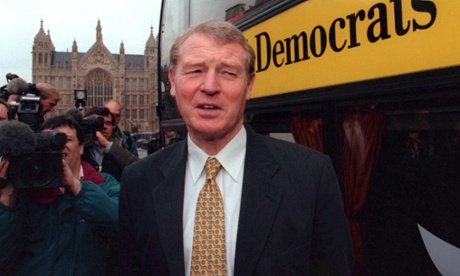
But in the UK, the 1980s were perhaps the pinnacle of battle bus tours, with Margaret Thatcher, the Conservative prime minister, Labour leader Neil Kinnock and SDP-Liberal Alliance leaders David Owen and David Steel travelling up and down the country in their buses to speak to voters.
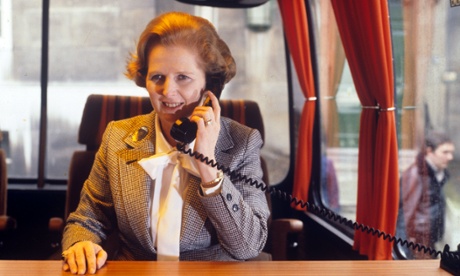
Although there was talk of it being “the end of the road” for the battle bus before the 2005 general election – when Alan Milburn, Labour’s election strategist, said the prime minister, Tony Blair, wanted to meet “real people” – all three main parties had campaign buses in 2010. Meanwhile, Nigel Farage, the Ukip leader, had a plane with a Ukip campaign banner streaming behind it.
During the last election, Sky News caught Gordon Brown’s “bigoted woman” comment about 65-year-old Gillian Duffy in Rochdale, just as the Labour battle bus had driven away with all the other journalist on board.
Here are some other battle bus moments.
1987 – the Owen and Steel battle bus show
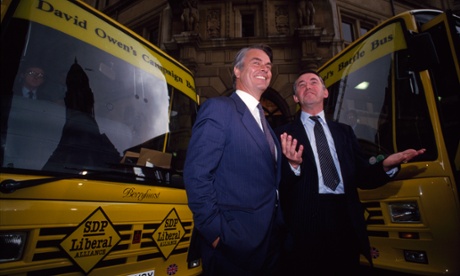
It was the heady days of peak battle bus campaigning when David Steel, the Liberal party leader, and David Owen, leader of the Social Democratics, co-led the Alliance’s “Britain united” campaign.
They criss-crossed the country in their individual yet matching bright-yellow battle busses holding “Ask the Alliance” meetings to rally support. However, much of the coverage was about the contradictory comments of the leaders – such as Steel disregarding an Alliance deal with the Tories and Owen dismissing coalition with Labour.
Political commentator Mary-Ann Sieghart gave an account of following the Alliance campaign trail on the BBC Radio 4 Today programme:
What would happen is David Steel would say one thing in one part of the country, and David Owen would say something completely contradictory in another part of the country.
But there were no mobile phones in those days and so the hacks had to sort of phone home from a phonebox and find out what the other party leader was saying and then trap Owen or Steel to say the opposite.
In the end, the Alliance trailed in third place.
2010 – out and about with ‘Webcameron’
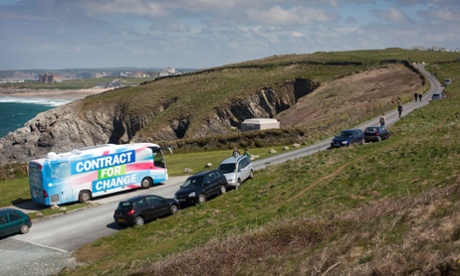
David Cameron had his sleeves rolled up as he toured the country on his sky-blue “Vote for change” battle bus during the 2010 election campaign. There were photo opportunities aplenty, and in this video – first uploaded to his Webcameron Youtube channel, which has since been removed, he kisses his first baby of the campaign and unmasks the Daily Mirror’s chicken.
He also mulls over the importance of meeting normal peopleand says:
I met lots of real people, [had] proper conversations, proper election, um, and [had] couple of chickens thrown into the pot as well.
2010 – all aboard the Prezza express
John Prescott, the former deputy prime minister, toured the UK in a customised white transit van to canvass support for Labour during the 2010 general election. In this video uploaded to his Prezzavision YouTube channel he explains (which fades out to the Rocky Theme):
I’ve been travelling 4,000 miles, visiting over 50 marginal seats seeking out the true Labour vote in the trade unions and constituency. You’ve just got to vote this time. It’s a big issue.
2012 – George Galloway’s green double-decker
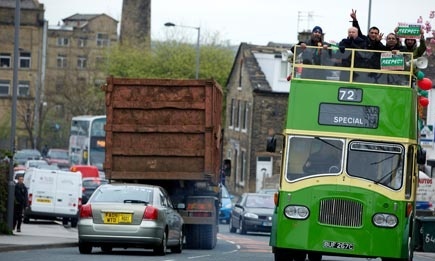
Winding through roads on a bright green open-topped bus with a megaphone in his hand and a band of green-placard waving supporters, George Galloway won the Bradford West byelection in 2012. His charismatic election campaign, and rallies that pulled in a 1,000 strong crowd, could not be ignored.
He dubbed it the “Bradford spring”, on winning the traditional Labour seat with a 10,140 majority. Political commentators at the time said the shock election success of Galloway’s Respect party had shaken up the political establishment.