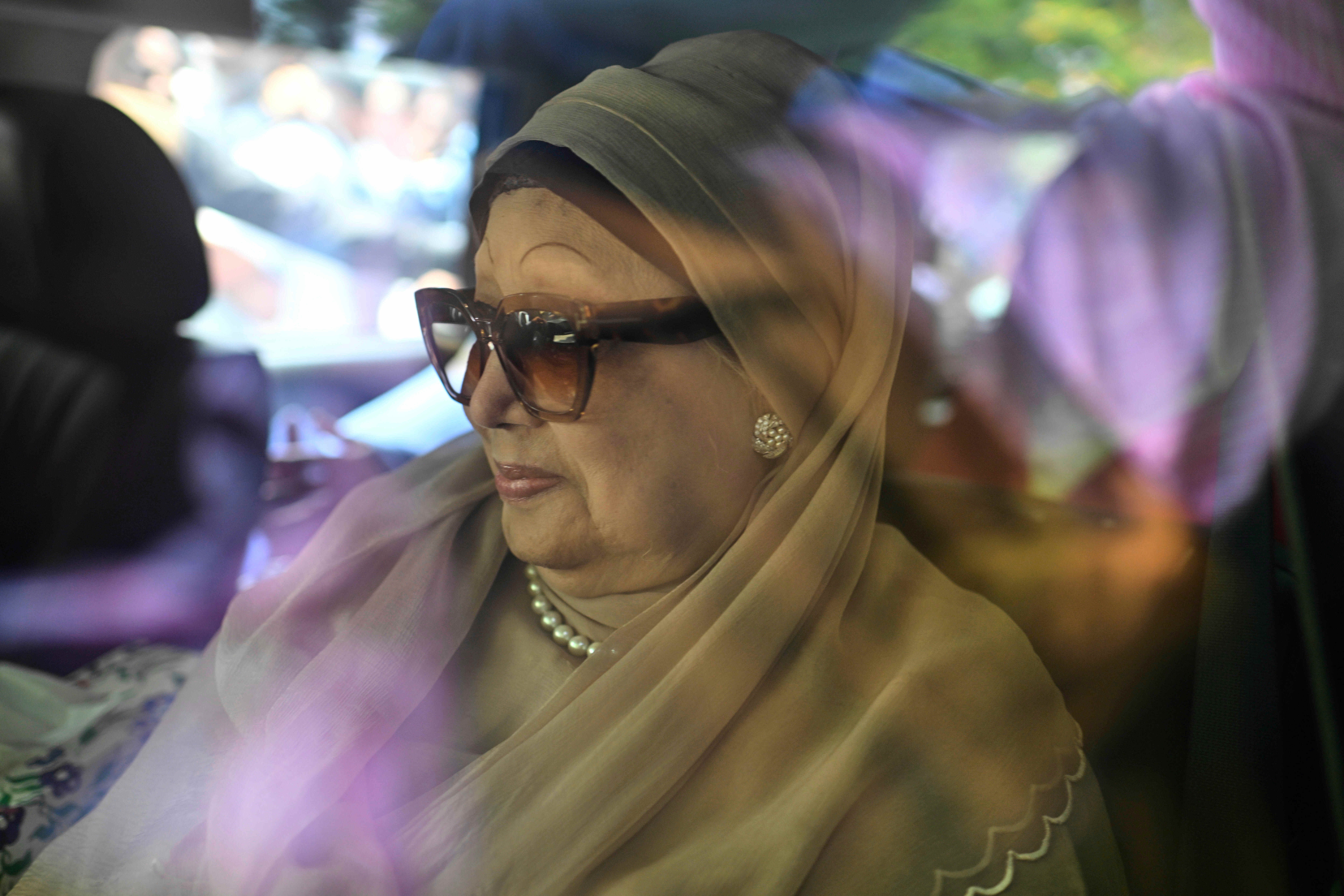
Khaleda Zia, Bangladesh’s first woman prime minister, died in Dhaka on Tuesday after a prolonged illness. She was 80.
She had advanced cirrhosis of the liver, arthritis, diabetes, and chest and heart problems, her doctors said.
Zia took over as the South Asian country's prime minister in 1991 and became one of the two poles of its politics alongside arch rival Sheikh Hasina. The two of them spent decades trading power, defining Bangladesh's politics for generations.
With Zia’s death and Ms Hasina’s ouster last year following mass street protests, Bangladesh’s long chapter of rare women-led politics appears closed.
Though the three-time prime minister had been out of power since 2006 and spent years in jail or under house arrest during Ms Hasina’s rule, she and her conservative party, BNP, continued to command wide support.
The former leader faced corruption cases she said were politically motivated, but in January 2025 the Supreme Court acquitted her in the last case. She went to London for medical treatment in early 2025, staying for four months before returning home.
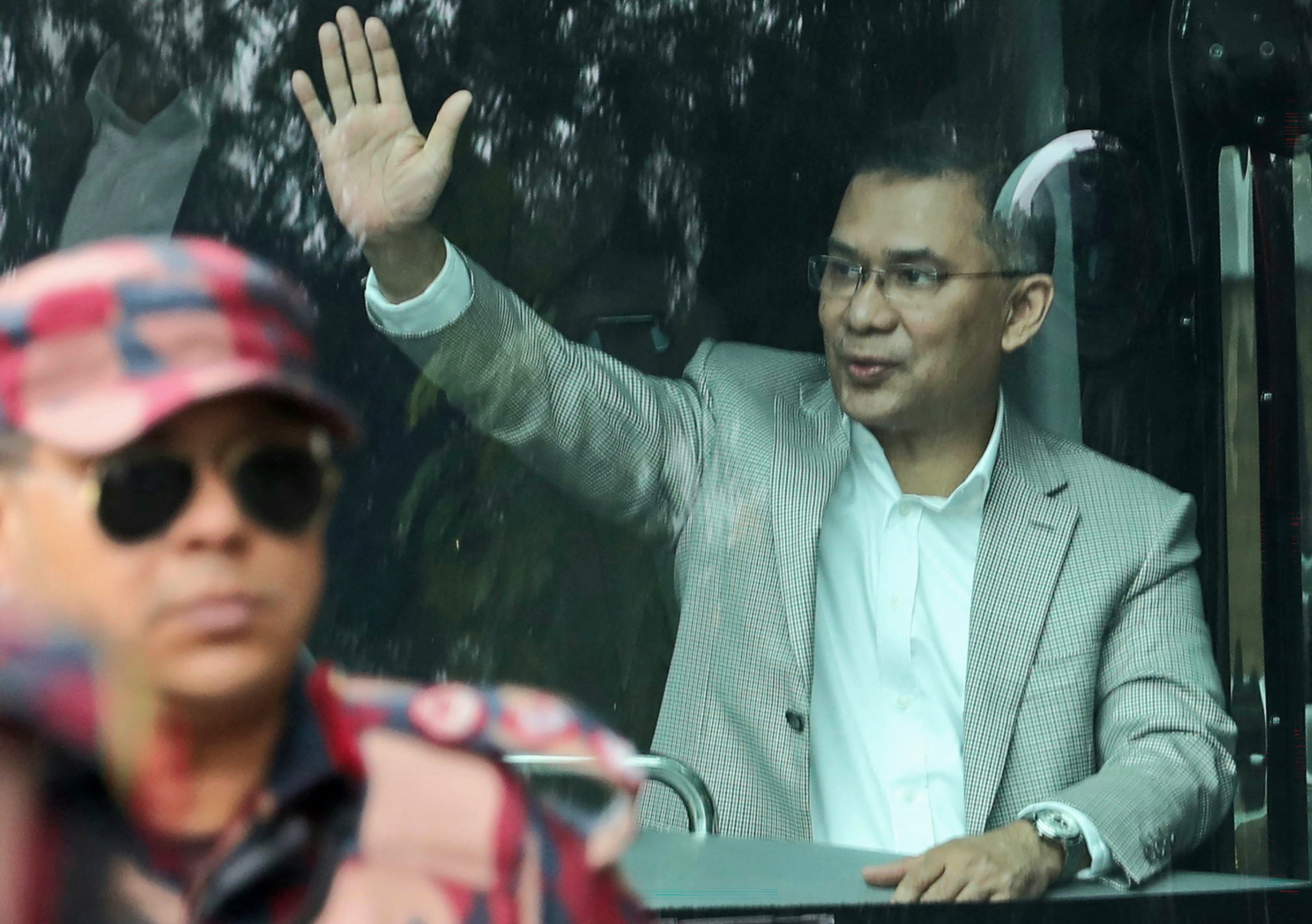
It was expected she would run for prime minister in the general election in February. Now her son, Tarique Rahman, who returned to Bangladesh last week after 17 years in self-exile, is set to assume the mantle.
Since August 2024, when Ms Hasina was ousted and forced to flee to India, Bangladesh has been ruled by an interim government led by the banker Muhammad Yunus.
Dr Yunus said that he was "deeply saddened and grief-stricken by her death".
He said Zia represented an important chapter in the history of Bangladesh and given her “contributions, her long struggle, and the deep public sentiment towards her, the government declared her a Very, Very Important Person of the State".
Chief Adviser's Condolence message on the Death of Former Prime Minister Begum Khaleda Zia
— Chief Adviser of the Government of Bangladesh (@ChiefAdviserGoB) December 30, 2025
Dhaka, 30 December 2025: The Chief Adviser of the interim government, Professor Muhammad Yunus, has expressed profound sorrow at the death of Begum Khaleda Zia—three-time former Prime…
India, among Dhaka’s closest allies before ties soured following Hasina’s ouster and flight to Delhi, said it mourned Zia’s death.
Prime minister Narendra Modi, in a post on X, said he was "deeply saddened” by Zia’s death.
"Our sincerest condolences to her family and all the people of Bangladesh. May the Almighty grant her family the fortitude to bear this tragic loss," he said.
Zia was described as a shy housewife devoted to raising her two sons until her husband, military ruler and later president Ziaur Rahman, was assassinated in an attempted army coup in 1981.
Three years later, she took over as head of the BNP, which her husband had founded, and vowed to deliver on his goal of “liberating Bangladesh from poverty and economic backwardness".
She joined hands with Ms Hasina, daughter of Bangladesh's founding father Sheikh Mujibur Rahman, to lead a popular uprising for democracy that toppled military ruler Hossain Mohammad Ershad in 1990.
But their cooperation did not last long. A bitter rivalry developed, leading to them being dubbed the “Battling Begums”, a phrase that uses an Urdu honorific for married women.
Ms Hasina, who now lives close to the corridors of power in Delhi, condoled Zia’s death.
“Her passing represents a profound loss for Bangladesh’s political life and for the leadership of the Bangladesh Nationalist Party. I pray for the eternal peace and forgiveness of Begum Khaleda Zia’s soul,” she said.
“As the first woman prime minister of Bangladesh, and for her role in the struggle to establish democracy, her contributions to the nation were significant and will be remembered.”
Supporters saw Zia as polite and traditional yet quietly stylish, someone who chose her words carefully. But they also viewed her as a bold, uncompromising leader when it came to defending her party and confronting her rivals.
Ms Hasina, by contrast, was far more outspoken and assertive. Their opposite personalities helped fuel the rivalry that dominated Bangladesh's politics for decades.
In 1991, Bangladesh held what was hailed as its first free election. Zia won a surprise victory over Ms Hasina, having gained the support of the country's largest Islamic party, Jamaat-e-Islami.
In doing so, Zia became Bangladesh's first woman prime minister and only the second woman to lead a democratic government of a mainly Muslim nation after Benazir Bhutto, elected to lead Pakistan three years earlier.
Zia replaced the presidential system with a parliamentary one, so that power rested with the prime minister. She also lifted restrictions on foreign investment and made primary education compulsory and free. She lost to Ms Hasina in the 1996 election but came back five years later with a surprise landslide win.
Her second term was marred by the rise of an Islamist militancy and allegations of corruption.
In 2004, a rally that Ms Hasina was addressing was hit by grenades. Ms Hasina survived but over 20 people were killed, and more than 500 wounded. Zia’s government and its Islamist allies were widely blamed.
In 2018, after Ms Hasina had reclaimed Bangladesh's leadership, Mr Rahman was tried in absentia over the attack and sentenced to life in jail. The BNP denounced the trial as politically motivated.

Zia's party and its partners boycotted the 2014 election over a dispute about a caretaker government, giving a one-sided victory to the increasingly authoritarian regime of Ms Hasina. Her party participated in the national election in 2018 but boycotted again in 2024, allowing Ms Hasina to return to power for a fourth consecutive term.
Zia was sentenced to 17 years in jail in two separate corruption cases involving the alleged embezzlement of funds meant for a charity named after her late husband. Her party said the charges were politically motivated to weaken the opposition, but the Hasina government said it didn’t interfere and the case was a matter for the courts.
Ms Hasina was criticized by both her opponents and independent critics for sending Zia to jail.
Zia was released in 2020 and moved to a rented home, from where she regularly visited a private hospital. Her family repeatedly requested the Hasina administration to allow Zia to travel abroad for medical treatment, but were turned down.
Zia was given permission to travel abroad by the Yunus administration in 2024. She did not attend political rallies or participate in political activities publicly, but remained the BNP chairperson until her death.
Her son was made the acting chair in 2018.
She was last seen at an annual function of the Bangladesh military in Dhaka on 21 November when Dr Yunus and other political leaders met her. She was in a wheelchair and appeared pale and tired.
She is survived by Rahman, her elder son and heir apparent to her political dynasty. Her younger son, Arafat, died in 2015.
Former PM’s son returns from exile as frontrunner to lead Bangladesh in new year
Hundreds protest outside Bangladesh embassy in Delhi over Hindu man’s death
Bangladesh student leader shot in head in brutal daylight attack
Nepal to scrap Everest waste deposit scheme after years of mounting rubbish
US tech enabled China’s CCTV empire. Now Tibetan refugees are paying the price
Hundreds of thousands attend funeral of slain Bangladeshi activist Sharif Osman Hadi