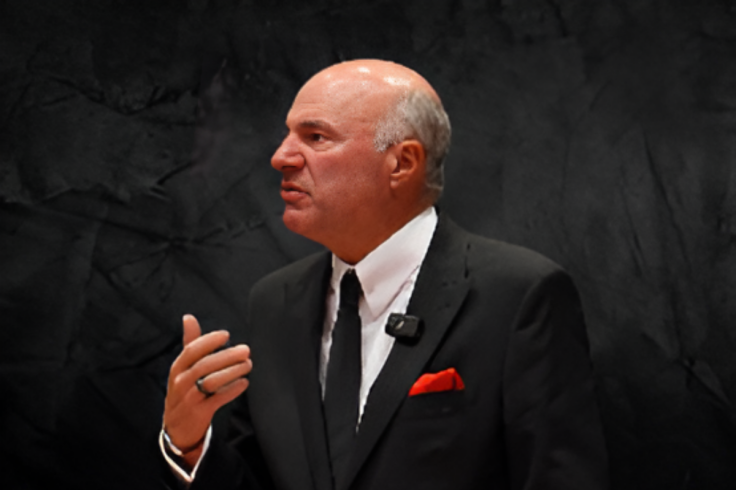
A remark by investor Kevin O'Leary has reignited a sharp debate about money habits, inflation and what it now means to build wealth in early adulthood.
O'Leary, known for his role on Shark Tank, said during a podcast interview that he could not understand why young professionals earning around $70,000 a year would spend $28 on lunch. He described the behaviour as poor financial discipline and argued that such daily expenses could weaken long-term wealth accumulation. His comments quickly spread across social media, drawing both support and criticism.
O'Leary Links Small Daily Spending to Long-Term Loss
O'Leary's argument focused on what he described as opportunity cost. Speaking on The Diary of a CEO podcast, he said repeated spending on convenience meals reduces the amount of money that could otherwise be invested over time. He suggested that if such money were placed into an index fund returning roughly 8% to 10% annually over decades, it could grow significantly through compounding.
Kevin O'Leary says Gen Z is financially cooked when people making $70K a year are spending $28 on lunch pic.twitter.com/7s820Xnhg9
— Mikli (@CryptoMikli) May 18, 2026
He extended the point beyond food spending, arguing that many people routinely buy items such as clothing and accessories that are rarely used. His broader message was that disciplined spending habits are essential for long-term financial security. He stressed that even modest spending choices, when repeated regularly, can create missed investment opportunities and reduce the ability to build savings over time.
Social Media Users Push Back on Cost of Living
Many online users challenged O'Leary's view, arguing that it does not reflect current economic conditions. Some said that a $28 lunch is no longer an indulgence in many US cities, but a standard cost after inflation, delivery charges, and service fees. Others pointed to stagnant wages and rising living costs, including housing and groceries, as the main barriers to saving money.
A Chipotle burrito costs $15. Ground beef is $7 a pound. Inflation is financially crippling Gen Z.
— Nicholas J. Stelzner (@stelzner_n1150) May 18, 2026
Once again, an out-of-touch rich boomer is lecturing young people. https://t.co/SeU5MFrKaC
Public reactions circulating on X suggested that focusing on lunch spending overlooks broader structural pressures facing younger workers. One widely shared response argued that financial struggles among younger people are driven more by wages and housing costs than by discretionary spending habits.
Supporters Say Discipline Still Matters
Others agreed with O'Leary's central point. Some social media users defended his calculation, saying that small daily savings can compound into significant long-term gains if invested consistently. They argued that financial discipline remains important regardless of inflation or income level.
He's 100% correct - make your own lunch for $10
— Dairy Doug (@MustachdMilkman) May 19, 2026
Save $18/5days a week/52 weeks a year = $4680
$4680 invested every year over 40 year working career
6.37% ROI (Average SP500 return minus inflation)
You'd have equivalent to 795k in todays dollars at retirement. https://t.co/d0uLnmCgvE pic.twitter.com/d0Yn2jxNTV
Supporters said his message was not about criticising younger generations, but about highlighting how repeated lifestyle spending decisions can affect long-term financial outcomes. Some also noted that building wealth often starts with small behavioural changes, including budgeting, reducing unnecessary expenses, and making smarter financial choices over time.
A Wider Debate Over Generational Finances
The discussion reflects a broader divide over personal finance advice in an inflationary environment. Younger workers face higher living costs in many urban areas, along with student debt and rising rent pressures. These factors have reshaped how people approach saving, spending, and long-term planning.
At the same time, personal finance commentators continue to emphasise budgeting and investment discipline as key tools for building wealth over time. The contrast between these two perspectives has fuelled ongoing debate over whether financial success is primarily driven by personal discipline or broader economic conditions.