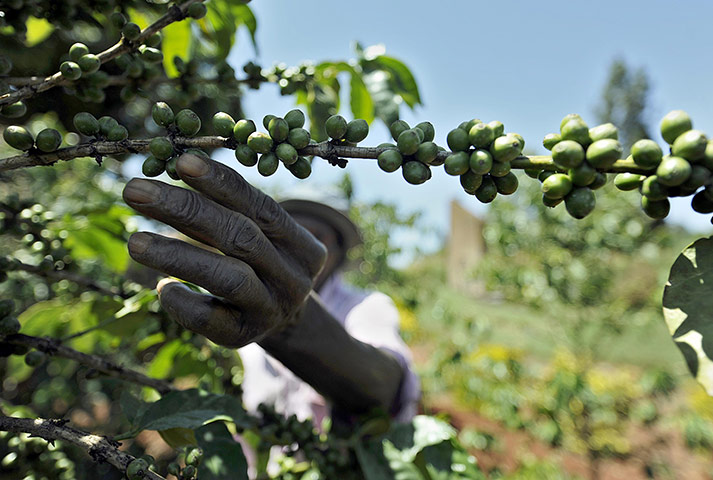
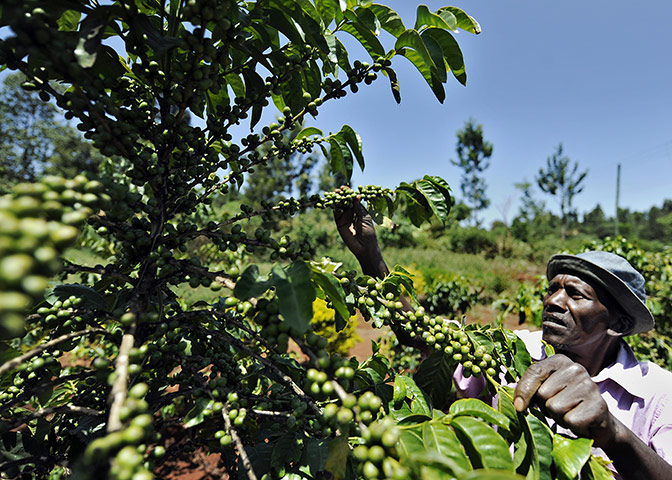
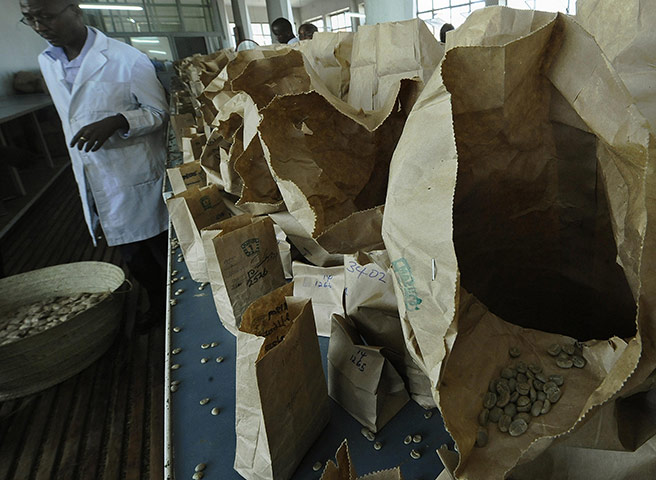
James Bandamo, 60, tends to a coffee tree in Kabati, 31 miles (50km) north-east of Nairobi. Production has more than halved in recent years due to intense rainy seasons and leaf rust, a fungus that infects the leaves and weakens the plant. The decline in output has encouraged some farmers to uproot their trees and diversifyPhotograph: Tony Karumba/AFPThe arabica bean that grows in the volcanic soil of Kenya's highlands is highly regarded among espresso connoisseurs, yet leaf rust has left many trees in need of replacement. On average, it takes three years for a new tree to produce its first cropPhotograph: Tony Karumba/AFPA man sorts through coffee beans at a factory in Nairobi. Loss of agricultural land to development throughout the country has meant a further decline in productionPhotograph: Tony Karumba/AFP
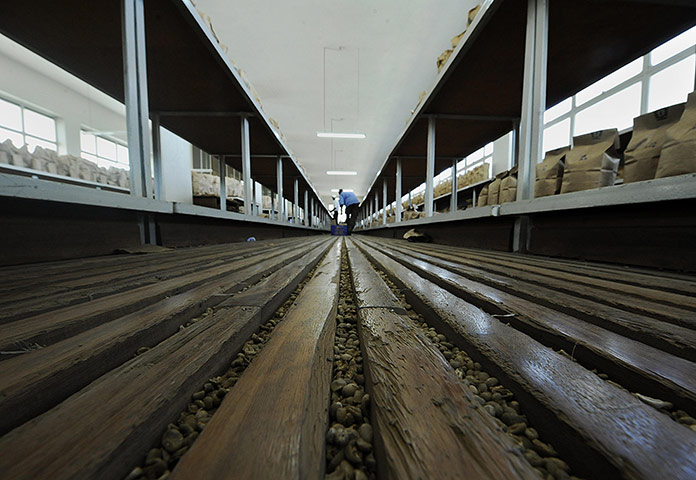
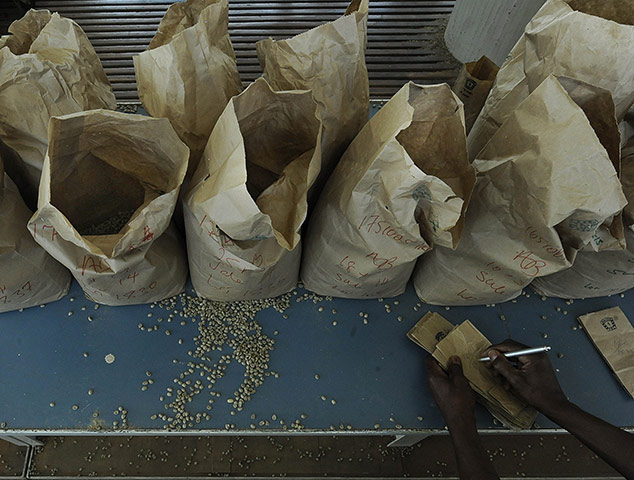
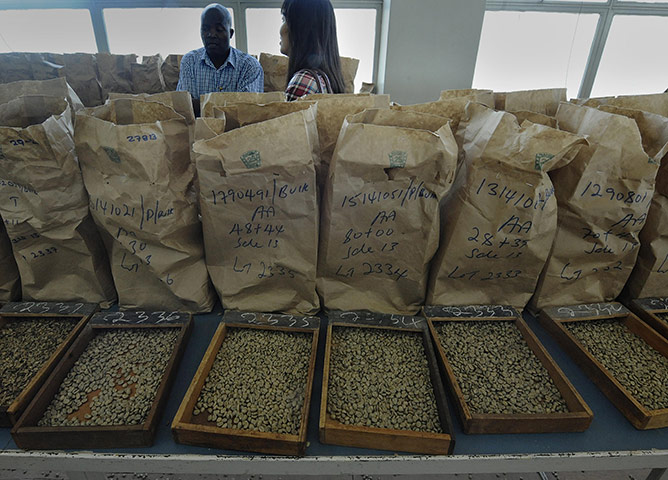
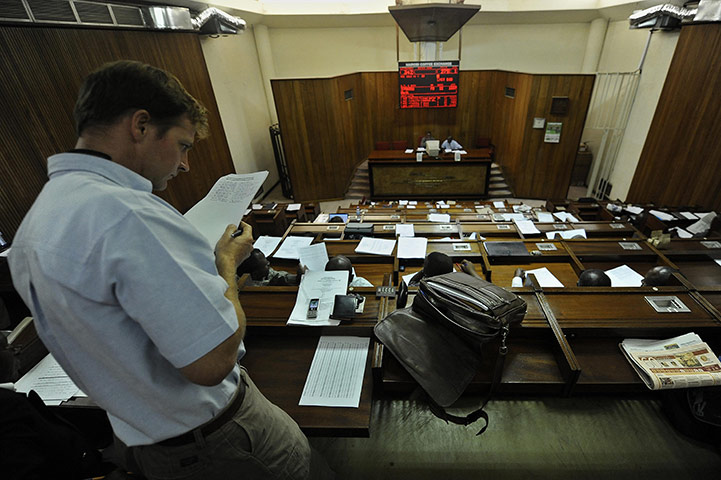
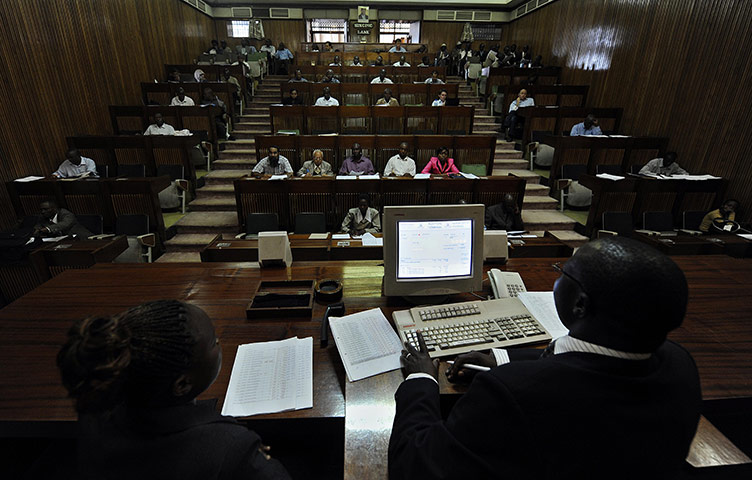
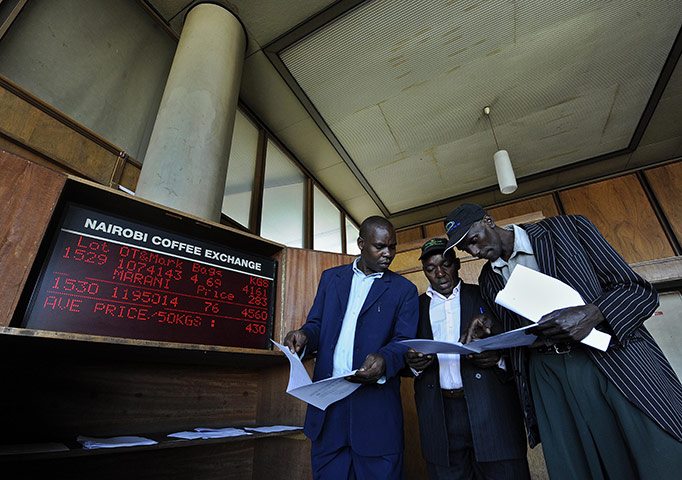
Coffee beans are collected from between the floorboards of the sorting factoryPhotograph: Tony Karumba/AFPA worker divides coffee beans according to qualityPhotograph: Tony Karumba/AFPCoffee beans await sorting in trays at the factory. After being packed into bags, they are sent for auction at the Nairobi Coffee ExchangePhotograph: Tony Karumba/AFPA coffee trader checks data during a bean auction at the coffee exchange. The weekly exchange is run by a committee elected by producers and traders. Its role is to protect the business interests of people engaged in coffee productionPhotograph: Tony Karumba/AFPCoffee traders attend an auction. Coffee is the most traded commodity in the world after oil, but Kenyan growers are still among the poorestPhotograph: Tony Karumba/AFPTraders check data during the auction. Coffee is packed for auction in bags of 60kg (132lbs), but the bids are made per 50kg bagPhotograph: Tony Karumba/AFP
Sign up to read this article
Read news from 100’s of titles, curated specifically for you.