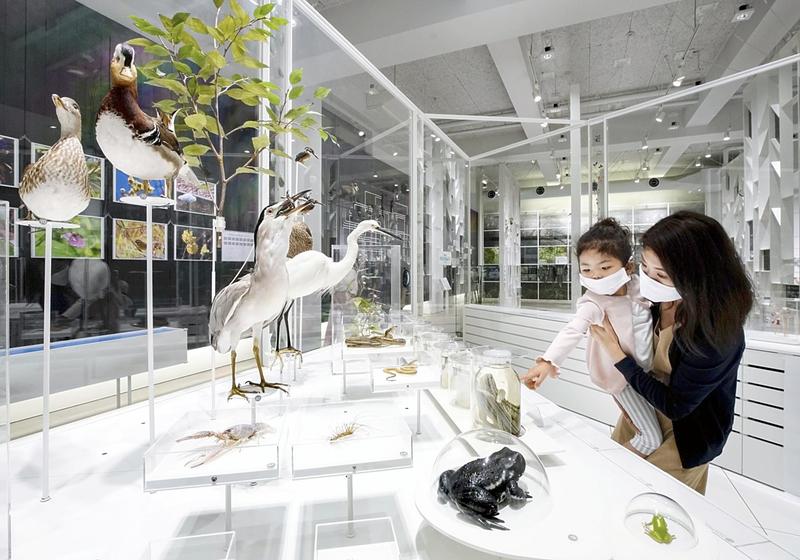
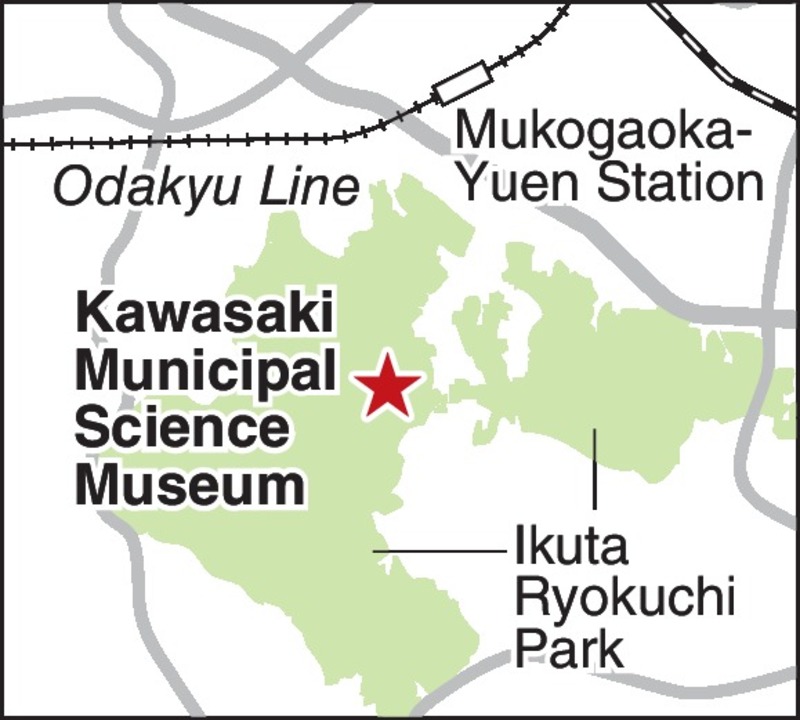
KAWASAKI -- Amid the bustle of the Tokyo metropolitan area, Ikuta Ryokuchi Park in Kawasaki stands out as an oasis of greenery. Within its confines we can learn about the natural aspects of the city, from the formation of the region to its thriving flora and fauna, at the Kawasaki Municipal Science Museum.
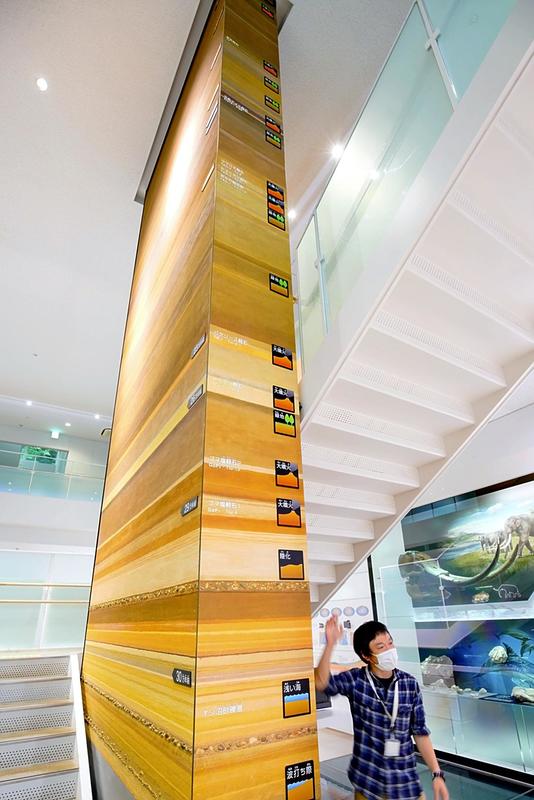
Entering the museum, the eye is instantly drawn to an 8-meter-high tower comprised of strata, a one-fifth scale depiction of the Ikuta Ryokuchi soil layers formed over 1 million years. Looking up, we see how the layers of sediment were piled on top of each other from era to era.
Heading to the Land of Kawasaki section, a cross-section of strata collected during boring exploration work in Ikuta Ryokuchi is on display. By taking a closer look, we can see differences in sand, pebbles and other matter that created each layer.
Museum curator Kenichiro Takanaka, 42, pointed out the imaginative names that are assigned to the layers based on their appearances. One with a black and white pattern is called the "gomashio pumice layer," named after the seasoning made of black sesame and salt. Among the others are "tricolor ice cream pumice," "egg sandwich" and "chocolate-color dark band."
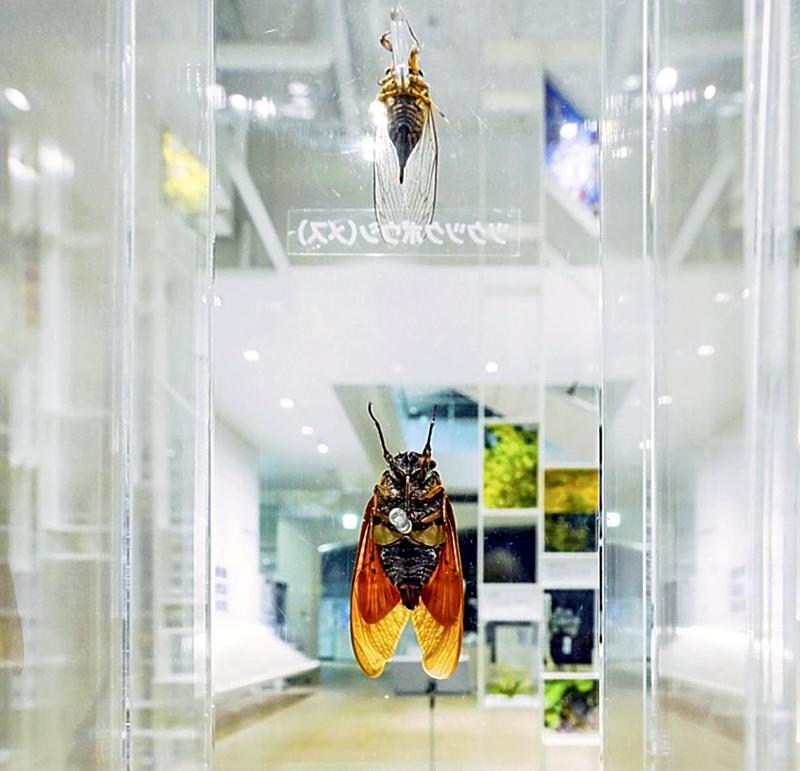
The section titled Nature in the Hilly Terrain presents insect specimens in an interesting way. A cicada, for example, has been placed in a transparent case in a position as if it had landed on a tree. Walking around it provides a 360-degree view.
"Can you tell the difference between a male and female?" Takanaka asked as he moved to the other side of the case, then explained, "Only the male cicadas sing. It does so by vibrating its abdomen area."
Particularly popular with children is the Ikuta Ryokuchi Gallery, where specimens of snakes, birds, raccoon dogs and other animals that can be observed in Ikuta Ryokuchi Park are on display. Children are often surprised upon seeing a huge hornet's nest, Takanaka said.
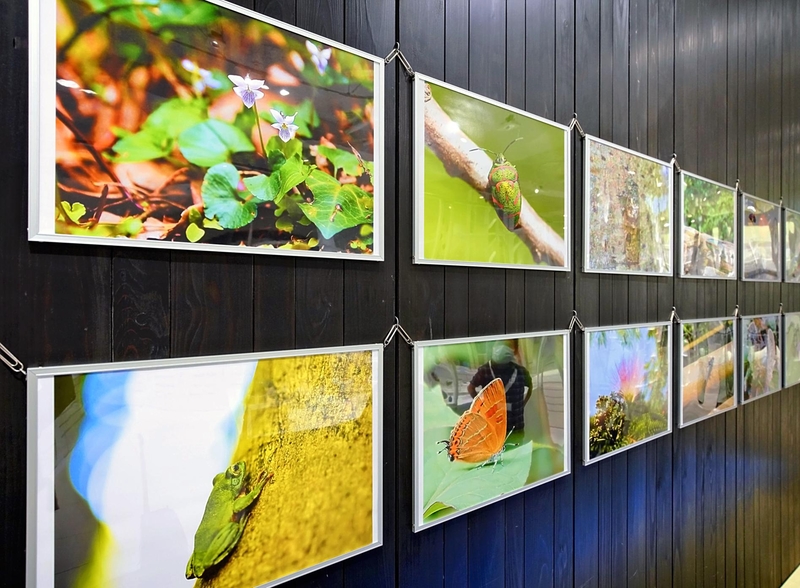
While visitors currently cannot touch the drawers holding the specimens in order to prevent spread of the novel coronavirus, they can see photographs of plants and insects taken in the park by curators.
"There are actually a lot of living creatures all around us close by," Takanaka said. "You can find them if you look carefully."
Kawasaki Municipal Science Museum: 7-1-2 Masugata, Tama Ward, Kawasaki
Read more from The Japan News at https://japannews.yomiuri.co.jp/