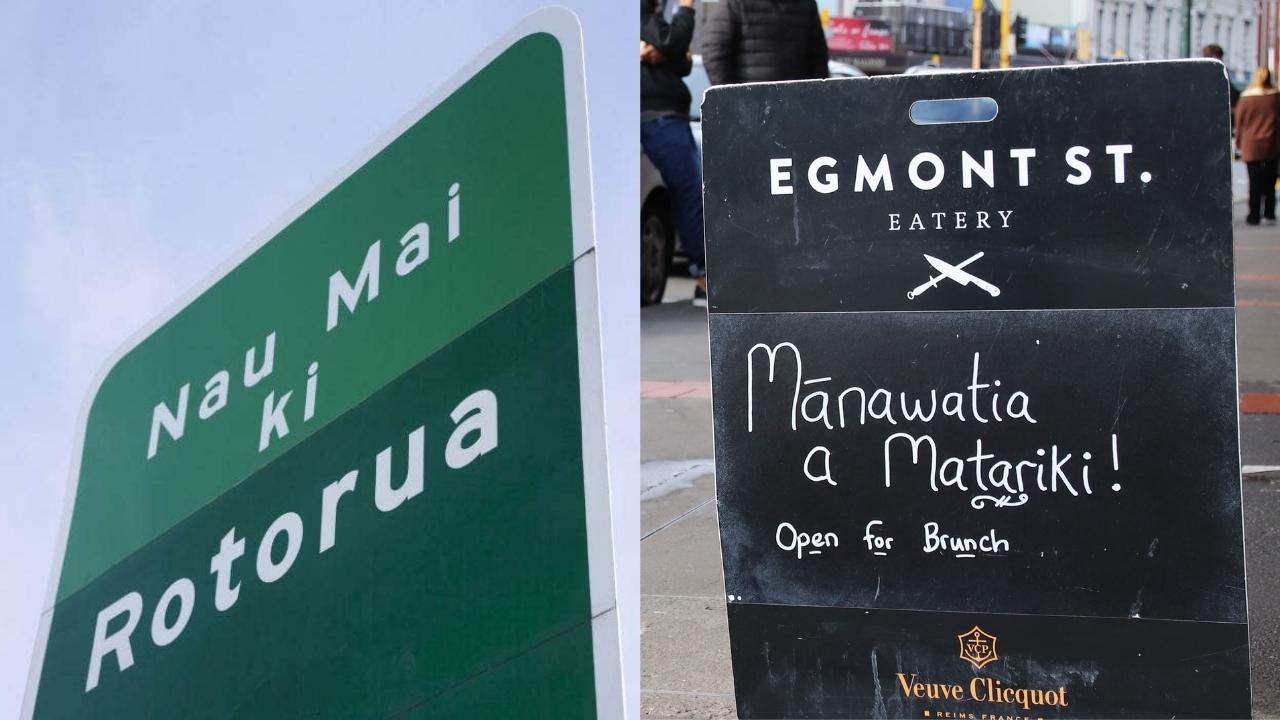
I recently had the opportunity to travel to New Zealand for the first time. At first, I was amazed at how similar it seemed to Australia, but as I walked around Auckland I noticed a big difference — the use of language.
The taxis and Ubers I rode in had Māori translations on their signage. The same went for the hotel I stayed in. I turned on the TV at night and almost every news presenter would say at least one word or phrase in Māori, if not more. Te reo Māori (the language of Māori) is used in conjunction with English in magazines, posters, pamphlets and even food packaging throughout Aotearoa New Zealand.
During my three days in New Zealand, I was exposed to — and as a result learned — more te reo Māori than I have ever learned any Aboriginal or Torres Strait Islander languages from my 27 years of living in Australia. Through this passive language acquisition, I was able to make connections of the importance of te reo Māori to Aotearoa New Zealand land and culture without having ever studied even the history of New Zealand.
Despite the positive steps being taken, there is still more to be done. The fact that there is even a “revival” of te reo Māori points towards a potentially tokenistic use of the language that is pushed as part of a colonial agenda that has existed since the late 1700s. This kind of use of te reo Māori may be seen as superficial, and we need to be careful that we aren’t just using it as a form of white saviorism.
Colonisation still affects Māoris today through the theft of land and loss of identity created by the erasure of Māori cultural practices, while glorifying the “acceptable” parts of the culture. As a result, there are disproportionately high rates of police brutality
been strugglingown injusticesCourtney Borrett is a writer with a background in languages and education. She loves writing about Japanese language and popular culture, especially anime and video games. You can contact her via her Twitter (@koutonii).