The June Fed meeting concluded on Wednesday June 17, with the central bank's latest policy decision.
With energy prices still high and inflation accelerating, the Federal Reserve unanimously voted to keep the federal funds rate unchanged this time around.
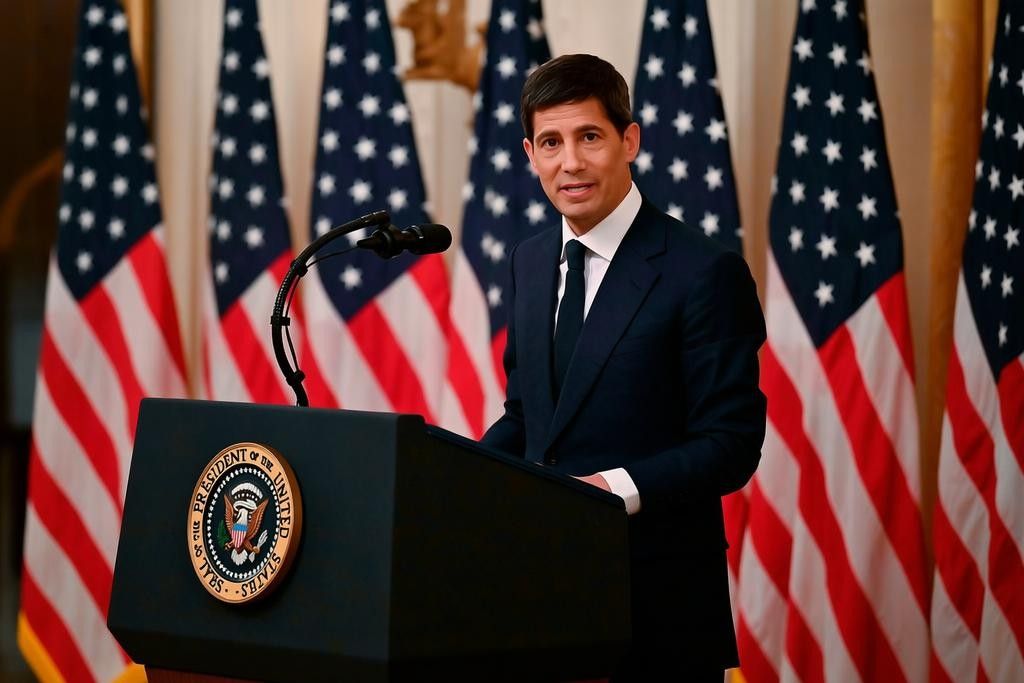
Wall Street was also tuned into new Fed Chair Kevin Warsh's post-meeting press conference, where he unveiled new changes that are coming to the central bank.
The Kiplinger team reported on the June Fed meeting, bringing you the news and our expert analysis of what it could mean for the economy. Scroll for the latest updates.
How Does the Federal Reserve Work? | 3 Ways Kevin Warsh Will Change the Fed | How the New Fed Chair Could Impact What You Pay in Taxes this Year
Fed meeting schedule for 2026
The next Fed meeting, which runs from June 16 through June 17, marks the fourth gathering of 2026.
"The committee meets eight times a year, or about once every six weeks," explains Kiplinger contributor Dan Burrows.
The Federal Open Market Committee "is required to meet at least four times a year and may convene additional meetings if necessary," Burrows adds, noting that "the convention of meeting eight times per year dates back to the market stresses of 1981."
Fed meetings last two days and wrap up with the release of a policy decision at 2 pm Eastern Standard Time. This is typically followed by the Fed chair's press conference at 2:30 pm, though this could change under Warsh's leadership.
Here is the full remaining Fed meeting schedule for 2026:
June 16 to 17
July 28 to 29
September 15 to 16
October 27 to 28
December 8 to 9
The stock market is trading higher to start Fed week
Stocks are solidly in positive territory on Monday as market participants cheer signs of potential peace in the Middle East.
Over the weekend, Pakistani Prime Minister Shehbaz Sharif announced on X "that the Peace Deal between the United States of America and Islamic Republic of Iran has been REACHED." President Donald Trump later confirmed the news.
At last check, the blue-chip Dow Jones Industrial Average was up 1% at 51,928, the broader S&P 500 was 1.9% higher at 7,573, and the tech-heavy Nasdaq Composite had gained 3% to 26,667.
Over in the bond market, the yield on the 2-year Treasury note is down 3.3 basis points at 4.052%, and the 10-year Treasury yield is off 2.4 basis points at 4.461%.
- Karee Venema
Who is Kevin Warsh?
On May 13, the Senate voted 54-45 to confirm Kevin Warsh as the new Federal Reserve chair, replacing Jerome Powell, who had served in that position since 2018.
But who is Kevin Warsh?
Warsh previously served on the Federal Reserve Board from February 2006 through March 2011. He was Fed Chair Ben Bernanke's right-hand man during the 2008-09 global financial crisis and was his primary liaison to Wall Street, which earned him credibility he still retains.
Before his time at the Federal Reserve, Warsh was special assistant to the president for economic policy and executive secretary of the White House National Economic Council from 2002 through 2006, during the George W. Bush administration. From 1995 to 2002, Warsh worked for Morgan Stanley.
Prior to being confirmed as Fed chair, Warsh was a visiting fellow in economics at Stanford University's Hoover Institution, a lecturer at the Stanford Graduate School of Business and a member of the Panel of Economic Advisers of the Congressional Budget Office.
He is widely viewed as a "hawk" on monetary policy who generally favors higher interest rates rather than the risk of inflation.
At the same time, Warsh, who was said to be a candidate for Treasury secretary before Trump picked Scott Bessent, was on the short list because he has a great relationship with the president.
Warsh said in mid-2025 that "the independent operations in the conduct of monetary policy is essential," adding "that doesn't mean the Fed is independent in everything else it does."
Though he consistently took the hawkish line on inflation during his time inside the central bank, Warsh has more recently advocated for lower interest rates.
- David Dittman
Who gets to vote at the June Fed meeting?
The Federal Open Market Committee (FOMC) has 12 total members, eight permanent and four who rotate each year.
The eight permanent voting committee members include the Fed chair and vice chair, the five Fed governors and the president of the New York Fed.
Four regional Fed presidents are rotated in each calendar year.
The 2026 FOMC voting committee consists of:
Fed Chair Kevin Warsh
Vice Chair Philip Jefferson
Fed Governor Michael Barr
Fed Governor Michelle Bowman
Fed Governor Lisa Cook
Fed Governor Jerome Powell
Fed Governor Christopher Waller
New York Fed President John Williams
Cleveland Fed President Beth Hammack
Minneapolis Fed President Neel Kashkari
Dallas Fed President Lorie Logan
Philadelphia Fed President Anna Paulson
In 2027, the presidents from Chicago, Richmond, Atlanta and San Francisco will rotate in as FOMC voting members, according to the Federal Reserve.
- Karee Venema
What Kiplinger economist David Payne is expecting at this week's Fed meeting
Wednesday will be Kevin Warsh's first monetary policy meeting since taking over the chairmanship of the Federal Reserve from Jerome Powell in May. It is not likely that there will be any changes in rates.
The decline in crude oil prices following the agreement to stop the U.S.-Iran war is welcome news for Warsh and the Fed, but it will not be enough for the new chair to persuade his fellow committee members to cut. For the moment, at least, the agreement likely prevents any move to fight inflation by increasing short-term interest rates.
- David Payne
May CPI came in hot as energy prices kept climbing
The Bureau of Labor Statistics (BLS) released the May Consumer Price Index (CPI) report last Wednesday and it confirmed that energy prices continue to boost inflation.
According to the BLS, headline inflation was up 0.5% from April to May and 4.2% higher than the year prior. The monthly increase was slower than the 0.6% rise seen in April.
The annual rise signaled an uptick from the 3.8% increase from the month prior and was the highest yearly pace since April 2023. Both figures matched economists' estimates.
"The index for energy rose 3.9 percent in May, after rising 3.8 percent in April and 10.9 percent in March. The energy index accounted for over sixty percent of the monthly all items increase," wrote the BLS in its report.
Core CPI, which excludes volatile food and energy prices, was up 0.2% month over month, a downshift from April's 0.4% increase and slower than economists expected. Year over year, core inflation was 2.9% higher, slightly faster than the 2.8% increase from the year prior and in line with estimates.
Prices for airfare, medical care and recreation were all higher in May, while costs for new cars, household furnishings and car insurance were lower.
Ahead of the June Fed meeting, many are wondering if higher inflation readings mean the central bank's next move will be a rate hike.
But Skyler Weinand, chief investment officer at Regan Capital, doesn't see that happening any time soon. "It's clear that rate cuts are off the table, and while there is chatter about a potential rate hike, we believe it's unlikely that we'll see a rate hike before the midterm elections, and any such hike is likely a year away," he says.
- Karee Venema
Iran peace deal has big implications for the Fed
Stocks are starting Fed week on a positive note thanks to news that the U.S. and Iran have agreed to a potential peace deal.
Daniela Hathorn, senior market analyst at Capital.com, says the deal has "major implications" for global central banks, given that higher oil prices have accelerated inflationary pressures — and have led many to believe the next moves from policymakers will be tightening rather than easing.
Indeed, CME FedWatch shows that futures traders aren't pricing in any rate cuts this year. At the start of 2026, many folks were anticipating at least two quarter-point rate cuts by December.
And while the recent decline in oil prices "does not eliminate inflation risks altogether," says Hathorn, "it does reduce some of the urgency surrounding them."
And while the Federal Reserve is likely to maintain a cautious stance this time around, the peace deal may give policymakers "greater flexibility to maintain a neutral stance rather than immediately leaning toward further tightening," she adds.
Hathorn believes Fed Chair Warsh's messaging "could prove critical," as markets look "for clarity on whether the Fed views current inflation pressures as temporary and manageable, or whether policymakers still see a need for tighter policy later in the year."
- Karee Venema
The June Fed meeting is historic, but will not bring fireworks, says Johnson Investment Counsel's chief economist
Kevin Warsh's first meeting as head of the Federal Open Market Committee (FOMC) will be "notable from a historic perspective," says Brandon Zureick, chief economist and senior managing director at Johnson Investment Counsel, considering he is just the 17th person to serve as Fed chair since the Federal Reserve was created in 1914.
But, Zureick adds, "the meeting itself is unlikely to produce substantive policy changes. The FOMC is widely expected to leave interest rates unchanged, extending the 'wait and see' approach it adopted earlier this year."
The economist will be watching to see if the Fed uses "this meeting to move away from its prior bias toward future rate cuts, reflecting a shift in its assessment of both inflation and the labor market."
While Zureick notes that higher energy prices have increased upward pressure on inflation, "labor market data has improved somewhat, reducing the urgency for additional policy easing." As such, the FOMC could decide that its most prudent course of action is to leave rates unchanged.
"Investors should pay close attention to any changes in the official FOMC statement, particularly language around 'the extent and timing of additional adjustments' to the federal funds rate," he adds.
The economist also points to the importance of the Fed's Summary of Economic Projections (SEP), particularly the dot plot. "When it was last revised in March, the median FOMC forecast still pointed to two additional rate cuts in 2026 — a path that may no longer reflect the Committee's current thinking," Zureick explains. "Instead, investors will need to look to the 2027 median projection for clues about the Fed's desired path for rates beyond this year."
Fed Chair Warsh is likely to encounter a wide range of questions, he says. "While reporters will likely press for clues about how policy may evolve under his leadership, Warsh is unlikely to reveal much. Instead, he will probably emphasize the Fed’s data-dependent approach and the need to preserve flexibility amid an uncertain inflation and growth outlook."
- Karee Venema
What Thrivent's CFO and CIO is watching for in Chair Warsh's first press conference
David Royal, chief financial officer and chief investment officer of Thrivent says Kevin Warsh's first press conference as Fed chair will give us insight into several things, including his policy framework and communication style. It will also show us "how he intends to lead the institution through a complex inflation, labor and rate environment."
Here are five things Royal will be watching for in the press conference:
1. How does Chair Warsh frame the inflation picture? "If he describes inflation as broadening beyond energy, that would read as hawkish. Core goods inflation has been flat for the last two months. If he simply notes that fact, it would be dovish, but if he attributes it to the tariff rollback (and especially if he observes that the rollback is a one-time effect), that would be hawkish as it would imply core inflation may rise due to underlying economic factors in coming months."
2. What does he say about forward guidance and the Summary of Economic Projections (SEP or "dot plot")? "Warsh has long been skeptical of forward guidance. The key question is whether he simply wants less of it or whether he is signaling a broader rethink of how the Fed communicates policy. I'll also be watching whether he sounds dismissive of the SEP and dot plot, even if he stops short of criticizing them directly. The dot plot still matters, especially if it points to a more neutral or even hawkish stance than markets currently expect."
3. What is Chair Warsh's communication style? "If Warsh is more terse than recent Fed chairs, markets will need to decide whether that reads as discipline or evasiveness. That distinction could matter for term premium and market confidence. His tone may also offer an early signal of whether he intends to lead as a consensus builder or as a reformer."
4. What does he say about Fed independence? "He is almost certain to get a question on Fed independence, and the strength of his response will matter. I'll be listening for whether he offers a routine defense of independence or signals a deeper personal commitment to it. Any sign of a weaker commitment could raise concerns in the Treasury market."
5. What does Chair Warsh say about the Fed's balance sheet? "Warsh has been outspoken about shrinking the balance sheet, so I'll be watching how directly he addresses quantitative tightening in his opening comments and Q&A. The bigger question is whether he sees balance sheet policy and interest-rate policy as separate tools or as moves that should be coordinated."
- Karee Venema
Stocks close higher ahead of the June Fed meeting
Stocks jumped out of the gate and stayed higher through the close as market participants cheered news of potential peace in the Middle East. Oil prices, meanwhile, cratered as reports of a deal to end the months-long war circulated, though the Federal Reserve is still likely to stay on hold at this week's meeting.
Front-month West Texas Intermediate crude futures tumbling 4.9% to $80.75 per barrel — their lowest settlement since early March.
As for stocks, the blue-chip Dow Jones Industrial Average was up 0.9% at 51,671 — a new record closing high — the broader S&P 500 was 1.7% higher at 7,554, and the tech-heavy Nasdaq Composite had jumped 3.1% to 26,683.
Futures show mixed open on first day of Fed's Warsh era
Equity index futures pointed to a mixed open on Tuesday, the first day of the first FOMC meeting under new Fed Chair Kevin Warsh. Stocks rallied on Monday after the U.S. and Iran appeared to reach an agreement that would open the Strait of Hormuz by Friday.
The 2-year Treasury yield, a proxy for short-term Fed policy on interest rates, ticked up to 4.066% from 4.064% on Monday. The 2-year yield was 3.990% on May 13, the day Warsh was confirmed by the Senate to succeed Jerome Powell as Fed chair.
The front-month West Texas Intermediate crude oil futures contract was down another 4% to around $76 per barrel early Tuesday after sliding almost 5% on Monday.
WTI rose from $67.02 on February 27, the day before hostilities in the Middle East began, to an intraday wartime peak of $119.48 on March 9.
Easing pressure from an energy shock will make Warsh's job a lot easier, with May data showing consumer inflation at a three-year high and producer prices at nearly four-year highs.
– David Dittman
Original 'Fed Whisperer' still doing his thing
Jon Hilsenrath was the first "Fed whisperer," a title he earned during a 26-year career at The Wall Street Journal covering the central bank and other economic and financial beats.
Hilsenrath is now a visiting scholar at Duke University, where he's still doing his Fed thing by collaborating with the economics department on a survey of former officials and staffers ahead of each FOMC meeting.
The one conducted between June 5 and June 12 included 34 former officials and staff members: six former board governors, six former regional bank presidents, and 22 former staff members from the board and regional banks.
Half of them think new Fed Chair Kevin Warsh may have to raise interest rates before the end of 2026.
Indeed, 17 of 32 former officials and staff who offered projections said an increase would likely be appropriate in 2026. Fourteen said no increase would be appropriate, and one person said the central bank should cut the federal funds rate.
"The survey panel foresaw little progress reducing inflation in the months ahead," the report said (pdf). "Already-elevated inflation was compounded by higher energy prices associated with conflict in the Persian Gulf."
The median estimate for year-end inflation based on forecasts provided by Hilsenrath's panel of former Fed officials for the Personal Consumption Expenditures Price Index (PCE) was 3.5%.
The Fed's policy target is 2%. Headline PCE printed at 3.8% last April.
– David Dittman
Papa Dow makes more new highs as Fed meeting opens
The Dow Jones Industrial Average traded up to a new all-time high on an intraday basis on the first day of the first FOMC meeting with new Fed Chair Kevin Warsh in charge.
Papa Dow was up 360 points, or 0.7%, as of late morning. The S&P 500 was down about 0.2%, while the Nasdaq Composite had shed 0.4%.
Both the front-month West Texas Intermediate crude oil futures and the Brent crude oil futures contracts were down about 4%, with WTI trading below $80 per barrel for the first time since March.
The 2-year Treasury yield was down to 4.060% vs 4.064% on Monday, as markets continue to price the implications of a Middle East peace deal.
As Deutsche Bank analyst Henry Allen notes of Brent crude, the futures curve is normalizing as longer-dated contracts move more in line with the front-end price.
“In other words," Allen explains, "investors are no longer pricing a sharp fall in oil prices over the next six months, as that was predicated on an agreement that’s now been announced.”
– David Dittman
Lawyer up: What Kevin Warsh and Jerome Powell have in common
Former Fed chair and current board member Jerome Powell was notable upon his nomination for the top job in 2017 for not being an academic economist.
In the early days of the world's most important central bank and through most of the 20th century, it was common for its leaders to have legal backgrounds before taking on the monetary policy-making role.
From the late 1970s, beginning with Paul Volcker, continuing with Alan Greenspan and including Ben Bernanke and Janet Yellen, it was all economists.
That is until President Donald Trump nominated Powell. Like Powell, new Fed Chair Kevin Warsh has a J.D., from Harvard Law School, no less, and is not an academic economist.
Whether a president widely considered the most litigious in U.S. history (in public and private) intended to put his bulldog in front of a central bank staff still heavy with PhDs is an open (and interesting) question.
For sure, though, Warsh will know how to marshal evidence and advocate for lower interest rates.
– David Dittman
'There's a lot at play' for Kevin Warsh
Kathleen Hays is a former economics reporter for Bloomberg, CNBC and CNN and is the current editor-in-chief of Central Bank Central.
Dennis Lockhart is the former president of the Federal Reserve Bank of Atlanta. His tenure at the Atlanta Fed overlapped with new Fed Chair Kevin Warsh's term on the Fed board from 2006 to 2011.
Today, Hays published an interview with Lockhart about Warsh and what he's looking for from Jerome Powell's successor amid his first FOMC meeting in charge of the central bank.
“Kevin, in my experience, which is four years of overlap, really was quite conservative in the sense that he feared the consequences of the balance sheet growth,” Lockhart told Hays. “He was an inflation hawk and I think was a big believer and respecter of Fed traditions and the modes of operation."
He also said Warsh will “work hard to be a consensus builder and collaborate with his colleagues.”
According to Lockhart, "The next few months will play out in a way that tells us whether inflation is going to be persistent above target or disinflation is going to resume, but it’s far from certain that prices are going to be restored to prewar levels.”
The former central banker says it's "probably far from certain that the Strait of Hormuz will operate the way it did pre-war," adding that the Iranians may continue to try to leverage their position.
Lockhart and Hays also talk about the Fed's independence. "So I think there’s a lot at play," Lockhart concludes, "much of which is not susceptible to monetary policy as a solution."
– David Dittman
A former Fed staffer talks about the new Fed chair's 'good family fight'
Claudia Sahm is a former Fed staffer who writes about central banking and other things that matter to the economy, working people and investors at Stay-At-Home-Macro.
(That's S-A-H-M, as in "Sahm," and speaking as a wordsmith who loves acronyms, that's clever…)
Today, of course, Sahm is previewing the in-progress Fed meeting ahead of tomorrow's anticlimactic decision on interest rates.
"The Fed faces a genuine challenge," she writes. "Inflation is rising, driven largely by an energy supply shock — and the textbook response to a supply shock is to look through it, since rate hikes can't fix a shortage and only squeeze families already paying more."
At the same time, inflation has been running above the Fed's 2% target for five years. As Sahm explains, more and more Fed officials think a half-decade of hot inflation "changes the calculus," and it amounts to "a real disagreement, not noise."
Sahm says the Summary of Economic Projections (SEP) and the dot-plot – "the one public window into the debate" – may show a hawkish shift, and she cites a survey of former Fed officials and staff we talked about earlier today indicating that kind of movement.
"The risk is that new Fed Chair Kevin Warsh, a longtime skeptic of the Fed's forecasts, might decline to submit his own dots or play down the SEP," Sahm says. "That would draw less attention to the dots — but it would also mask the range of views just as that range becomes the story."
As Sahm concludes, "Warsh says he wants a 'good family fight' on the committee. The dot plot is how the rest of us see it. Improve it, don't bury it."
– David Dittman
Fed Zeppelin: when whisperers aren't loud enough
Nick Timiraos of The Wall Street Journal, who has inherited Jon Hilsenrath's title as "Fed whisperer," writes about new Fed Chair Kevin Warsh and how he might change the way the central bank communicates with the public in his preview of this week's FOMC meeting.
"For more than a decade," Timiraos notes, "Warsh has argued that the Fed should say less. How much a central bank reveals about its thinking shapes mortgage rates, markets and the cost of borrowing for everyone."
Naturally, he concludes, "Wall Street will parse Wednesday's meeting, his first as Fed chairman, for any sign of where he'll take it." Indeed, that Warsh is holding a press conference tomorrow is significant.
Perhaps, though, instead of a bunch of "Fed whisperers" to describe things like this potential communication breakdown, the thing we really need right now is the "hammer of the gods."
Here are five Led Zeppelin songs that explain the biggest central bank in the world right now.
– David Dittman
Stocks are mixed on the first day of the June Fed meeting
The Dow Jones Industrial Average closed at a new all-time high, rising above 52,000 for the first time, but tech stocks slumped and weighed on the S&P 500 and the Nasdaq Composite during the first day of the first FOMC meeting with new Fed Chair Kevin Warsh in charge of the world's most important central bank.
The 2-year Treasury yield ticked down to 4.056% from 4.064% on Monday, and the front-month West Texas Intermediate crude oil futures contract was down 4%, finishing below $80 per barrel for the first time since March 4.
"Tomorrow," writes Louis Navellier of Navellier & Associates, "we get to hear Kevin Warsh's first comments as the new head of the Federal Reserve, when the FOMC releases its rate decision. If he's perceived as more dovish than expected, it should be bullish for stocks. If he's hawkish, it could bring volatility."
As Navellier notes and CME FedWatch confirms, there's almost zero chance the Fed cuts interest rates tomorrow. "Perhaps more interesting," he adds, "will be what he wants to do with the Fed's balance sheet."
Stock futures are mixed ahead of today's Fed announcement
Stock futures are signaling a mixed open ahead of this afternoon's policy announcement from the Federal Reserve.
At last check, futures on the Dow Jones Industrial Average are marginally lower, while premarket gains in several tech stocks have futures on the S&P 500 trading up 0.2% and futures on the Nasdaq-100 trading 0.6% higher.
What time will the Fed statement be released and what changes are expected?
The Federal Open Market Committee will release its updated policy statement at 2 pm Eastern Standard Time today, June 17.
"Recent indicators suggest that economic activity has been expanding at a solid pace," the FOMC wrote in its April policy statement. "Job gains have remained low, on average, and the unemployment rate has been little changed in recent months. Inflation is elevated, in part reflecting the recent increase in global energy prices."
The committee went on to say that "developments in the Middle East are contributing to a high level of uncertainty about the economic outlook."
As such, the FOMC voted to keep the federal funds rate unchanged at its current range of 3.5% to 3.75%.
This time around, Deutsche Bank economists expect the June FOMC statement to reflect improvements in the labor market and remove any bias toward easing, reflecting Chair Warsh's disapproval of forward guidance.
"While it is possible that Warsh could look to scrap the guidance language entirely, given his prior criticisms of the Fed's over-reliance on forward guidance, we expect change to come more incrementally, given that a rising chorus of the Committee wishes to signal the potential for monetary tightening amidst ongoing elevated inflation concerns," they note.
They anticipate the removal of the "extent and timing of additional adjustments" language, with this more neutral revision: "In considering any adjustments to the level of the federal funds rate, the Committee will carefully assess incoming data, the evolving outlook, and the balance of risks.”
- Karee Venema
May retail sales came in higher than expected
Retail sales came in higher than expected in May. According to the Census Bureau, retail sales rose 0.9% month over month, much higher than economists' estimate for a 0.6% increase.
It was also an improvement over April's retail sales, which were downwardly revised to +0.4% from the initial reading of +0.5%.
"Nominal retail sales rose again in May despite the weakness in consumer sentiment and higher energy prices," says Richard de Chazal, macro analyst at William Blair. "The resiliency is a function of a labor market that remains structurally tight, equity markets that continue to hit new highs (generating a wealth effect), a very strong tax refund season, and household cash levels as a share of total assets that are exceptionally high."
But de Chazal adds that consumers view the war in Iran as temporary, which has not impacted demand. "However, should the Strait of Hormuz remain closed much longer, the current memorandum of understanding not be agreed upon, or indeed the conflict escalate into other major global choke points, prices would rise further and more tangible demand destruction would be likely."
- Karee Venema
How well do you know the Fed?
Fed meetings have become key events as central bank officials try to balance high inflation and labor market hiccups against the White House's desire for lower interest rates.
But how well do you know the Fed?
With the next Fed meeting on deck, we decided to test your basic knowledge of the Federal Reserve with a quick quiz.
Master Your Fed Knowledge: Take Our Quick Federal Reserve Quiz
What time does Kevin Warsh speak today?
Fed Chair Warsh will host a press conference at 2:30 pm Eastern Standard Time today, June 17.
How Warsh frames answers to key market questions surrounding inflation, AI and the future path of interest rates during his press conference is more important than today's policy statement, says Gargi Chaudhuri, chief investment and portfolio strategist, Americas at BlackRock.
"Investors will be listening closely for his views on whether policymakers should look through tariff and energy-related inflation, how AI may affect inflation and whether he believes the neutral rate has moved higher," she explains.
Chaudhuri also says that the market will be watching for any comments on the Federal Reserve's future path for projections and guidance. "Warsh has previously been critical of the Summary of Economic Projections, making any comments on the future of the dot plot particularly noteworthy," she says. "In the past, he shared that he believed dot plots provide a false sense of precision, cause the bank to focus more on forecasts than reaction, and that too much forward guidance can become a policy tool of itself."
- Karee Venema
Stocks edge higher, bond yields barely budge ahead of Fed statement
Stocks are trading cautiously higher ahead of the June Fed statement, due out at 2 pm Eastern Standard Time.
The blue-chip Dow Jones Industrial Average is in the lead, up 0.4% on strength in financial giant Goldman Sachs (GS, +2.6%) and industrial stock Caterpillar (CAT, +2.5%). The broader S&P 500 is 0.03% higher and the tech-heavy Nasdaq Composite has edged up 0.08%.
Bond yields have failed to make any major moves, as well. The yield on the 2-year Treasury is up 2.1 basis points at 4.068%, while the 10-year Treasury yield flat at 4.428%.
Any post-Fed market volatility is a "buying opportunity," says Main Street Research's CIO
The June Fed meeting is the most important in recent memory, says James Demmert, chief investment officer, Main Street Research. "Investors will now have to get used to the new Fed Chair's communication style, which is an adjustment period for markets."
Demmert doesn't expect the FOMC to make any changes to the federal funds rate this time around, but considering lower oil prices could spur economic activity, he thinks Chair Warsh could "mention accelerating economic growth and the potential for higher rates going forward, even with the political pressure he is facing to cut rates."
The CIO adds that any Fed-induced market volatility represents "a buying opportunity" for investors as he believes "market fundamentals remain in place."
- Karee Venema
The Fed decision is in
The Fed decision is in. As expected, the FOMC kept the federal funds rate at its current range of 3.5% to 3.75%.
Unlike recent decisions, the vote was unanimous.
- David Payne
The June FOMC statement is much more terse than usual
The June FOMC statement looks very different than the ones we've become accustomed to. Given how barebones it is, there's really not much we can read into it — though this should be expected, given that Warsh is reported to be in favor of less communication.
The FOMC did release the Summary of Economic Projections and the dot plot, despite some indication that Warsh wants to get rid of it. Both show an expected gradual decline in the fed funds rate over the next several years.
The press conference should be interesting.
- David Payne
Where can I watch Fed Chair Warsh's press conference?
Fed Chair Kevin Warsh's press conference will begin at 2:30 pm Eastern Standard Time this afternoon.
The presser can be viewed on the Federal Reserve's website or on the Fed's YouTube channel.
The path to avoid rate hikes is narrow, says Kay Haigh of Goldman Sachs
"Today's meeting confirms that the Fed's recent hawkish shift was not just about higher energy prices," says Kay Haigh, global head and CIO of Fixed Income and Liquidity Solutions at Goldman Sachs Asset Management.
Haigh adds that despite the recent drop in oil prices, the dot plot shows that half of the committee members expect rate hikes as soon as this year.
This, he notes, reflects strong labor market and inflation data. "Our base case remains that the Fed can just about avoid hikes, but the path is narrow and there will be a high premium on the incoming inflation data," Haigh concludes.
- Karee Venema
Stocks turn lower after Fed announcement
The main equity indexes have turned lower after the release of the Fed statement. At last check, the Dow Jones Industrial Average was down 0.09% at 51,954, the S&P 500 was off 0.4% at 7,480, and the Nasdaq Composite was 0.6% lower at 26,230.
Meanwhile, the 2-year Treasury yield was up 10.8 basis points to 4.155% and the 10-year Treasury yield was 4.1 basis points higher at 4.469%.
Warsh promises price stability
"This committee will deliver price stability," Kevin Warsh emphatically announced in the opening statement of his first press conference as chair of the Federal Reserve.
He noted that inflation has been running well above the Fed's 2% goal for five years now, something that American consumers know well.
Whether Warsh can bring inflation back to a tolerably low level, and what it would take to do that, are the real questions.
- Jim Patterson
Warsh announces new Fed task forces
Warsh started his first press conference with a sweeping announcement of new task forces he has formed at the Fed to reconsider a range of the central bank's operations.
One will reexamine how much the Fed communicates about its future monetary policy decisions, suggesting that the Warsh Fed may be less forthcoming about signaling potential changes to interest rates and other monetary policy decisions.
Markets may have to get used to receiving less guidance from Warsh than they got from his predecessor.
- Jim Patterson
Warsh says the Fed is no longer promising forward guidance
"Inflation is a choice" for central bankers, Warsh said: A mantra he has harped on before. In other words, he believes that monetary policy is the main driver for inflation, not economic events. And by that logic, he indicated, the Fed can and will get inflation under control.
He declined to say how specifically it will do that, and whether he would contemplate raising interest rates soon, saying that under him, the Fed is dropping "forward guidance" about future rate decisions.
He noted that some of his colleagues on the FOMC have penciled in interest rate increases for later this year, but said those pencils come with erasers. In other words, nothing has been decided about rates later this year.
- David Payne
Warsh talks future press conferences
When asked whether he will continue with post-meeting press conferences, Chair Warsh said that pressers can be a useful way to communicate.
Citing his mentor George Schultz, Warsh said that when you have a press conference, you better have something important to say. Walsh noted that today he had something to say, about price stability and some changes that he's making to the Federal Reserve.
While Warsh did not commit to specific future press conferences, he did say that more changes are to come and those changes will be worthy of a press conference.
- Karee Venema
Warsh says the Fed will rely on different data sources, but did not give specifics
Warsh doesn't want markets to react too closely to economic data just because they assume those data releases will influence the Fed in one way or another. And he seems frustrated that the Fed relies heavily on government statistics that take time to collect and go through multiple revisions.
He intimated that under him, the Fed will be studying other data sources, and methods for analyzing economic data, to get a better real-time read on how the economy is doing. But he did not go into any details about what those new sources or methods could be, leaving markets to guess for now on what Chair Warsh will be looking at as he makes monetary decisions.
- Jim Patterson
Warsh is not concerned about the market's reaction to the Fed's limiting of communication
"This is a lot of change for financial markets to digest," Warsh said, referring to his plan to limit how much the Fed will be communicating about its future monetary moves. But he also indicated he's not concerned about how markets react to that change.
The main purpose of his inaugural press conference seems to be to drive home the point that he won't be foreshadowing any changes in Fed policy to the media, and that investors will have to get by without such hints.
"I don't have anything for you" was a recurring theme of his answers to questions from the assembled financial media. His message seems to be "Trust us to bring inflation down, but don't expect us to explain how we'll do that before we're ready to do it."
- Jim Patterson
Interest rates are having an "uneven" impact on the economy, says Warsh
A glimmer of a hint on how Warsh sees present interest rates: He said that they seem "restrictive" when it comes to the housing market, but not necessarily in other parts of the economy.
He referred to the present level of rates as "uneven" in terms of how rates are impacting the economy. That doesn't suggest he clearly favors either a rate hike or cut in the future. But considering that he was initially seen as a Fed chair who favored lower rates, the description of today's rates as having an "uneven" impact at least suggests he's not in a race to cut rates right now.
He did not indicate that today's rate level is holding the economy back and needs to be lowered.
- Jim Patterson
Fed may be waiting to see the impact the Iran deal has on oil prices
The dot plot shows that half of the committee members wanted to leave interest rates unchanged for the rest of the year, while the other half thought rates would need to rise a little. Yet Warsh notes that no one in the meeting brought up increasing the federal funds rate this time around.
This may be because the FOMC wants to see what the impact of the Iran deal will be on oil prices.
- David Payne
"Trends matter more than data points," says Warsh
"Trends matter more than data points," Warsh said in wrapping up his remarks. Commenting on the recent trends in the labor market, he indicated optimism, including on the potential for artificial intelligence to boost worker productivity.
That seems to be an important part of his overall approach to monetary policy: The idea that new technology like AI can help lower inflation by enabling workers to do more, thus easing cost pressures for businesses and enabling them to curb price increases. But, in keeping with the theme of his earlier remarks, Warsh did not go into specifics about what that trend could mean for Fed interest rate decisions.
Investors should get used to hearing less from the new Fed chair, rather than more.
- Jim Patterson
Beat inflation: the savings accounts that actually work
Inflation recently hit 4.20%, and most savings accounts aren't keeping up. It means if you have a savings account earning less than inflation, you're losing money — and as the Fed didn't raise rates today, you're not likely to see an increase in your current account.
We're tracking the high-yield savings accounts and CDs that are actually beating the curve, see them here: Inflation Is at 4.2%: These Savings Accounts Are Outpacing It
Stocks close lower after June Fed meeting
Stocks were choppy in the lead-up to Wednesday afternoon's shortened policy statement from the Federal Reserve, but made a decisive turn lower after it was released.
By the closing bell, the blue-chip Dow Jones Industrial Average had declined by 1% to 51,493, despite reaching another new all-time high on an intraday basis. The broad-based S&P 500 was down 1.2% at 7,420, and the tech-heavy Nasdaq Composite was off 1.3% at 26,021.
Market-based interest rates were up across the maturity spectrum, with the 2-year Treasury yield, widely watched as a gauge of short-term policy, rising to 4.216% from 4.047% on Tuesday.
CME FedWatch, which tracks the probability of rate cuts and rate hikes based on 30-day fed funds futures prices, indicates the Warsh Fed could raise interest rates as soon as October.
The bar for rate cuts is higher, says Johnson Investment Counsel's chief economist
While the Federal Reserve's decision to leave interest rates unchanged came as little surprise to Wall Street, the statement and updated projections indicate a shift in the central bank's underlying policy framework, says Brandon Zureick, chief economist and senior managing director at Johnson Investment Counsel.
"Notably, the post-meeting statement was streamlined and sharpened in tone, emphasizing that inflation 'remains elevated' and explicitly highlighting the role of recent supply shocks — particularly in energy — in driving price pressures," he adds.
The FOMC statement also reinforced the diminishing urgency in lowering interest rates due to "solid" economic activity and a stable labor market. "Taken together, these adjustments mark a clear move away from the easing bias that defined earlier communication this year," Zureick explains.
The updated Summary of Economic Projections, which shows a split between holding rates steady and raising rates this year, underscores this shift, the economist says. "In addition, the Fed revised its macroeconomic assumptions, suggesting an environment with higher expected inflation, somewhat slower growth, and a still-resilient labor market."
With Chair Warsh reluctant to offer forward guidance, Zureick says the overall message from the June Fed meeting is that "the bar for rate cuts has moved higher, and investors will need to look further out on the horizon — particularly to 2027 and beyond — for clarity on the eventual path of policy normalization."
- Karee Venema