Judoka Ono hopes for 2nd-straight Olympic gold
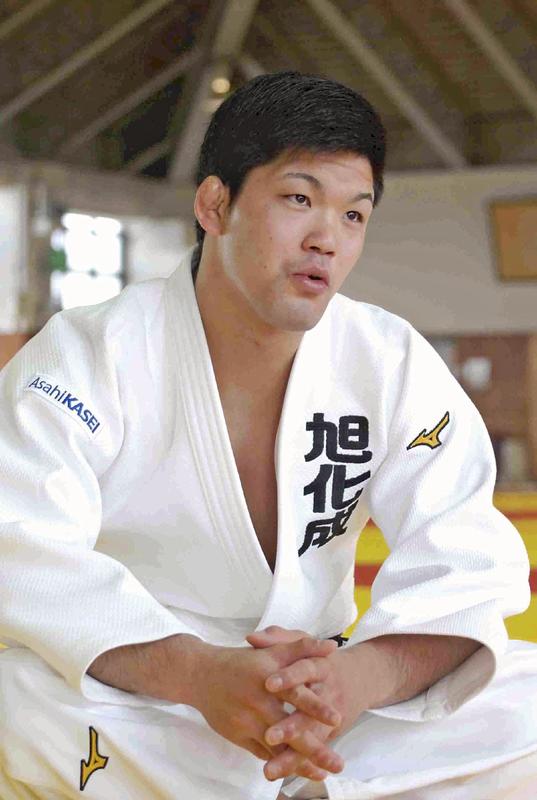
Defending Olympic judo champion Shohei Ono, who has been named on the Japan national team for the Tokyo Olympics, gave an interview to The Yomiuri Shimbun. Ono, 28, of Asahi Kasei Corp., who won a Rio Olympic gold medal in the men's 73-kg division, is determined to grab his second straight Olympic gold at the Tokyo Games, which have been postponed by a year to start in July 2021. Ono discussed his thoughts about the Games and his mindset as a judo champion.
The following are excerpts from the interview.
Yomiuri: The Tokyo Olympics and Paralympics have been postponed.
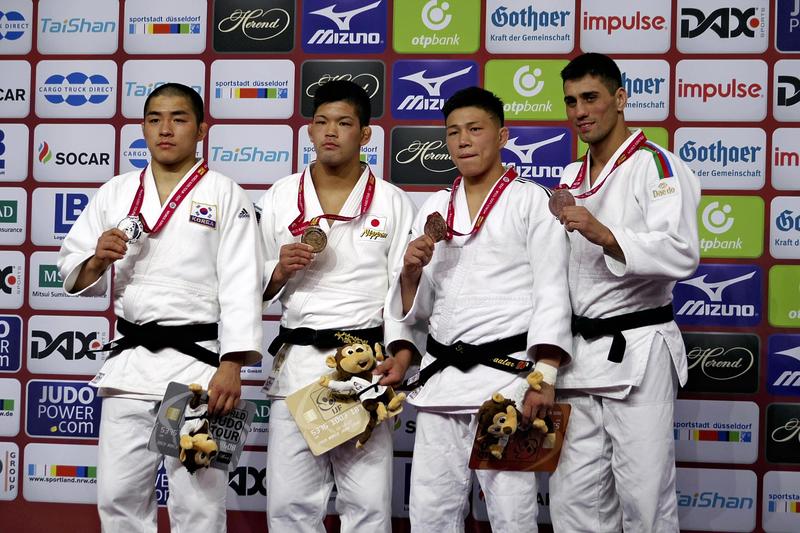
Ono: At this time of year, the national invitational weight class championships are held in Fukuoka city in April after the Dusseldorf Grand Slam in February. So, now it's time for us to prepare for the championships. We are affected by the spread of the new coronavirus and it's hard to hold training camps or exercise at practice halls other than ones we usually use. But it's also time for us to relax. It is hard to describe how I feel at the moment, but I would like to recharge my batteries by varying the pace and intensity of training. We can't train hard for 365 days.
Q: The interval between the Rio Olympics, where you won a gold medal, and the Tokyo Olympics has been extended from four to five years. Will this affect your long-term training plan?
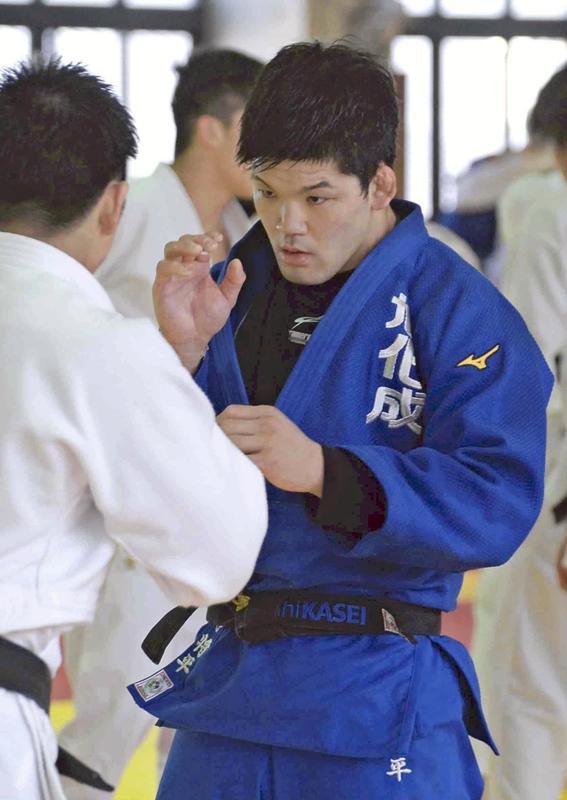
Ono: No, on the contrary, the extended interval is interesting. It applies to all athletes, not just me. No matter how long the extension may be, what athletes have to do is change their approach. In my case, whether the interval is four or five years, I won't be able to win a gold medal if I repeat the same four-year preparation leading up to the Rio Olympics. I was away from competition in 2017 -- writing a master's thesis -- so I can use this extra year to make up for my time away. In this sense, it's all right with me.
Q: Will athletes be stronger?
Ono: It probably differs how each judoka will deal with the postponement. Some judoka may be confused, while others may have anxiety. But what has to be done doesn't change. It would be easier for us to prepare if tournament or championship schedules and goals were set. No doubt about it. But we're in limbo waiting, so it's not something we can control. I don't know whether I'll take part in a training camp or compete in a tournament, and I can't predict how the situation will change. But when I think about it calmly, I don't believe it's time to train and practice aggressively. So, I am thinking about taking a break both physically and mentally at Tenri -- the alma mater university where his training is based. If I was named on the Japan national team after winning the Dusseldorf Grand Slam in February, I did consider taking a break in March. So, my schedule may not change.
Head coaches have things harder
Q: Was it easy to accept that the Olympics will be postponed by about one year?
Ono: Well, I thought the Games couldn't be held normally. But I can't say anything about that. There isn't a correct answer. Rather, what I should say is there isn't a solution or measure that would convince all athletes. There is no point if we get stressed over what we can't control. Even if the Tokyo Games started in July as scheduled, I don't think I would retire from judo after the Games. Of course, there might be judoka who considered the 2020 Tokyo Games as the end of their career. But I suppose that Katsuyuki Masuchi-sensei, head coach of the Japan women's national team, and Kosei Inoue-sensei, head coach of the Japan men's national team, have a harder time than us judoka.
Q: What are your thoughts about the Games remaining unchanged?
Ono: I'm concerned about when the Games will be held, whether there will be training camps and when judo tournaments and championships will be held. There are many elements to consider, including taking part in a tournament to replace the postponed Games, and reelection of national team members. At any rate, the postponement of the 2020 Olympics doesn't mean that we don't need to practice and don't need training. It isn't good if we get injured by practicing desperately or lose mental toughness before the Games are held. So, maintaining health is my top priority. At this point I feel like just going to the dojo for a casual sweat. Whoever I grapple with, it's all right to do it seriously, or for fun. Now is the only time when I can practice various judo techniques. I think I should be positive. Of course, I'm concerned that there are some who can't practice. I am grateful that I can practice with other judoka.
A 'definite' desire to inspire
Q: You often use the word "kakugo" meaning determination. Is it a precious word for you?
Ono: There are many words and phrases that I cherish. Now that it's come to this, I think things could change altogether depending on how focused we are. If I don't waver, there shouldn't be a problem. I believe I won't.
I don't know what form it will take but, I always think about conveying something at the Tokyo Games and via judo. I believe it's necessary to convey a message, not only at the Olympics but also in other international tournaments and championships.
Q: You've interacted with karateka Ken Nishimura and athletes from other sports.
Ono: I went out for dinner with Nishimura yesterday (March 25). He's well-informed in judo. So am I in karate because I graduated from Setagaya Gakuen High School (in Tokyo) whose karate club is as strong [as their judo club]. It's fascinating to share thoughts with him as we are both martial art practitioners persevering together. We didn't discuss things in depth but enjoyed a private conversation as friends.
Q: You also interact with grand sumo wrestlers. Are you inspired by athletes of other sports?
Ono: I think people with energy resonate with each other naturally. I talk about random stuff with them but, I don't feel like I take in all of what they say. I have recently been thinking that I would like to become a person regarded as "someone that other athletes want to talk to." I want to become someone who is respected by athletes from other sports and considered to be a strong judoka.
Q: What made you to feel like this?
Ono: There are people in the judo world such as, my superior Tadahiro Nomura and the head coach of the Japan men's national team, Kosei Inoue, who are sought after by athletes from other sports as well. I feel a sense of pride about that. I hope I can get closer to such an existence. That's why I don't think it's good to confine myself to the small world of judo. I think it's important to look beyond the boundary because various events are held at the Olympics.
Q: You often use the word "zettaiteki" (definitely). What is a definite existence for you?
Ono: Anything is possible in the world of physical competition. No doubt about it. I thought that "definitely" was close to "overwhelming." But given the fact that other athletes use "overwhelming," I began to feel that I would like to be higher than that. That's why I began to use "definitely," expressing a nuance that nothing is definite, but it is close to "overwhelming." I want to become a judoka who inspires a feeling of hope in others at any time. To give the impression that I will go beyond expectations placed on me, I want to become a "definite" existence at the Tokyo Games. And the path I pursue will continue after that. I would like to keep on practicing.
Q: When the 1964 Tokyo Olympics judo gold medalist Isao Okano coached the Japan men's national team late last December, you listened attentively to what he said to the press corps. What phrases stayed in your mind?
Ono: I felt that what I said after winning the gold medal at the Rio Olympics closely resembled what Okano-sensei said after winning his gold medal at the Tokyo Olympics. In Rio de Janeiro, I made a statement to the effect that "I once again felt the difficulty of doing what's expected as expected." Okano-sensei also said in Tokyo, "I didn't assume that doing what's expected as expected would be difficult like this." In this sense, I feel like it's a twist of fate. Still I'm really no match for him. I would like to get just a little closer at the next Tokyo Olympics and stand on par with Okano-sensei, a living legend.
Profile of Shohei Ono: Born in 1992 in Yamaguchi Prefecture. A graduate of Tenri University, he won a judo gold medal at the 2016 Rio Olympics and won the Judo World Championships in 2013, 2015 and 2019.
Read more from The Japan News at https://japannews.yomiuri.co.jp/