Optics, meet reality. The visuals emanating from Cornwall are just what Boris Johnson wanted: a warm encounter with the new US president, followed by a summit of world leaders with himself in the chair. The “special relationship” renewed, “Global Britain” in action, him at the centre: job done. Trouble is, the photo-ops and reality don’t match.
I’m not referring to the gulf that separates the personal styles of Joe Biden and the British prime minister. One former diplomat with experience of both men notes that, while Biden “asks for briefing folders and does his homework, Boris’s instinct is to wing it and play the clown”.
They’re chalk and cheese, but that need not matter. Opposites can connect, especially when it suits their mutual self-interest. Witness the renewed Atlantic charter the pair signed on Thursday – a reprise of the wartime pledge by the US and UK to make common cause that saw Biden casting himself as the latter-day Franklin Roosevelt, and Johnson equally happy to be a Churchill tribute act.
Nor do I mean the gap between G7 pledges on vaccinating the world’s poorer countries, and what’s actually needed. Of course, it’s welcome that the US will give away 500m surplus doses and that Britain will chip in with 100m more, so that the G7 collectively hands over 1bn. But even that apparently generous gesture is less than a tenth of the number required. If Biden and the others truly want to make good on their talk of vaccinating the world, they need to pay towards the manufacture and distribution of a further 10bn doses, an effort that would cost up to $66bn (£47bn).
No, the chasm I have in mind is between the worldview that Biden is urging upon his western allies, and the ethos embodied by Johnson. The US president is not an ideological figure, but he has a firm creed, and central to it is international cooperation. He believes in multilateralism, in the system of alliances constructed at the end of the second world war. You could show him Gordon Brown’s new book – which argues that the severest problems confronting our world – from the pandemic to poverty to the climate crisis – can only be solved through global cooperation, and he would scarcely disagree with a word of it. It’s one reason Biden recoiled from Donald Trump’s revival of the historically bleak slogan “America first”. The same sentiment animates the rest of the G7 leaders now in Carbis Bay – with one exception.
Johnson may talk the multilateralist talk, but his record points in the opposite direction. Whether he likes it or not he is defined, abroad especially, by Brexit (and one suspects he does not like it, telling the Atlantic magazine the topic is a lemon that’s been sucked dry). Johnson’s signature deed, the one that will be his enduring legacy, is aimed at reducing the cooperation between nations, about doing more alone. It is a mission to put “Britain first”.
Sure, he and the other Brexiters have always shied away from that reality, telling themselves that leaving the EU would see Britain become a leader not merely in Europe but across the world. But the Global Britain fantasy forgets something basic about geopolitics. “If you want to be a global player, you start by being a player in your neighbourhood,” says the former Downing Street chief of staff Jonathan Powell. “That’s difficult when you’ve pulled out.”
Or as the former British ambassador in Washington, Peter Westmacott, puts it: “We’re no longer in the room where it happens; we’re listening in the corridor outside.”
Perhaps there was a way to leave the European Union while minimising the damage to the world of alliances and Britain’s place in it – deploying what Westmacott calls “the right blend of expertise, strategic thinking, effectiveness and humility”. But that is not the path Johnson has chosen.
The slashing of Britain’s aid budget, breaking a manifesto promise to keep spending 0.7% of gross national income to help the world’s poorest, makes a mockery of Johnson’s expressed desire to play an international “convening” role: you can’t expect to sit in the chair if you’re not pulling your weight. Nor, say those in the know, has Johnson shown much interest in the painstaking, diligent work of investing in bilateral relationships, hoping that a flash of Etonian charm will do the trick instead.
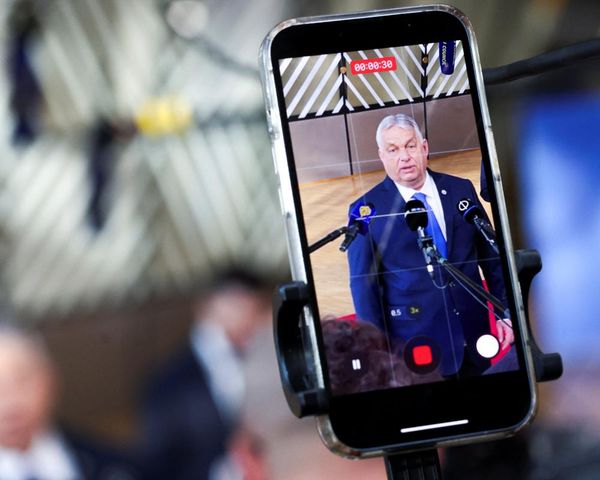
The result is that there’s a disconnect between the bloc Johnson wants to be in and the one where, thanks to his decisions, he belongs. The new Atlantic Charter demands, for example, that the US and Britain adhere to “the rules-based international order”. But nine months ago, Johnson’s government cheerfully announced that it intended to break international law over the Brexit arrangements for Northern Ireland. Johnson might want to sit with the wholesome kids at the multilateralist table, but his actions constantly send him round the back of the bike shed for a smoke with the rule-breakers – the likes of Hungary’s Viktor Orbán, who was given the red-carpet treatment at No 10 just last month.
This is the logic of Brexit. It’s the same logic responsible for the sharpest tension between Johnson and Biden, and several others in Cornwall: the current standoff over that Northern Ireland protocol. The government signed up to it, but now demands that the EU be “less purist” in its application. Johnson is effectively telling Brussels what he has doubtless told so many others before: “Sure, I made a promise. But you weren’t meant to take that literally.”
Now Johnson faces a choice. Either he caves in – as he did in late 2019 by agreeing to put a border down the Irish Sea – and betrays again an already restless unionist population. Or he refuses to buckle, so risking an all-out trade war with the EU, the chances of which are serious, according to the Eurasia Group.
Not for the first time, Boris Johnson wants to have his cake and eat it. He wants to stand next to a US president mouthing the catechism of cooperation between nations, even as he is forever associated with pulling Britain away from cooperation among the nations of Europe – in the process imperilling the union that enshrines cooperation among the four nations of the UK. He wants to pose with Biden and the G7, even as he remains a poster boy for the populist unilateralism of his old pal Trump. A photo-op might hide that contradiction for a while, but it cannot hide it for ever.
Jonathan Freedland is a Guardian columnist