Japanese Olympic hopefuls find themselves unable to go abroad
Many Japanese athletes who were training overseas are unable to go back because of entry restrictions on respective countries and territories, which have been imposed due to the coronavirus.
With less than 300 days remaining until the start of the Tokyo Olympics, the athletes are continuing their training while hoping the travel restrictions will quickly be lifted.
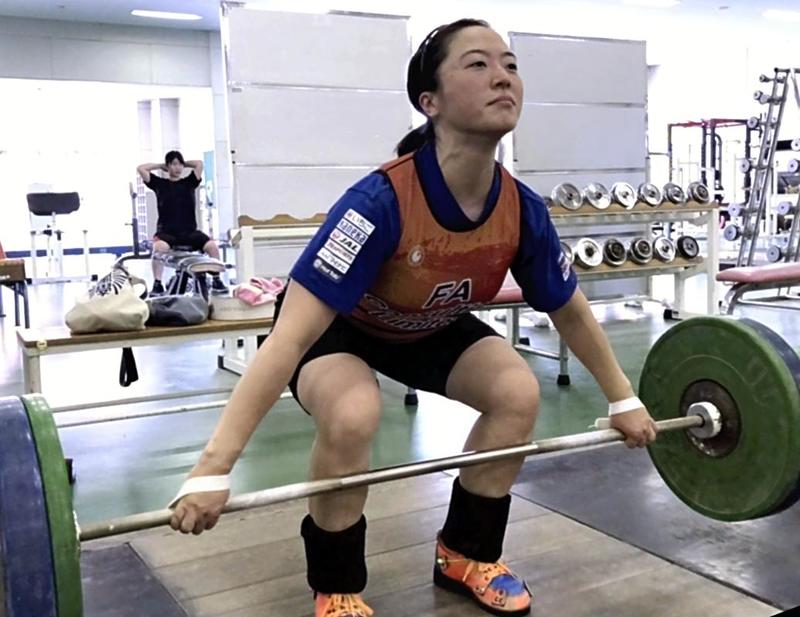
"Since I planned on going back soon, I left my training notes and personal computers there," said Mikiko Ando, 27, who won six all-Japan championships in a row and finished fifth in the women's weightlifting in the Rio de Janeiro Olympics.
Ando, who belongs to FA Consulting, has been since February unable to return to South Korea, where she has her training base.
In 2017, Ando moved to Gimhae, South Korea, to win an Olympic gold medal. There, she asked Kim Do Hee, who once served as coach of the Japanese national team and fostered a South Korean gold medalist, to train her.
Under Kim's instruction, Ando renewed the Japanese record and deepened her trust in the coach.
"She points out details without failing to notice really small changes," Ando said.
On Feb. 16, Ando came back to Japan to participate in an international event. The event was canceled due to the coronavirus, and Ando trained until early March in Japan to participate in another event. At the time, Japan and South Korea largely strengthened their respective entry restrictions.
Visa waivers for entering South Korea were suspended. Even if she could enter South Korea, she would be isolated for 14 days in a facility or other location.
Ando thought, "I can't stay away from barbell training just before the Olympics." Partly due to the concern, Ando has no other choice but to remain in Japan for now.
"I actually really want to receive instructions from the coach, but I have to do what I can," she said. She has continued training at Heisei International University in Saitama Prefecture, which is her alma mater, and other places in Japan.
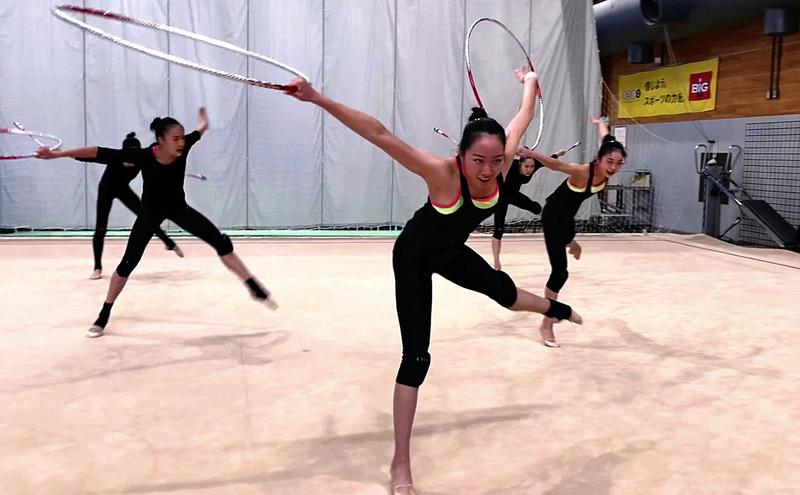
The national team for rhythmic gymnastics has brushed up their members' skills through training camps and matches overseas, including Russia, which is highly competitive in the sport.
Last year, Kaho Minagawa, a 23-year-old ace in individual competitions, and other athletes spent about 10 months overseas. Fairy Japan, a selected team for group competitions that won a silver medal for overall competitions in a world championship for the first time in 44 years, spent about six months overseas.
Minagawa returned to Japan in early February, and the Fairy Japan team members have not been able to go abroad since.
"They have not been able to experience the tension-filled matches you can get overseas," said Hiroko Yamasaki, 60, chief of the athlete-strengthening headquarters of the Japan Gymnastics Association.
But she also pointed out growth among the athletes.
"They have repeated exercises to adjust their limbs, and their movements have improved so much," she said.
Amuro Tsuzuki, 19, in the new Olympic sport of women's surfing, was scheduled to tour more than 10 countries and territories starting in March. She would have participated in championship tours, in which the world's top-ranked professional surfers would compete.
However, all championship tours for this season were canceled. Tsuzui has been brushing up her physical strength at home in Kanagawa Prefecture.
After requests for refraining from going out were lifted, she has driven her own car to Chiba Prefecture and other places, searching for "good waves" for surfing.
Because the next season's championship tour will start in November, her 46-year-old mother, Yoshiko, who is also the manager for the daughter, has made inquiries to Japanese consulates in venue countries to find out whether she will need to self-isolate after traveling there.
"Both overseas and when she returns to Japan, 14-day isolation is too long for athletes," Yoshiko said. "For her to do her best in the run-up to the Olympics, all I can do is hope that entry restrictions will be eased in other countries as soon as possible."
(captions)
Courtesy of Mikiko Ando
Mikiko Ando practices at Heisei International University in Kazo, Saitama Prefecture, in August.
Courtesy of the Japan Gymnastics Association
Group rhythmic gymnastics athletes practice in Kita Ward, Tokyo, in July.
Read more from The Japan News at https://japannews.yomiuri.co.jp/