This series presents basic information and tips for preparing washoku dishes. In this installment, we discuss how to make dashi broth.
Dashi is water or hot water infused with the umami flavor of ingredients such as fish and seaweed. "Dashi is the base that brings out the best flavors of washoku," said Yoko Munakata, an instructor with the Tokyo-based Better Home Association.
Ingredients such as kombu, dried bonito flakes and dried sardines are frequently used in dashi. Dashi made from kombu and dried bonito flakes in particular tastes superb as it generates a synergistic effect between two umami flavors: the glutamic acid of kombu and the inosinic acid of bonito flakes. The very first batch of dashi -- called "ichiban dashi" in Japanese -- has a richer umami flavor than the second batch, which is made from the ingredients left over from the first batch.
Try making ichiban dashi. Use thick kombu that is sold for making dashi rather than young soft kombu, which should be used for cooking and is not suitable for dashi.
Some bonito flakes packaged for sale are made from not only bonito but also mackerel, mackerel scad or a mixture. The type made from just bonito gives the dashi a delicate flavor.
For every 350 milliliters of dashi, three grams of kombu should be used. Firstly, wipe off any dust on the surface of the kombu using a dry cloth, making sure not to remove the white powder as this contains umami flavor. Next, immerse the kombu in a pot filled with two cups of water (400 milliliters) for half an hour, in order to bring out the umami flavor.
After that, simmer over low heat. As soon as the water begins to bubble, remove the kombu from the pot. "If you boil it, the kombu could become too soft and give out a strong smell or develop a slimy texture. Taking it out right before boiling is key," Munakata said.
Next, add five grams of bonito flakes to the pot. Stir once, and when the liquid comes to a boil, turn off the heat. Finally, set it aside for about a minute and strain. Your dashi is now ready.
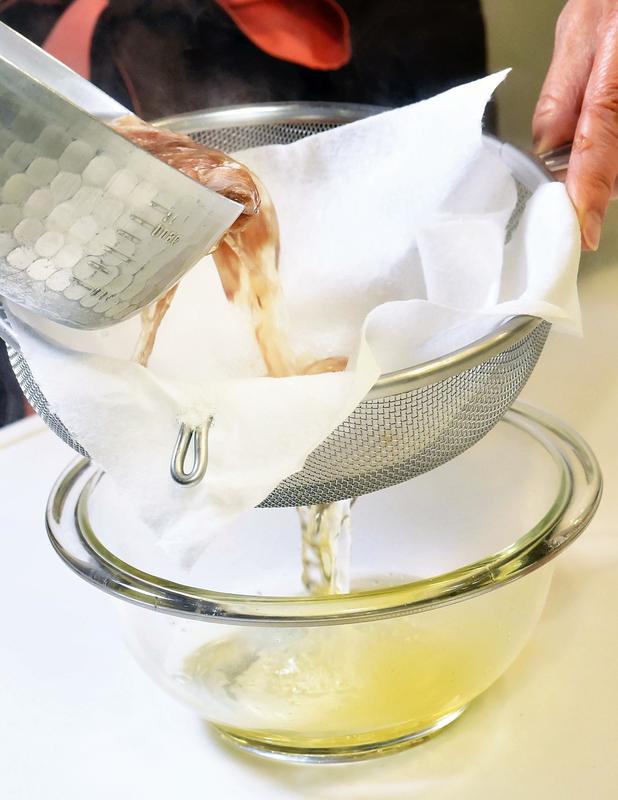
If you wish to make the dashi clear, lay something like a paper towel over a strainer (see photo). "The first dashi has a savory smell. It's appropriate for soup, marinated and other dishes with which you can enjoy the original flavor of the dashi," Munakata said.
Taking the leftover kombu and bonito flakes used in the first batch, a second batch can be made once these ingredients have been simmered in water for a couple of minutes. Use half as much water as for the first batch. This second dashi brings out the flavor of miso soup and simmered food.
Simmer leftover ingredients
The kombu and bonito flakes left over from the first dashi batch can be made into a dish that goes well with rice. Munakata explained how to cook a tozani simmered dish.
Cut the leftover kombu into strips 2 centimeters long and 2-3 millimeters wide, and roughly chop the bonito flakes. Put the ingredients in a pot along with five grams of thinly sliced ginger. Add 100 milliliters of water, 1 teaspoon each of sugar and mirin, 2 teaspoons of soy sauce, and half a teaspoon of vinegar. Simmer until the liquid has evaporated. Tozani is better if you add shichimi-togarashi spice mix and sesame.
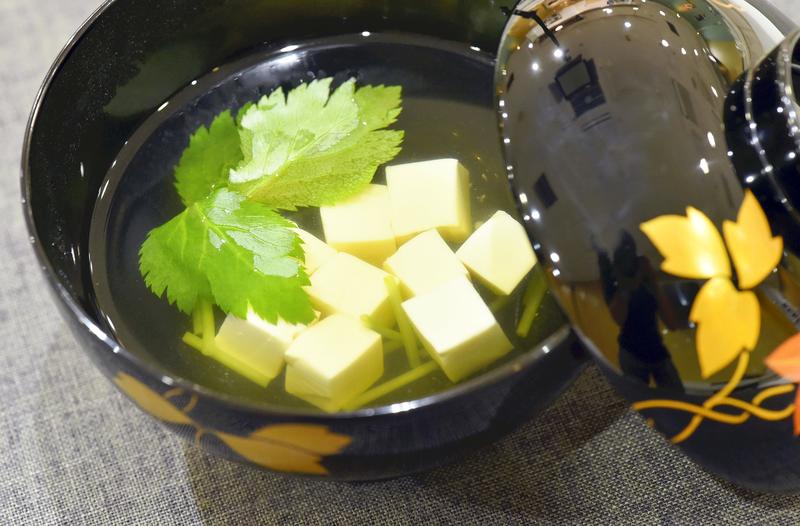
Recipe for soup using first dashi
Ingredients (serves 2):
350 milliliters dashi
100 grams silken tofu
4 stems mitsuba greens
1/6 tsp salt
1/2 tsp soy sauce
Directions:
1. Cut tofu into 1-centimeter-square pieces. Pluck leaves off the mitsuba and cut stems into pieces 1-2 centimeters long.
2. Pour dashi into a pot, place on stove and turn on heat. After adding tofu, season the soup with salt and soy sauce.
3. Put the mitsuba leaves and stems into two soup bowls and pour in the soup.
To find out more about Japan's attractions, visit http://the-japan-news.com/news/d&d
Read more from The Japan News at https://japannews.yomiuri.co.jp/